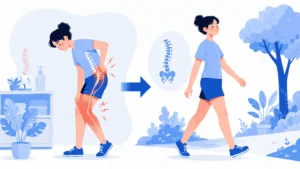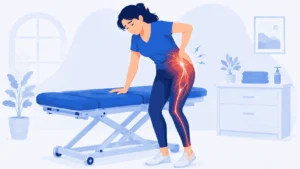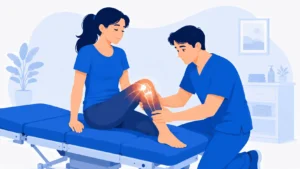

Have you noticed an ache on the right side of your lower back? Maybe it started after lifting something, sitting for hours, or waking up one morning. Or perhaps the pain appeared without any obvious reason.
Right side lower back pain can feel like a dull ache, tightness, sharp discomfort, or pain that travels into your hip or leg.
Sometimes, the cause is a strained muscle or irritated joint. Other times, the discomfort may come from a kidney, abdominal, or pelvic condition rather than the spine.
Understanding the possible causes can help you recognise which symptoms may respond to simple self-care and which need medical attention.
Why Does the Lower Right Side of My Back Hurt?
Your lower back contains muscles, ligaments, spinal joints, discs, and nerves. Problems involving any of these structures can cause discomfort on one side.
However, pain in this area does not always originate in the back itself.
For example, kidney conditions, urinary problems, and certain abdominal or pelvic disorders can produce pain that feels like it is coming from the lower back.
The location of pain is useful information, but it cannot identify the cause on its own.
Consider when the pain started, what makes it better or worse, and whether you have symptoms such as fever, urinary changes, abdominal discomfort, numbness, or weakness.
9 Possible Causes of Right Side Lower Back Pain
1. Muscle Strain or Overuse
Muscle strain is a common cause of lower back discomfort.
It may develop after lifting a heavy object, twisting awkwardly, exercising more intensely than usual, or repeating the same movement for a long time.
Common symptoms include:
- Aching or soreness on one side
- Muscle tightness
- Tenderness when touching the area
- Discomfort when bending or turning
- Stiffness after resting
Mild muscular pain often improves gradually with comfortable movement and temporary adjustments to activity.
However, severe or persistent pain should not automatically be assumed to be a muscle strain.
2. Sacroiliac Joint Irritation
The sacroiliac (SI) joints connect the pelvis to the lower part of the spine.
Pain involving this region can sometimes be felt on one side of the lower back, close to the buttock.
You might notice discomfort when:
- Climbing stairs
- Standing for long periods
- Getting out of a chair
- Turning in bed
- Walking or changing positions
SI joint pain can resemble other lower back or hip conditions, so symptoms alone are not enough to confirm the source.
3. Herniated or Irritated Spinal Disc
Spinal discs sit between the vertebrae and help distribute loads through the spine.
A disc problem can sometimes cause lower back pain, especially if nearby nerves become irritated.
Possible symptoms include:
- Localised back pain
- Pain spreading into the buttock or leg
- Tingling or numbness
- Discomfort that changes with certain movements
Not every disc change causes symptoms, and an imaging finding does not necessarily explain someone’s pain.
An assessment can help determine whether a disc-related problem is likely.
4. Sciatica or Nerve Irritation
Sciatica refers to symptoms associated with irritation of nerve roots that contribute to the sciatic nerve.
It typically causes pain that travels from the lower back or buttock into the leg.
You may experience:
- Shooting or burning leg pain
- Tingling or pins and needles
- Numbness
- Pain that worsens in certain positions
- Weakness in the affected leg
Sciatica is not always limited to one side, but it commonly affects one leg.
If symptoms are persistent or worsening, seek medical evaluation. New or progressive weakness requires prompt attention.
5. Arthritis or Age-Related Spinal Changes
Changes in the joints and other structures of the spine become more common with age.
Some people develop discomfort or stiffness associated with these changes.
Symptoms may include:
- Stiffness after inactivity
- Pain during certain movements
- Reduced flexibility
- Discomfort that comes and goes
However, age-related changes seen on scans are common even in people without pain.
A healthcare professional should consider your symptoms and examination findings rather than relying on imaging alone.
6. Kidney Stones or Kidney Infection
Kidney-related pain can sometimes be mistaken for back pain.
The kidneys are located toward the back of the upper abdomen, beneath the lower ribs. Kidney discomfort is often felt in the flank rather than directly over the lower spine.
Kidney stones may cause severe pain that comes in waves and can travel toward the lower abdomen or groin.
Kidney infections may cause flank or back pain together with fever and urinary symptoms.
Watch for:
- Fever or chills
- Burning or painful urination
- Blood in the urine
- Nausea or vomiting
- Severe pain in the side or flank
These symptoms require medical assessment. Fever with flank pain can indicate a kidney infection needing prompt treatment.
7. Appendicitis or Other Abdominal Conditions
Although appendicitis typically causes abdominal pain, some people experience discomfort in less typical locations, including the back.
Appendicitis may cause:
- Pain that becomes more noticeable in the lower right abdomen
- Nausea or vomiting
- Loss of appetite
- Fever
- Increasing abdominal tenderness
Suspected appendicitis requires urgent medical evaluation.
Other abdominal conditions can also produce pain that seems to spread toward the back.
Do not assume right-sided back pain is musculoskeletal when significant abdominal symptoms are present.
8. Pelvic or Reproductive Conditions
In women, some pelvic and reproductive conditions can cause discomfort that is felt in the lower abdomen and lower back.
Possible causes include:
- Menstrual cramps
- Endometriosis
- Ovarian cysts
- Other pelvic conditions
- Pregnancy-related musculoskeletal changes
Sudden severe one-sided pelvic pain, especially with nausea, vomiting, dizziness, or fainting, requires urgent medical assessment.
If pregnancy is possible, one-sided pelvic or abdominal pain with bleeding, dizziness, or fainting may indicate an ectopic pregnancy and requires emergency care.
For a broader explanation, see our article on causes of lower back pain in women.
9. Prolonged Sitting or Repetitive Physical Strain
Spending long periods in one position can contribute to lower back discomfort.
You may notice pain after:
- Working at a desk
- Driving for several hours
- Standing for extended periods
- Repeated bending or lifting
- Returning to exercise after inactivity
It is not necessarily one incorrect posture that causes pain. Prolonged positioning, physical workload, and individual sensitivity may all contribute.
Changing positions regularly and building comfortable movement into your day may help.
What Does the Location of Right-Sided Back Pain Tell You?
Where you feel pain can provide clues, particularly when combined with other symptoms.
| Pain pattern | Possible explanations |
| Pain close to the spine | Muscle, joint or disc-related discomfort |
| Pain near the right buttock | SI joint irritation or referred pain |
| Pain travelling into the leg | Sciatica or another nerve-related condition |
| Pain in the side below the ribs | Kidney or muscular causes |
| Back pain with lower right abdominal pain | Possible abdominal or pelvic condition |
| Pain after lifting or twisting | Muscular or mechanical irritation |
These are possibilities, not diagnoses. Different conditions can produce overlapping symptoms.
Right Side Lower Back Pain in Women
Women may experience right-sided lower back discomfort for many of the same musculoskeletal reasons as men.
However, certain symptoms may also be related to menstrual, pregnancy-related, urinary, or pelvic conditions.
Pay attention to whether the pain occurs alongside:
- Changes in your menstrual cycle
- Pelvic discomfort
- Unusual vaginal bleeding
- Urinary symptoms
- Pregnancy or possible pregnancy
- Fever or nausea
A healthcare professional can help determine whether the symptoms are related to the spine or another part of the body.
Is It Back Pain or Kidney Pain?
Musculoskeletal back pain and kidney-related pain can sometimes feel similar.
However, there are patterns worth noticing.
Musculoskeletal pain may change when you bend, lift, twist, or move into certain positions.
Kidney-related pain is often felt higher in the flank and may occur with fever, nausea, urinary symptoms, or blood in the urine.
These differences are not reliable enough to diagnose yourself.
If you have significant flank pain, fever, urinary changes, or vomiting, seek medical assessment rather than trying stretching or chiropractic treatment.
How to Relieve Mild Lower Right Back Pain
If your discomfort appears muscular, is mild, and is not accompanied by warning signs, simple measures may help.
Keep Moving Comfortably
Short walks and gentle movement can help maintain mobility.
Avoid prolonged bed rest unless a healthcare professional advises otherwise.
Change Positions Regularly
If sitting makes your back uncomfortable, take brief standing or walking breaks.
Choose positions that feel comfortable rather than forcing yourself to maintain a rigid posture.
Try Heat or Cold
A warm compress or wrapped cold pack may provide temporary relief.
Use moderate temperatures and avoid prolonged contact with the skin.
Reduce Activities That Aggravate Pain
Temporarily modify heavy lifting, strenuous exercise, or repeated movements that clearly worsen your symptoms.
Return to normal activities gradually as discomfort improves.
Consider Gentle Stretching
Some people find comfortable mobility exercises helpful for mild muscular stiffness.
For movement ideas, read our guide to 10 stretches for lower back pain relief.
Stop any exercise that causes sharp pain or makes symptoms spread farther down your leg.
When Should You Worry About Lower Right Back Pain?
Most mild mechanical back pain is not an emergency.
However, some symptoms require urgent attention.
Seek emergency care if you experience:
- New loss of bladder or bowel control
- Numbness around the groin or inner thighs
- Rapidly worsening leg weakness
- Severe back pain after major trauma
- Sudden severe abdominal or pelvic pain, especially with fainting or significant bleeding
Seek prompt medical evaluation for:
- Fever or chills with back or flank pain
- Blood in the urine or painful urination
- Persistent vomiting
- Unexplained weight loss
- Severe or worsening pain
- Persistent numbness or tingling
- Pain that repeatedly disrupts sleep
Do not attempt to manage these symptoms with stretching or spinal manipulation before an appropriate medical assessment.
How Is Right-Sided Lower Back Pain Diagnosed?
A healthcare professional will usually begin by discussing your symptoms and medical history.
They may ask:
- When did the pain begin?
- Is it sharp, dull, aching, or burning?
- Does it change with movement?
- Does it travel into your leg?
- Have you noticed urinary or abdominal symptoms?
- Have you experienced a recent injury?
A physical examination may assess movement, strength, sensation, and other relevant findings.
Depending on the suspected cause, further testing may include urine tests, blood tests, imaging, or referral to another healthcare professional.
Not everyone with lower back pain needs an X-ray or MRI.
Can Chiropractic Care Help Right-Sided Lower Back Pain?
Chiropractic care may be one option for certain types of musculoskeletal lower back pain.
However, the most appropriate treatment depends on the underlying cause.
Pain associated with kidney problems, abdominal conditions, infections, or other non-musculoskeletal issues requires appropriate medical care rather than chiropractic treatment.
For suitable musculoskeletal conditions, a chiropractor may provide assessment, movement guidance, exercise recommendations, or other conservative approaches.
To explore treatment options, visit our back pain care page.
Getting Help for Lower Back Pain in Sanford, FL
If right-sided lower back discomfort continues, returns frequently, or limits your activities, a professional assessment may help clarify the possible cause.
At VitalSpine Chiropractic in Sanford, FL, Dr. Michaelene Callahan, DC, provides assessments and conservative care for appropriate musculoskeletal conditions.

The clinic is located at 413 W 1st St, Sanford, FL.
If your symptoms suggest a kidney, abdominal, pelvic, or another medical condition, an appropriate medical evaluation is important.
For musculoskeletal concerns that may be suitable for chiropractic care, you can book an appointment.
Frequently Asked Questions
1. Can right-sided lower back pain be caused by gas or constipation?
Yes. Gas, constipation, and some digestive conditions can cause abdominal discomfort that may be felt in the back. However, severe or persistent pain, particularly with fever, vomiting, or significant abdominal symptoms, should be medically evaluated.
2. Why does my lower right back hurt when I bend over?
Bending may aggravate certain muscular, joint, or disc-related conditions. However, the movement that triggers pain does not identify the cause by itself. Seek assessment if symptoms persist or worsen.
3. Can sleeping in the wrong position cause right-sided lower back pain?
Sleeping in an uncomfortable position may contribute to temporary stiffness or soreness. However, persistent pain or discomfort that repeatedly wakes you from sleep should not automatically be blamed on your mattress or sleeping position.
4. How long does right-sided lower back pain usually last?
Mild muscular discomfort may improve over several days or weeks. Other causes have different recovery timelines. Seek medical advice if pain is severe, worsening, or not improving as expected.
5. Can dehydration cause pain in the lower right back?
Dehydration does not typically cause isolated lower right back pain directly. However, inadequate fluid intake can contribute to kidney stone risk in some people. If pain is severe or accompanied by urinary symptoms, seek medical evaluation.
Disclaimer
This article is for educational purposes and does not replace professional medical advice, diagnosis, or treatment. Right-sided lower back pain may have musculoskeletal or non-musculoskeletal causes. Seek medical attention for severe, persistent, or concerning symptoms.al needs when developing a care plan. At Vitalspine Chiropractic in Sanford, FL, Dr. Callahan works with patients to identify contributing factors and support better movement and comfort.