Lower back discomfort can make sitting, walking, sleeping, and completing everyday tasks more difficult. It may appear after a long day at a desk, an extended drive, an unfamiliar workout, heavy lifting, or a sudden awkward movement.
Gentle movement can often help reduce stiffness and restore comfortable mobility. Exercise may also help strengthen the muscles that support the spine, although stretching should be only one part of a complete back-care plan.
The following 10 stretches for lower back pain relief are designed as general movements for adults with mild back stiffness or muscular discomfort. They are not appropriate for every injury or medical condition.
Important: Stop any stretch that causes sharp pain, increasing numbness, weakness, or pain that travels farther down your leg. Speak with a qualified healthcare professional before starting if you recently had surgery, experienced a serious injury, are pregnant, have osteoporosis, or have been diagnosed with a spinal condition.
How to Stretch Your Lower Back Safely
Begin with a few minutes of gentle walking or another light activity rather than stretching cold muscles. Move slowly, breathe normally, and avoid bouncing. You should feel mild tension not sharp, burning, or electric pain.
For a static stretch, holding the position for approximately 20 to 30 seconds and repeating it on both sides may be appropriate. However, the number of repetitions should always be adjusted according to your comfort and your clinician’s recommendations.
1. Single Knee-to-Chest Stretch
The knee-to-chest stretch gently moves the lower back and may help release tightness around the hips and lumbar area.

How to do it:
- Lie on your back with both knees bent and your feet flat on the floor.
- Bring one knee toward your chest.
- Place your hands behind your thigh or over your shin.
- Gently pull the knee closer until you feel a comfortable stretch.
- Hold for 20 to 30 seconds.
- Lower the leg and repeat on the opposite side.
Complete two or three repetitions on each side. Keep your head and shoulders relaxed throughout the movement.
2. Lower Back Rotation
This gentle rotation can improve movement through the lower back and hips.
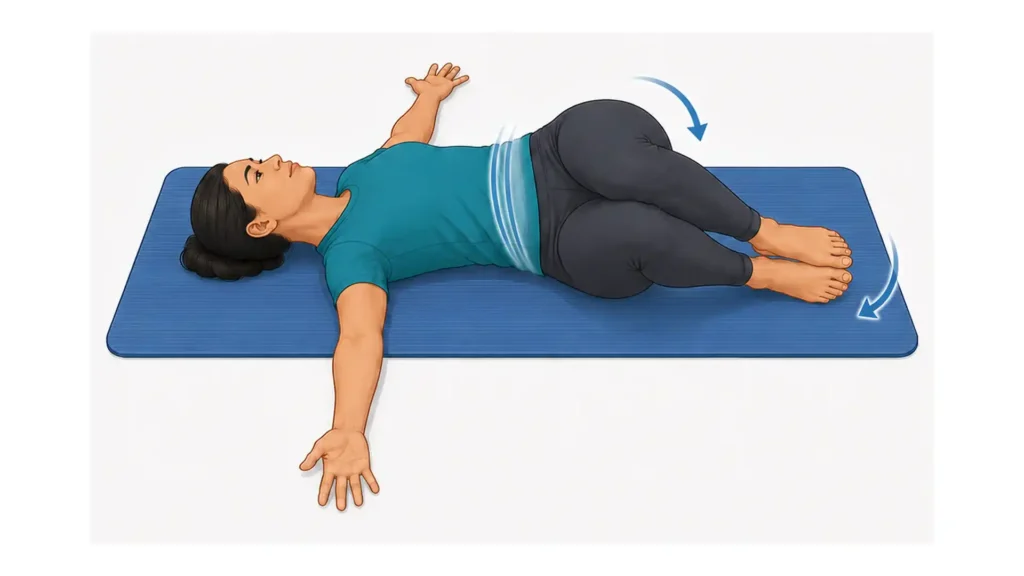
How to do it:
- Lie on your back with your knees bent and feet together.
- Extend your arms out to the sides for support.
- Keeping your shoulders against the floor, slowly lower both knees toward one side.
- Move only as far as you can without increasing your pain.
- Return to the center and repeat on the other side.
Perform eight to 10 slow repetitions in each direction. Do not force your knees to reach the floor.
3. Pelvic Tilt
A pelvic tilt is more of a controlled mobility exercise than a traditional stretch, but it can help you become more aware of your lower-back position.
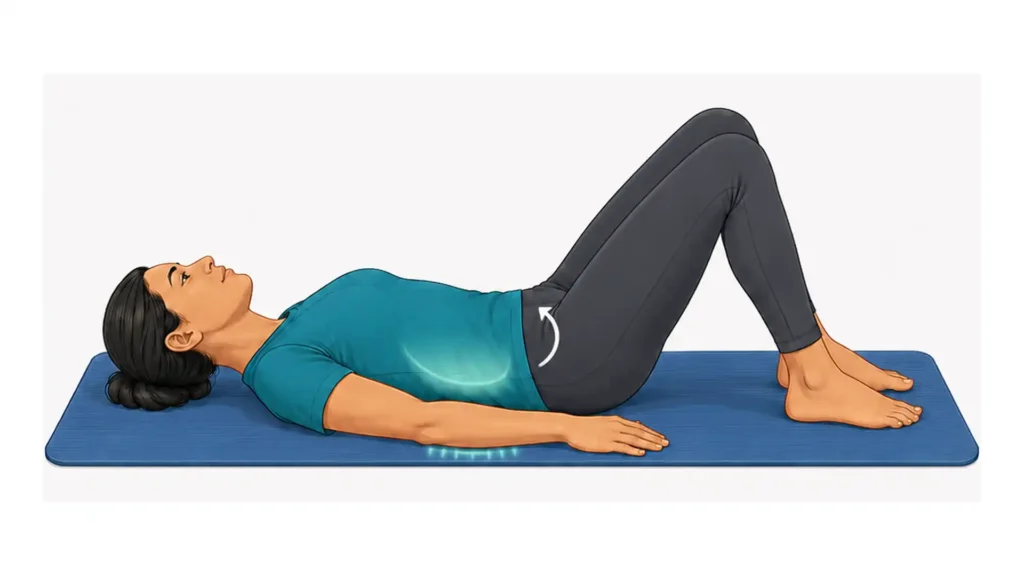
How to do it:
- Lie on your back with your knees bent.
- Relax your shoulders and neck.
- Gently tighten your abdominal muscles.
- Flatten your lower back toward the floor by slightly tilting your pelvis.
- Hold for three to five seconds.
- Relax and return to the starting position.
Repeat eight to 12 times. Avoid holding your breath or pressing forcefully into the floor.
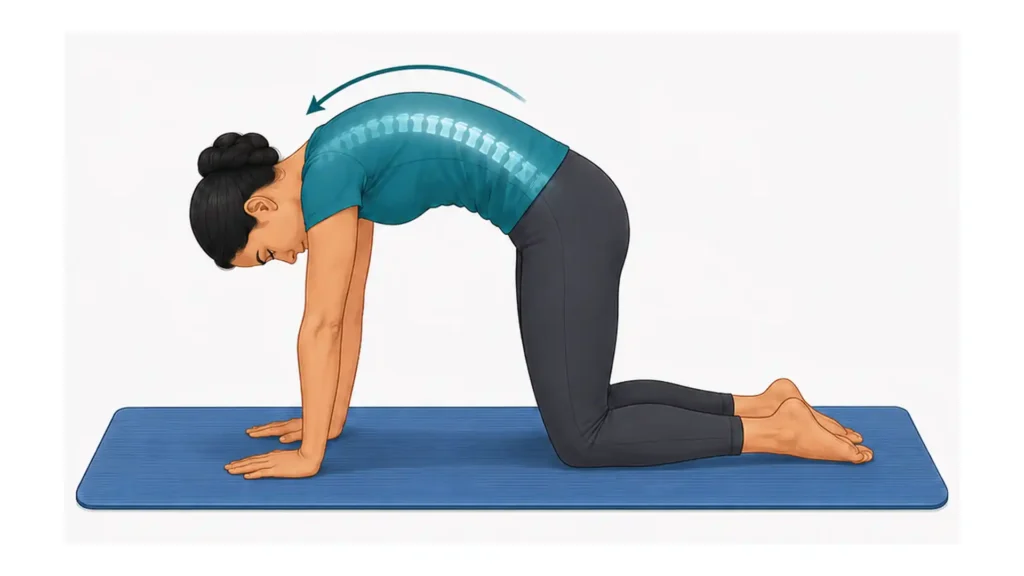
4. Cat-Cow Stretch
Cat-cow moves the spine through gentle flexion and extension. It can be useful when the back feels stiff after a period of inactivity.
How to do it:
- Begin on your hands and knees.
- Position your hands beneath your shoulders and your knees beneath your hips.
- Slowly round your back upward while allowing your head to lower comfortably.
- Pause briefly.
- Reverse the movement by gently lowering your abdomen and lifting your chest.
- Stay within a pain-free range.
Complete eight to 10 controlled repetitions. Do not exaggerate either position.
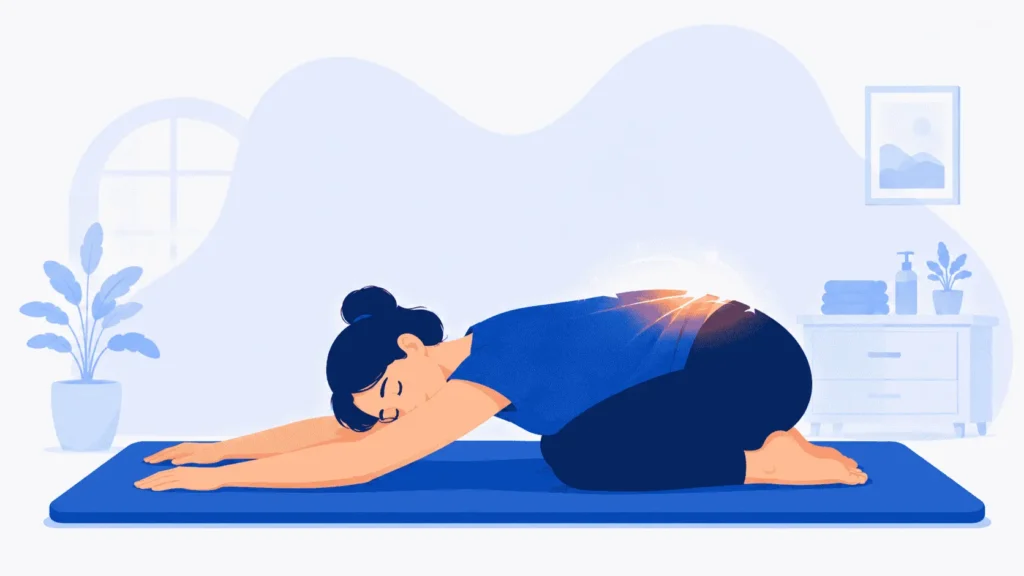
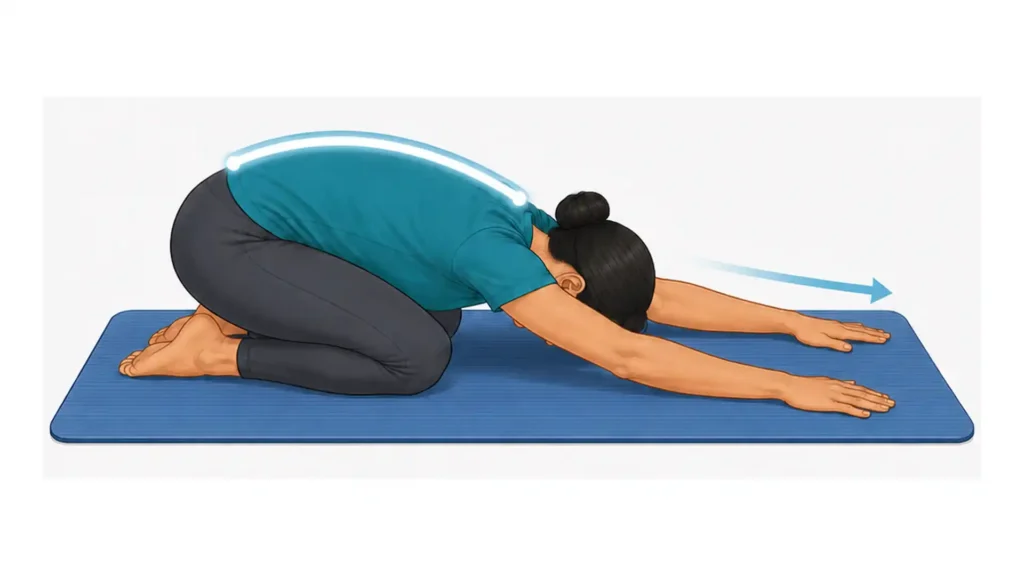
5. Child’s Pose
Child’s pose may stretch the lower back, hips, and muscles along the sides of the torso.
How to do it:
- Begin on your hands and knees.
- Slowly move your hips back toward your heels.
- Extend your arms in front of you.
- Let your chest move toward the floor without forcing the position.
- Hold for 20 to 30 seconds.
Place a pillow under your chest or between your hips and heels if the full position is uncomfortable. Skip this stretch if bending forward increases your symptoms.
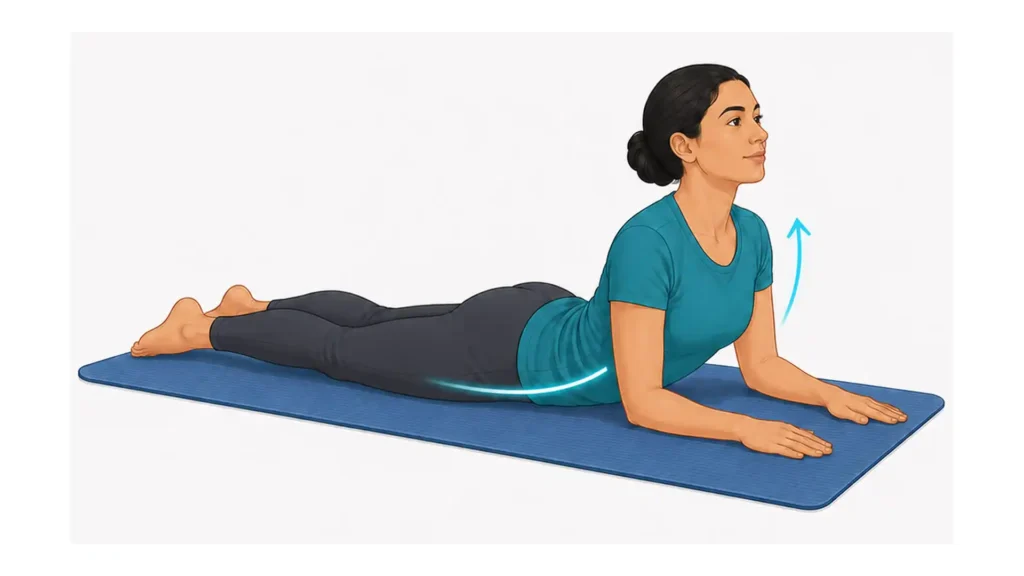
6. Sphinx Stretch
The sphinx stretch places the lower spine in gentle extension. Some people find this movement comfortable, while others—particularly those whose symptoms worsen when bending backward—may need to avoid it.
How to do it:
- Lie on your stomach.
- Place your elbows beneath your shoulders.
- Rest your forearms on the floor.
- Gently lift your chest while keeping your hips and legs relaxed.
- Hold for five to 10 seconds.
- Lower yourself slowly.
Repeat up to five times. Stop immediately if the movement increases leg pain, tingling, or numbness.
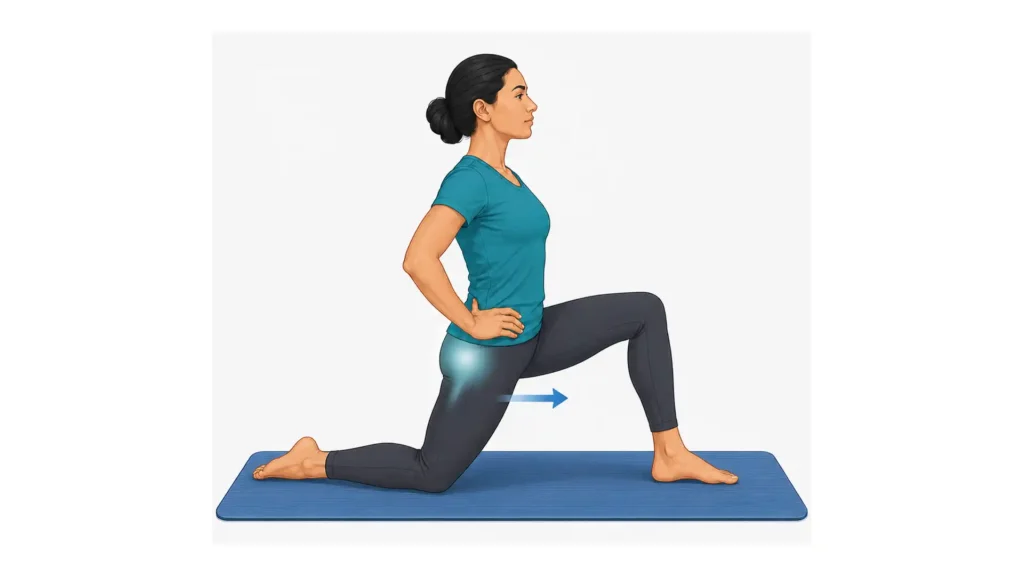
7. Kneeling Hip-Flexor Stretch
Long periods of sitting can leave the muscles at the front of the hips feeling tight. A hip-flexor stretch may reduce that tension without requiring a large amount of spinal movement.
How to do it:
- Kneel on one knee with the opposite foot in front of you.
- Keep your torso upright.
- Gently tuck your pelvis rather than arching your lower back.
- Shift your weight forward slightly.
- Stop when you feel a stretch at the front of the kneeling-side hip.
- Hold for 20 to 30 seconds.
Repeat two or three times on each side. Use a folded towel under your knee for comfort.
8. Supine Hamstring Stretch
Tightness behind the thighs can affect how the hips and pelvis move. This supported version allows you to stretch without bending deeply at the waist.
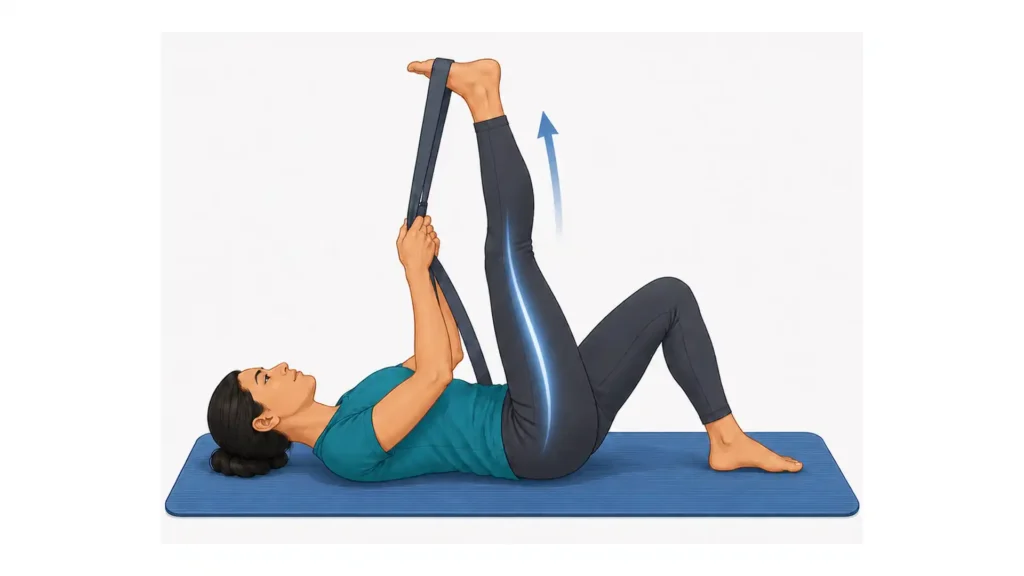
How to do it:
- Lie on your back with both knees bent.
- Lift one leg and place a towel or stretching strap around the back of your thigh or foot.
- Gently straighten the knee until you feel tension behind the thigh.
- Keep the opposite foot on the floor if that is more comfortable.
- Hold for 20 to 30 seconds.
- Switch sides.
Do not pull until the leg shakes or your lower back lifts forcefully from the floor.
9. Figure-Four Stretch
The figure-four stretch targets muscles around the buttocks and back of the hip.
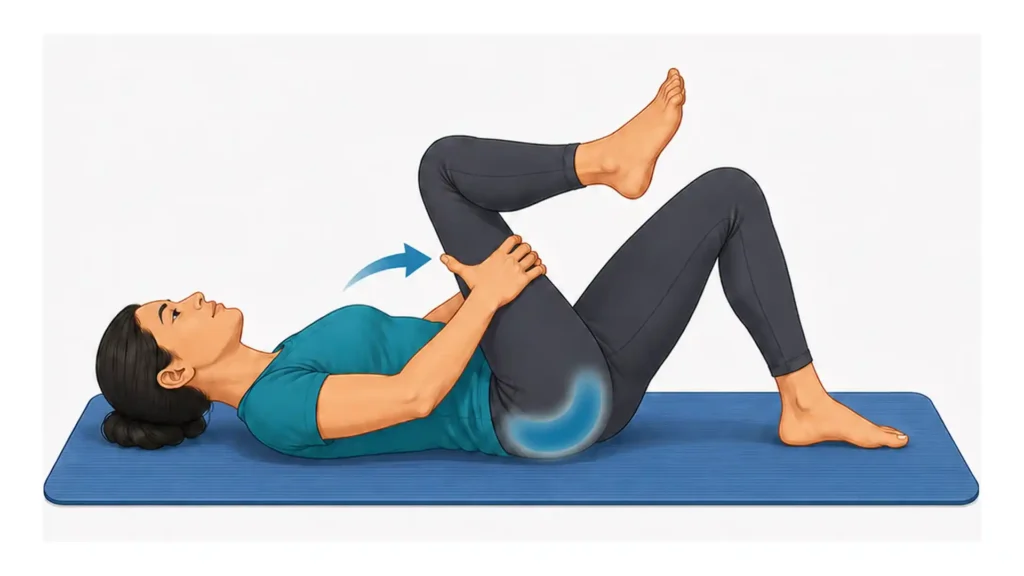
How to do it:
- Lie on your back with your knees bent.
- Place your right ankle over your left thigh.
- Reach behind your left thigh and gently draw it toward your chest.
- Keep your right foot relaxed but supported.
- Hold for 20 to 30 seconds.
- Repeat on the opposite side.
You can also perform a gentler version while sitting in a sturdy chair. Avoid pushing the raised knee downward.
10. Standing Side-Body Stretch
This movement stretches the muscles along the sides of the waist and lower trunk.

How to do it:
- Stand with your feet approximately hip-width apart.
- Place one hand on your hip.
- Lift the opposite arm overhead.
- Gently lean away from the raised arm without twisting your torso.
- Hold for 15 to 20 seconds.
- Return to the center and switch sides.
Keep the movement small and controlled. Hold a countertop or stable chair if balance is a concern.
Stretches for Lower Back Pain After Sitting
Sitting for long periods can contribute to stiffness, particularly when you remain in one position without movement breaks. Mayo Clinic recommends breaking up prolonged desk time with stretching and physical activity to help reduce stiffness and soreness.
Try this simple three-minute routine:
- Stand and walk for 30 to 60 seconds.
- Perform the kneeling or standing hip-flexor stretch on each side.
- Complete five gentle pelvic tilts or standing backward movements, but only if extension feels comfortable.
- Finish with a seated figure-four stretch on each side.
These stretches for lower back pain after sitting can be performed during the workday, after driving, or whenever your back begins to feel stiff. Regular movement is generally more helpful than trying to correct several hours of sitting with one intense stretching session.
Should You Stretch When Pain Travels Down the Leg?
Pain that travels from the lower back into the buttock or leg may involve irritation of a nerve. It can also be accompanied by tingling, numbness, or weakness.
People searching for pain relief for a trapped nerve in the lower back should avoid assuming that one specific stretch will fix the problem. “Trapped nerve” is a general term rather than a precise diagnosis, and radiating symptoms can have several possible causes.
Some people find gentle movement helpful, while others notice that certain positions make their symptoms worse. Stop stretching and arrange an evaluation if your pain travels farther down the leg, becomes more intense, or is accompanied by numbness or weakness.
Are These Stretches Suitable for Lower Back Pain and Sciatica Relief?
Not every stretch is suitable for sciatica. A movement that helps one person may aggravate another person’s symptoms, depending on which tissues are irritated and which spinal positions feel comfortable.
For lower back pain and sciatica relief, begin with small, gentle movements and monitor how your leg symptoms respond. A stretch should not make pain, tingling, or numbness spread farther down the leg. Persistent or worsening symptoms should be evaluated by a qualified healthcare professional.
When Stretching Is Not Enough
Stretching may temporarily reduce stiffness, but an effective lower back pain rehabilitation program may also include:
- Gradual strengthening of the back, abdominal, hip, and leg muscles
- Changes to lifting, sitting, or working habits
- Regular walking or another tolerable form of activity
- A personalized home-exercise program
- Manual therapy when clinically appropriate
- Coordination with a medical provider or physical therapist when necessary
Physical therapists commonly use flexibility, strengthening, and posture exercises as part of back-pain care. Stronger supporting muscles may also improve spinal stability and help protect the back during daily activities.
Can Chiropractic Care Help Lower Back Pain?
Chiropractic care is one possible component of non-surgical lower back pain treatment. Depending on the person’s condition, care may involve education, exercise recommendations, mobility work, soft-tissue techniques, and spinal manipulation.
A spinal adjustment for lower back pain should not be presented as a guaranteed cure. According to the National Center for Complementary and Integrative Health, spinal manipulation may produce small improvements in pain and function for some people with acute or chronic lower back pain. It is one of several possible treatment approaches, and the evidence supporting it has limitations.
A responsible provider should first review your symptoms and medical history, perform an appropriate examination, explain the proposed treatment, discuss alternatives, and refer you for additional medical care when necessary.
Choosing a Back Pain Chiropractor in Sanford, FL
Typing “back pain chiropractor near me” into a search engine can produce many results, but distance should not be the only factor you consider.
When selecting a chiropractor for lower back pain in Sanford, look for a provider who:
- Performs an examination before recommending treatment
- Screens for symptoms that require medical referral
- Provides a clear explanation of the proposed care
- Includes active rehabilitation or home exercises when appropriate
- Tracks functional improvement rather than relying only on pain scores
- Adjusts the plan when treatment is not producing meaningful progress
- Coordinates with other healthcare professionals when needed
For people comparing lower back pain treatment in Sanford, FL, an individualized plan is usually more useful than a one-size-fits-all series of adjustments.
When to Seek Immediate Medical Care
Do not attempt to stretch through serious or rapidly changing symptoms.
Seek urgent medical attention for back pain that:
- Begins after a major fall, crash, or other trauma
- Is accompanied by fever
- Causes new loss of bladder or bowel control
- Causes difficulty urinating
- Produces numbness around the groin, genitals, or inner thighs
- Causes severe or progressive weakness in one or both legs
You should also arrange a timely medical evaluation if pain is constant, becomes worse at night, spreads below the knee, is accompanied by unexplained weight loss, or does not begin improving with reasonable self-care.
Need Lower Back Pain Relief in Sanford?
These lower back stretches for pain relief may be a useful starting point for mild stiffness, but recurring or persistent pain deserves a more individualized assessment.
At Vitalspine Chiropractic, patients can discuss their symptoms, movement limitations, daily activities, and treatment goals before deciding whether chiropractic care is appropriate.
To learn more about chiropractic care for back pain in Sanford, FL, or request an appointment through Booking Link.
FAQs
1. What are the best stretches for lower back pain relief?
The most helpful stretches depend on the cause of your discomfort and which movements feel comfortable. Common options include the knee-to-chest stretch, pelvic tilts, gentle lower back rotations, cat-cow, child’s pose, hip-flexor stretches, hamstring stretches, and the figure-four stretch. Perform each movement slowly and stop if it causes sharp pain, numbness, tingling, weakness, or pain that travels farther down your leg.
2. How often should I perform lower back stretches for pain relief?
Many people can perform gentle stretches once or twice a day, especially after long periods of sitting. However, stretching frequency should be based on your symptoms, health history, and advice from a qualified healthcare professional. Consistent, comfortable movement is generally better than occasional, forceful stretching.
3. What stretches can help lower back pain after sitting?
Useful stretches for lower back pain after sitting may include hip-flexor stretches, pelvic tilts, standing side stretches, gentle back rotations, and seated figure-four stretches. It can also help to stand and walk briefly every 30 to 60 minutes rather than remaining in one position for several hours.
4. Can stretching provide natural lower back pain relief?
Gentle stretching may support natural lower back pain relief by reducing muscular tightness, improving mobility, and helping you move more comfortably. However, stretching may not address every cause of back pain. Persistent, severe, or recurring symptoms should be professionally evaluated.
5. Can these stretches help with lower back pain and sciatica relief?
Some gentle movements may support lower back pain and sciatica relief, but the correct exercises vary from person to person. Stop any stretch that makes pain, numbness, or tingling travel farther down the leg. Sciatic symptoms that are severe, worsening, or accompanied by weakness should be assessed by a healthcare professional.
6. Should I stretch if I think I have a trapped nerve in my lower back?
Do not force a stretch when experiencing possible nerve-related symptoms. People seeking pain relief for a trapped nerve in the lower back should first determine what is causing the pain, especially if symptoms include burning, numbness, tingling, or weakness. Gentle movement may help some conditions, while certain stretches may aggravate others.
7. How long should I hold each lower back stretch?
A gentle static stretch can often be held for approximately 20 to 30 seconds. Mobility exercises, such as pelvic tilts or cat-cow, are usually performed through several slow repetitions instead. Avoid bouncing, holding your breath, or pushing beyond a comfortable range.
8. When should I consider professional lower back pain rehabilitation?
Consider professional lower back pain rehabilitation if pain continues, repeatedly returns, restricts your daily activities, or does not improve with reasonable self-care. Rehabilitation may include mobility exercises, gradual strengthening, posture and movement guidance, activity modifications, and a personalized home-care plan.
9. Can chiropractic care be part of non-surgical lower back pain treatment?
Chiropractic care may be included in a non-surgical lower back pain treatment plan for some patients. Depending on the assessment, care may involve exercise guidance, soft-tissue techniques, mobility work, education, or a spinal adjustment for lower back pain. Treatment should be individualized, and no procedure should be presented as a guaranteed cure.
10. How do I choose a chiropractor for lower back pain in Sanford?
When choosing a chiropractor for lower back pain in Sanford, look for a licensed provider who performs a thorough examination, explains the recommended treatment, screens for warning signs, and includes active rehabilitation when appropriate. Rather than selecting the first result for “back pain chiropractor near me,” compare the provider’s experience, treatment approach, communication, and willingness to coordinate with other healthcare professionals.
Disclaimer
This article is for general educational purposes and is not a substitute for diagnosis or treatment from a qualified healthcare professional. Individual stretching and treatment recommendations should be based on a person’s symptoms, examination findings, health history, and clinical needs.


