Introduction
Sciatica is one of the most common causes of lower back and leg pain, affecting millions of people each year. While both men and women can develop sciatica, women often experience unique symptoms due to pregnancy, hormonal changes, pelvic alignment, and lifestyle factors. The sciatic nerve symptoms in women may range from mild discomfort to severe pain that interferes with walking, sleeping, and everyday activities.
If you’ve been experiencing persistent lower back pain, tingling, numbness, or pain radiating down your leg, it may be more than just muscle soreness. Understanding the symptoms of sciatica in women can help you seek treatment before the condition worsens.
At Vitalspine Chiropractic in Sanford, FL, we provide personalized, non-invasive chiropractic care to help relieve sciatic nerve pain naturally by addressing its underlying cause rather than simply masking the symptoms.
What Is Sciatica?
Sciatica occurs when the sciatic nerve—the largest nerve in the body—becomes irritated, compressed, or inflamed. The sciatic nerve begins in the lower spine, travels through the hips and buttocks, and extends down each leg.
When pressure is placed on the nerve, pain and other neurological symptoms can develop anywhere along its path.
Common causes include:
- Herniated discs
- Degenerative disc disease
- Spinal stenosis
- Piriformis syndrome
- Pregnancy-related pelvic changes
- Poor posture
- Muscle imbalances
- Repetitive movements
Top 9 Sciatica Symptoms in Women
1. Pain That Travels Down One Leg
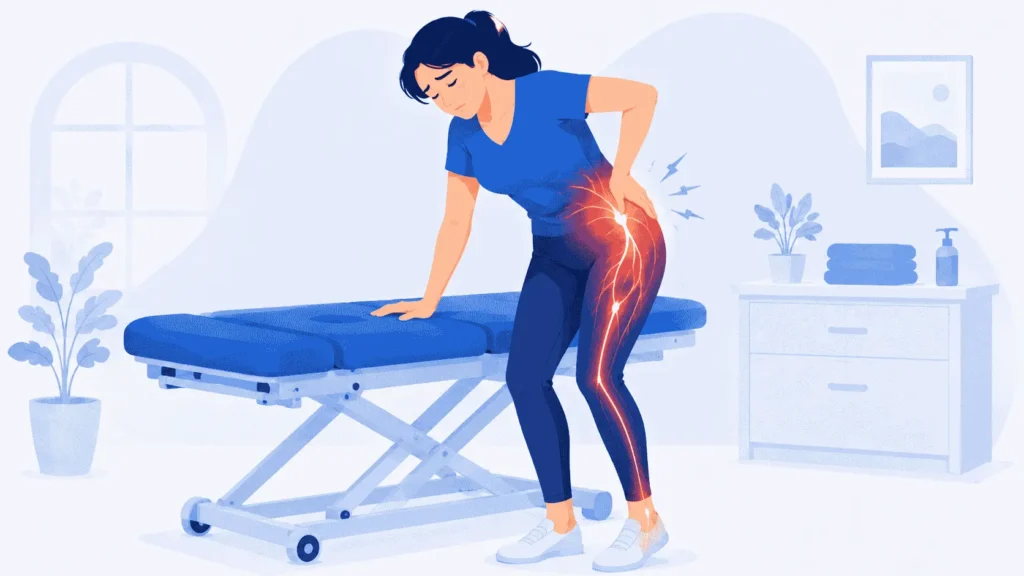
The most recognizable sciatica symptoms in women is pain that begins in the lower back or buttock and travels down one leg.
The pain may feel:
- Sharp
- Burning
- Electric
- Shooting
- Aching
Many women notice the discomfort becomes worse after sitting, standing, or walking for long periods.
2. Lower Back Pain
Although sciatica primarily affects the leg, many women also experience lower back pain.
This pain may:
- Come and go
- Feel stiff in the morning
- Increase after prolonged sitting
- Worsen with bending or lifting
Lower back discomfort often appears before leg symptoms develop.
3. Tingling or Pins-and-Needles Sensation
Another common symptoms of sciatica in women is tingling that travels from the buttock into the thigh, calf, or foot.
Women often describe it as:
- Pins and needles
- Buzzing sensations
- Crawling feelings
- Mild electric shocks
These sensations indicate irritation of the sciatic nerve.
4. Numbness in the Leg or Foot
Sciatic nerve compression may reduce sensation in certain parts of the leg.
Common areas include:
- Calf
- Heel
- Foot
- Toes
Some women notice their foot feels “asleep” even after changing positions.
5. Muscle Weakness
When nerve irritation continues, muscles may become weaker.
You may notice:
- Difficulty climbing stairs
- Trouble standing on one leg
- Reduced balance
- Weak ankle movement
- Difficulty lifting the foot
Muscle weakness should never be ignored and requires professional evaluation.
6. Hip and Buttock Pain
Many women mistake sciatica for hip pain because discomfort often begins deep in the buttock.
Pain may:
- Feel deep and aching
- Worsen while sitting
- Improve after walking
- Increase when driving
This symptom is commonly associated with piriformis syndrome or pelvic dysfunction.
7. Pain That Worsens During Pregnancy
Pregnancy frequently contributes to sciatic nerve symptoms in women.
Growing babies place additional pressure on:
- The pelvis
- Lower spine
- Sciatic nerve
- Surrounding muscles
Hormonal changes also loosen ligaments, making spinal instability more likely.
8. Pain While Sitting
Many women experience worsening pain after sitting for extended periods.
This happens because sitting increases pressure on:
- Lumbar discs
- Pelvis
- Piriformis muscle
- Sciatic nerve
Taking regular movement breaks often helps reduce symptoms.
9. Difficulty Walking or Standing
As sciatica progresses, everyday movement becomes more difficult.
Women may experience:
- Limping
- Difficulty standing upright
- Reduced walking distance
- Increased fatigue
- Balance problems
These symptoms indicate that professional treatment may be beneficial.
What Causes Sciatica in Women?
Several conditions can compress or irritate the sciatic nerve.
The most common causes include:
- Herniated discs
- Degenerative disc disease
- Pregnancy
- Poor posture
- Spinal misalignment
- Muscle tightness
- Piriformis syndrome
- Arthritis
- Spinal stenosis
- Obesity
- Repetitive strain
Identifying the underlying cause is essential for long-term relief.
Why Do Women Experience Sciatica Differently?
Women may develop sciatica because of factors that uniquely affect the spine and pelvis.
These include:
- Pregnancy
- Hormonal changes
- Wider pelvic anatomy
- Pelvic floor dysfunction
- Carrying young children
- Sitting for extended periods
- High-heeled shoes
- Repetitive household activities
Because these factors influence posture and spinal alignment, women may notice symptoms at different stages of life.
How Chiropractic Care May Help Sciatica
Many women ask, “Is chiropractor good for sciatica?”
For many patients, chiropractic care offers a safe, non-invasive approach to relieving sciatic nerve pain by improving spinal alignment and reducing pressure on irritated nerves.
Treatment may include:
- Chiropractic adjustments
- Pelvic alignment
- Soft tissue therapy
- Stretching recommendations
- Mobility exercises
- Postural correction
- Lifestyle guidance
Rather than simply reducing symptoms, chiropractic care focuses on addressing the mechanical cause of sciatica.
Should I See a Chiropractor for Sciatica?
Many people wonder, “Should I see a chiropractor for sciatica?”
If your symptoms are mild to moderate and related to spinal or muscular dysfunction, a chiropractor may help improve mobility and reduce nerve irritation.
You may benefit from chiropractic care if you have:
- Persistent leg pain
- Recurring lower back pain
- Tingling or numbness
- Pain when sitting
- Difficulty walking
- Limited mobility
However, severe weakness, loss of bladder or bowel control, or sudden numbness requires immediate medical attention.
Should I Go to a Doctor or Chiropractor for Sciatica?
Many patients ask, “Should I go to a doctor or chiropractor for sciatica?”
A medical doctor can diagnose serious underlying conditions, prescribe medications when appropriate, or recommend imaging if needed.
A chiropractor focuses on treating musculoskeletal causes of sciatica through non-invasive care.
Depending on your symptoms, both healthcare professionals may play important roles in your recovery.
Benefits of Chiropractic Care for Sciatica
Many women choose a chiropractor for sciatica treatment because care is designed to improve function naturally.
Potential benefits include:
- Reduced nerve pressure
- Better spinal alignment
- Improved mobility
- Reduced muscle tension
- Drug-free care
- Personalized treatment plans
- Better posture
- Long-term symptom management
When Should You Seek Immediate Medical Care?
Seek immediate medical attention if you experience:
- Loss of bladder or bowel control
- Severe leg weakness
- Sudden numbness
- Difficulty walking that rapidly worsens
- Severe trauma
- Fever with back pain
These symptoms may indicate a serious medical condition requiring emergency evaluation.
Meet Dr. Michaelene Callahan
Dr. Michaelene Callahan has more than 24 years of experience helping patients find relief from musculoskeletal conditions, including sciatica, lower back pain, and nerve-related discomfort. After earning her Doctorate of Chiropractic from Life University, she has dedicated her career to providing personalized, non-invasive care that addresses the root cause of pain rather than simply treating symptoms.
At Vitalspine Chiropractic, Dr. Callahan creates individualized treatment plans that may include chiropractic adjustments, posture correction, soft tissue therapies, movement education, and lifestyle recommendations. Her patient-centered approach helps improve spinal function, reduce nerve irritation, restore mobility, and support long-term wellness for patients throughout Sanford and surrounding communities.

Why Choose Vitalspine Chiropractic in Sanford, FL?
If you’re searching for a chiropractor for sciatica Sanford FL, Vitalspine Chiropractic offers compassionate, personalized care designed to help patients move more comfortably without relying solely on medication or invasive procedures.
Patients choose us because we provide:
- Personalized treatment plans
- Comprehensive spinal evaluations
- Non-invasive chiropractic care
- Advanced therapies for nerve-related pain
- Patient-centered wellness approach
- Convenient Sanford, FL location
Ready to Find Relief from Sciatica?
Living with sciatic nerve pain can affect every aspect of your daily life—but you don’t have to manage it alone. Our team is committed to helping you find the cause of your discomfort and create a treatment plan tailored to your needs.
Schedule your Appointment today to learn how personalized chiropractic care may help relieve sciatica symptoms and improve your mobility.
Have questions about your symptoms or treatment options? Contact Us and our friendly team will be happy to assist you.
Frequently Asked Questions
What are the most common sciatica symptoms in women?
The most common sciatica symptoms in women include lower back pain, pain radiating down one leg, tingling, numbness, muscle weakness, hip pain, buttock pain, and difficulty walking. Symptoms can vary depending on how much the sciatic nerve is irritated or compressed.
What causes sciatic nerve symptoms in women?
Sciatic nerve symptoms in women may be caused by herniated discs, spinal misalignment, pregnancy, piriformis syndrome, arthritis, poor posture, or muscle imbalances. A proper evaluation helps determine the underlying cause and guide the most effective treatment.
Is chiropractor good for sciatica?
Many patients find that chiropractic care helps reduce pressure on the sciatic nerve, improve spinal alignment, and restore mobility. A chiropractor develops a personalized treatment plan to address the mechanical causes of sciatica and support long-term pain relief.
Should I see a chiropractor for sciatatica?
If your sciatica is related to spinal alignment, joint dysfunction, or muscle tension, a chiropractor may help improve symptoms naturally. Persistent pain, numbness, or limited mobility should be evaluated by a qualified healthcare professional.
Should I go to a doctor or chiropractor for sciatica?
A medical doctor can diagnose serious conditions and prescribe medications when necessary, while a chiropractor focuses on treating musculoskeletal causes through non-invasive care. Depending on your symptoms, both professionals may be involved in your treatment.
Can pregnancy cause sciatica?
Yes. Pregnancy is a common cause of sciatica in women because hormonal changes, increased body weight, and pelvic shifts place additional pressure on the sciatic nerve, leading to lower back, hip, and leg pain.
How long does sciatica usually last?
Acute sciatica often improves within several weeks with appropriate care, while chronic sciatica may last longer if the underlying cause is not treated. Early intervention can help improve recovery and reduce recurring symptoms.
Can sciatica go away on its own?
Some mild cases improve with rest, activity modification, and conservative treatment. However, persistent or worsening sciatica should be evaluated to identify the underlying cause and prevent long-term complications.
What should I avoid if I have sciatica?
Avoid prolonged sitting, poor posture, heavy lifting, sudden twisting movements, and activities that increase your leg pain. Gentle movement and following your healthcare provider’s recommendations can help support recovery.
How do I find the best chiropractor for sciatica near me?
Look for an experienced chiropractor who provides personalized treatment plans, performs a thorough evaluation, and focuses on addressing the root cause of sciatica through evidence-based, patient-centered care.
Disclaimer
This article is for informational purposes only and should not be considered medical advice, diagnosis, or treatment. Always consult a qualified healthcare provider regarding any medical concerns or before beginning chiropractic treatment for sciatica.