
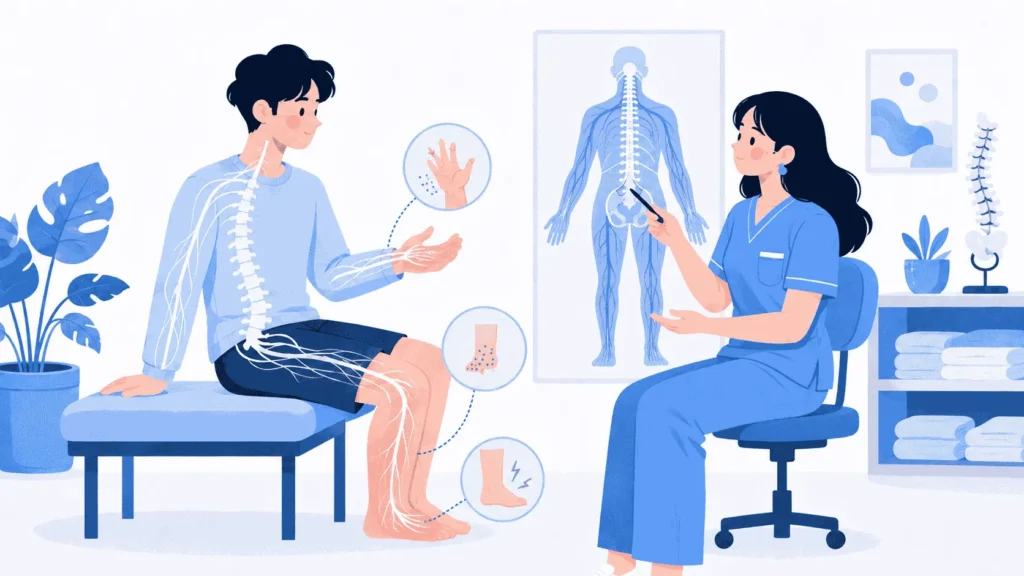
If you are experiencing tingling, numbness, burning, weakness, or unusual sensitivity, these may be early signs of nerve damage or nerve irritation. Recognizing symptoms early can help you seek appropriate evaluation and treatment before they interfere more seriously with movement, sleep, or daily activities.
At Vitalspine Chiropractic in Sanford, FL, we provide personalized, non-invasive care for patients experiencing nerve-related discomfort. Understanding the symptoms of nerve damage can help you determine when professional evaluation may be appropriate.
What Is Nerve Damage?
Nerve damage occurs when nerves are injured, compressed, irritated, or affected by an underlying health condition. Nerves are responsible for transmitting signals between your brain, spinal cord, and the rest of your body, so problems with nerve function can cause changes in sensation, movement, and coordination.
Nerve problems can affect a small area, such as one arm or leg, or involve multiple areas of the body. The symptoms and severity can vary depending on which nerves are affected and what is causing the problem.
What Are the First Signs of Nerve Damage?
The first signs of nerve damage can vary from person to person. Some people initially notice unusual sensations, while others develop weakness or changes in coordination.
Common early signs of nerve damage include:
- Tingling or “pins and needles”
- Numbness or reduced sensation
- Burning or shooting pain
- Increased sensitivity to touch
- Muscle weakness
- Unexplained cramping or twitching
- Problems with balance or coordination
- Changes in temperature sensation
- Pain that travels along an arm or leg
These symptoms do not always mean permanent nerve damage. Nerve compression, inflammation, injuries, and other conditions can produce similar symptoms, which is why proper evaluation is important.
1. Tingling or Pins and Needles
Tingling is one of the most commonly recognized nerve pain symptoms. You may feel a prickling, buzzing, crawling, or pins-and-needles sensation in your hands, feet, arms, or legs.
Occasional tingling can happen when you temporarily put pressure on a nerve. However, recurring or persistent tingling should not be ignored, particularly when it occurs without an obvious cause.
2. Numbness or Loss of Sensation
Numbness occurs when you have reduced or completely lost sensation in an area of the body. You may notice that your hand, foot, leg, or another area feels “asleep” or less sensitive than usual.
Persistent numbness can be associated with nerve irritation or damage. It may also occur with conditions involving nerve compression, so professional evaluation can help determine the underlying cause.
3. Burning or Shooting Nerve Pain
Nerve-related pain can feel very different from typical muscle soreness. Some people describe it as burning, electric, stabbing, shooting, or sharp pain.
The discomfort may travel along the path of a nerve. For example, irritation affecting a nerve in the lower back may cause symptoms that extend into the buttocks or leg.
4. Increased Sensitivity to Touch
Another possible sign is unusual sensitivity, where normal touch feels painful or uncomfortable.
For example, clothing, bedding, or light pressure may cause discomfort in an affected area. This type of altered sensation can occur when nerves are not processing sensory signals normally.
5. Muscle Weakness
Nerves play an important role in controlling muscle movement. When certain nerves are affected, you may notice weakness in an arm, hand, leg, or foot.
You might find it harder to:
- Grip objects
- Lift your foot
- Climb stairs
- Stand from a chair
- Walk normally
- Perform activities you previously found easy
New or worsening weakness should be evaluated by a qualified healthcare professional.
6. Balance or Coordination Problems
Some nerve conditions can affect your ability to sense where your body is positioned. This can contribute to balance or coordination problems.
You may feel unsteady while walking, have difficulty controlling certain movements, or notice that you are more likely to stumble. These symptoms deserve professional evaluation, especially if they develop suddenly.
7. Changes in Temperature or Sensation
Nerve problems can sometimes affect the way you perceive temperature. You may have difficulty distinguishing between hot and cold or notice unusual sensations in your hands or feet.
Reduced sensation can increase the risk of injury because you may not recognize heat, cold, pressure, or other potentially harmful stimuli normally.
Common Symptoms of Nerve Damage
While the first signs can be subtle, peripheral nerve damage symptoms may become more noticeable as nerve dysfunction progresses.
Some possible symptoms include:
- Numbness
- Tingling
- Burning sensations
- Shooting pain
- Muscle weakness
- Increased sensitivity
- Reduced sensation
- Balance problems
- Coordination difficulties
- Muscle cramps or twitching
The location of symptoms can provide useful information, but only a qualified healthcare professional can determine the specific cause.
What Causes Nerve Damage?
Nerve symptoms can have many possible causes. Some are temporary and related to pressure or irritation, while others may require ongoing medical management.
Potential causes include:
Nerve Compression
A compressed or irritated nerve can cause pain, numbness, tingling, or weakness. This can occur in areas such as the neck or lower back.
Injuries
Trauma, repetitive strain, or other injuries can affect nerves directly or cause surrounding swelling and inflammation that places pressure on them.
Diabetes and Metabolic Conditions
Certain metabolic conditions can affect peripheral nerves over time. People with diabetes, for example, may develop nerve-related symptoms in the feet and hands.
Nutritional Deficiencies
Certain nutritional deficiencies may contribute to nerve dysfunction. A healthcare professional can determine whether testing is appropriate based on your symptoms and medical history.
Certain Medications or Medical Conditions
Some medications and health conditions can affect nerve function. If you develop new symptoms, discuss them with your healthcare provider rather than stopping prescribed medication on your own.
When Should You See a Healthcare Professional?
Not every episode of tingling or numbness indicates serious nerve damage. However, persistent, recurring, or worsening symptoms deserve attention.
Consider seeking professional evaluation if you experience:
- Numbness that does not go away
- Recurrent tingling or burning
- Persistent nerve pain
- Increasing muscle weakness
- Balance or coordination problems
- Symptoms that interfere with sleep or daily activities
- Pain or numbness that travels down an arm or leg
Seek Urgent Medical Attention for Sudden Symptoms
Sudden weakness, significant numbness, difficulty speaking, facial drooping, severe dizziness, loss of bladder or bowel control, or sudden difficulty walking can indicate a medical emergency.
If these symptoms occur suddenly, seek emergency medical attention rather than waiting for chiropractic or routine outpatient care.
Can Nerve Damage Be Reversed?
Whether nerve damage can improve depends on its cause, severity, duration, and the nerves involved.
Some nerve irritation or compression may improve when the underlying cause is addressed. Other forms of nerve damage may require long-term management.
The most important step is identifying the underlying cause rather than assuming that every tingling or numb sensation represents permanent damage.
How Is Nerve Pain Evaluated?
A healthcare professional may review your symptoms, medical history, medications, lifestyle factors, and physical examination findings.
Depending on your symptoms, additional evaluation may be recommended. This can help distinguish nerve irritation or compression from other potential causes of pain, numbness, or weakness.
An accurate evaluation is especially important when symptoms are persistent or progressively worsening.
Nerve Pain Treatment in Sanford, FL
If you are experiencing recurring nerve pain symptoms, getting an appropriate evaluation can help determine what may be contributing to your discomfort.
At Vitalspine Chiropractic in Sanford, FL, care is personalized based on each patient’s symptoms and functional needs. Chiropractic care may be considered when nerve-related symptoms are associated with musculoskeletal problems such as spinal or joint dysfunction.
Treatment may include:
- Chiropractic adjustments when appropriate
- Mobility and corrective exercises
- Posture recommendations
- Soft tissue techniques
- Lifestyle guidance
- Functional rehabilitation strategies
Chiropractic care is not appropriate for every cause of nerve damage, so persistent or concerning symptoms should be evaluated by the appropriate healthcare professional.
Can Chiropractic Care Help Nerve Pain?
Chiropractic care may help some patients when nerve symptoms are related to musculoskeletal dysfunction or nerve irritation associated with the spine or surrounding structures.
For example, addressing restricted movement, posture, or mechanical stress may help improve comfort and function in appropriate cases. However, treatment should be based on an individualized evaluation rather than assuming that chiropractic care is appropriate for every type of nerve damage.
If you are searching for a chiropractor for nerve pain Sanford FL, a professional evaluation can help determine whether chiropractic care may be suitable for your symptoms.
Nerve Pain vs. Muscle Pain: What’s the Difference?
Nerve pain and muscle pain can feel similar, but there are some differences.
Nerve pain may feel like:
- Burning
- Electric shocks
- Pins and needles
- Shooting pain
- Numbness
- Pain that follows a specific pathway
Muscle pain may feel like:
- Aching
- Soreness
- Tightness
- Tenderness
- Pain with movement or pressure
Because symptoms can overlap, professional assessment is useful when pain persists or is difficult to explain.
Meet Dr. Michaelene Callahan, DC
Dr. Michaelene Callahan brings more than 24 years of chiropractic experience to personalized, non-invasive patient care. She earned her Doctorate of Chiropractic from Life University and focuses on helping patients improve mobility, function, and overall wellness.
Her patient-centered approach considers individual symptoms, lifestyle factors, movement patterns, and functional needs when developing a care plan. At Vitalspine Chiropractic, the goal is to help patients better understand their condition and identify appropriate strategies for improving comfort and mobility.
Why Choose Vitalspine Chiropractic in Sanford, FL?
If you are searching for neuropathy treatment Sanford FL, nerve damage treatment Sanford FL, or a neuropathy specialist Sanford FL, it is important to choose a provider who takes the time to understand your symptoms.
Vitalspine Chiropractic offers:
- Personalized care plans
- Non-invasive treatment options
- Chiropractic and functional wellness approaches
- Movement and mobility support
- Patient-focused guidance
- Convenient care in Sanford, FL
Our approach focuses on identifying contributing factors and supporting better movement and function whenever chiropractic care is appropriate.
Take the Next Step Toward Better Nerve Health
Persistent tingling, numbness, burning, or weakness should not be ignored. Understanding the first signs of nerve damage can help you recognize changes early and seek appropriate professional guidance.
If you are experiencing nerve-related discomfort in Sanford, FL, Book Your Appointment with Vitalspine Chiropractic to discuss your symptoms and determine whether chiropractic care may be appropriate for your needs.
Have questions about your symptoms or available care? Contact Us to learn more about your options.
Frequently Asked Questions
What are the first signs of nerve damage?
The most common early signs include tingling, numbness, burning, shooting pain, increased sensitivity, or weakness. Persistent nerve pain symptoms should be evaluated to identify whether nerve irritation, compression, or another condition is involved.
What are the symptoms of nerve damage?
Common symptoms of nerve damage include numbness, tingling, burning pain, muscle weakness, altered sensation, and balance problems. Symptoms can vary depending on which nerves are affected and the underlying cause.
What causes tingling and numbness?
Tingling and numbness causes can include temporary nerve pressure, nerve compression, injuries, metabolic conditions, nutritional deficiencies, and other health conditions. Persistent or unexplained symptoms should receive professional evaluation.
Can nerve damage cause muscle weakness?
Yes, nerve dysfunction can affect the signals responsible for muscle movement and may contribute to weakness. New, progressive, or significant weakness should be evaluated promptly by a qualified healthcare professional.
Can nerve damage cause burning pain?
Yes, burning is a common type of nerve pain symptom and may occur with nerve irritation or dysfunction. Burning sensations can also have other causes, so an appropriate evaluation is important for persistent symptoms.
Can chiropractic care help nerve pain?
Chiropractic care may help when nerve-related discomfort is associated with musculoskeletal problems such as spinal or joint dysfunction. An individualized evaluation can help determine whether chiropractic treatment is appropriate for your specific symptoms.
When should I see a doctor for nerve symptoms?
You should seek professional evaluation for persistent, worsening, or unexplained numbness, tingling, pain, or weakness. Sudden weakness, severe numbness, or other sudden neurological symptoms require urgent medical attention.
Is nerve damage always permanent?
No, nerve symptoms are not necessarily permanent. Recovery depends on the underlying cause, severity, duration, and overall health, so identifying and addressing the cause is an important part of treatment.
Can neuropathy cause numbness and tingling?
Yes, neuropathy can cause numbness, tingling, burning, and other abnormal sensations, particularly in the hands or feet. The underlying cause should be evaluated to determine the most appropriate treatment approach.
Where can I get nerve pain treatment in Sanford, FL?
If you are looking for nerve pain treatment Sanford FL, Vitalspine Chiropractic offers personalized evaluation and non-invasive chiropractic care when appropriate. Persistent or complex nerve symptoms may also require coordination with your medical healthcare provider.
Disclaimer
This content is for informational purposes only and does not constitute medical advice, diagnosis, or treatment. Nerve symptoms can have many possible causes. Always consult a qualified healthcare professional for appropriate evaluation, diagnosis, and treatment recommendations. If you experience sudden or severe neurological symptoms, seek urgent medical attention.