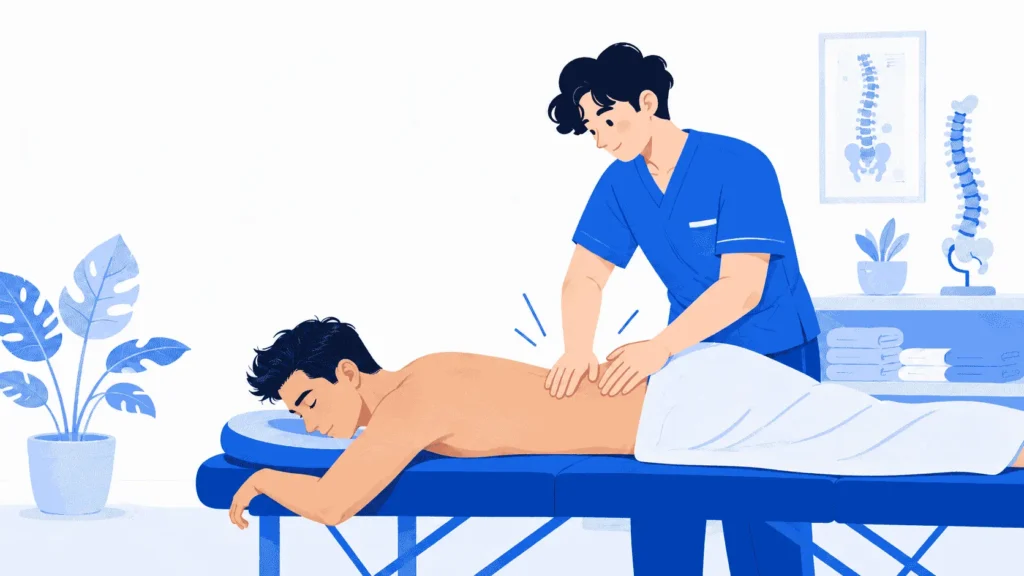
Back pain can develop after long periods of sitting, repetitive movements, strenuous exercise, lifting, poor movement habits, or muscle overuse. When tight or overworked muscles contribute to discomfort, massage therapy may be one option for improving comfort and helping the body relax.
Research suggests that massage therapy for back pain may provide short-term benefits for some people with low-back pain, although the quality of evidence varies and massage should not be viewed as a cure for every cause of back pain.
Different massage techniques use different amounts of pressure, movement, and tissue work. The right approach depends on your symptoms, comfort level, medical history, and treatment goals.
Here are seven commonly used massage techniques that may be incorporated into a personalized back-care plan.
1. Swedish Massage
Swedish massage is one of the gentler forms of therapeutic massage. It commonly uses long, flowing strokes, kneading, and rhythmic movements across the muscles.
For someone whose back feels tight after sitting, working, exercising, or dealing with everyday stress, Swedish-style massage may be a comfortable starting point.
A therapist may use techniques such as:
- Long gliding strokes across the back
- Gentle kneading of tight muscles
- Circular movements around muscular areas
- Light rhythmic tapping
- Gradually increasing or decreasing pressure
Because the pressure is typically moderate rather than intense, Swedish massage may be appropriate for people who want relaxation alongside gentle muscular work.
It can also be useful when a person is sensitive to deeper pressure.
2. Deep Tissue Massage for Back Pain
Deep tissue massage for back pain uses slower movements and more focused pressure than a typical relaxation massage.
Instead of working primarily on superficial muscles, the therapist may gradually apply pressure to deeper muscular and connective tissue layers.
This technique may be considered when someone has persistent muscular tightness around areas such as the:
- Lower back
- Upper back
- Shoulder blades
- Hips
- Gluteal muscles
Deep pressure does not mean that massage should be painfully aggressive.
Effective massage should be adjusted to the person’s comfort level. Excessive pressure can leave an already sensitive area feeling more irritated rather than better.
Communicate with your therapist throughout the session if the pressure feels sharp, uncomfortable, or excessive.
3. Myofascial Release
Fascia is connective tissue that surrounds muscles and other structures throughout the body.
Myofascial techniques generally involve slow, sustained pressure or stretching movements intended to address areas that feel restricted or tight.
Unlike traditional massage strokes, the therapist may hold pressure on an area while waiting for the tissues to gradually relax.
Myofascial work may focus on areas around the:
- Lumbar muscles
- Hips
- Glutes
- Mid-back
- Shoulders
Mayo Clinic notes that myofascial release is a manual therapy sometimes used for back pain, although research has not established that it works for every person or every cause of pain.
It may therefore be used as one component of a broader treatment or rehabilitation plan rather than as a standalone cure.
4. Trigger Point Therapy
Some people notice small areas in a muscle that feel particularly tight or tender.
Trigger point techniques involve applying focused pressure to these sensitive muscular areas for a controlled period before gradually releasing the pressure.
For back discomfort, massage therapists may examine muscles around the:
- Lower back
- Gluteal region
- Hips
- Upper back
- Shoulder blades
The goal is not to press as hard as possible.
Instead, the therapist should use controlled pressure while monitoring how the tissue and the patient respond.
Trigger point work may feel more focused than a relaxation massage, so communication about pressure and sensitivity is especially important.
5. Sports Massage
Despite the name, sports massage is not limited to professional athletes.
It may be useful for active adults whose back discomfort is related to exercise, repetitive movement, physical work, or changes in training volume.
Sports massage may combine several techniques, including:
- Compression
- Kneading
- Assisted stretching
- Deep tissue techniques
- Mobility work
For example, a therapist may work not only on the lower back but also on the glutes, hips, hamstrings, or upper back when those areas are contributing to muscular tension.
Sports massage is generally tailored to the individual’s activity level and movement demands rather than following one standard routine.
6. Gentle Soft-Tissue Massage
Not every painful back needs deep pressure.
When muscles are particularly sensitive or irritated, lighter soft-tissue work may be more comfortable.
A therapist may use slow, gentle strokes around the affected area rather than directly applying strong pressure to the most painful point.
This type of massage for lower back pain relief may be considered for people who:
- Prefer lighter pressure
- Are new to massage therapy
- Feel sore after physical activity
- Have sensitive muscles
- Find deep pressure uncomfortable
A good massage session should be adapted to the person rather than forcing every patient into the same treatment style.
7. Assisted Stretching and Massage
Massage and gentle stretching are sometimes combined within the same session.
After working on tight muscles, a massage therapist may guide a patient through controlled stretches for areas such as the:
- Hip flexors
- Hamstrings
- Glutes
- Upper back
- Shoulders
This combination may help someone feel more mobile after the session, particularly when stiffness extends beyond the back itself.
However, stretching should remain gentle and should not reproduce sharp pain, numbness, tingling, or worsening symptoms down the leg.
What Are the Therapeutic Massage Benefits for Back Pain?
The potential therapeutic massage benefits for back pain vary depending on why the pain is occurring.
For some people, massage may temporarily help with:
- Muscle tension
- Stiffness
- Relaxation
- Comfortable movement
- Short-term pain reduction
- Stress associated with persistent discomfort
Evidence reviews have found that massage may offer some short-term improvement for low-back pain, but research quality is limited, and long-term benefits have not been firmly established.
That distinction matters.
Massage may help someone feel or move better without necessarily correcting the underlying cause of their symptoms.
Is Deep Tissue Massage Always Better for Back Pain?
No.
Stronger pressure does not automatically produce better results.
Some people respond well to deep tissue massage for back pain, while others feel better with moderate or gentle pressure.
The appropriate intensity depends on factors including:
- How sensitive the tissues are
- Whether the pain is new or longstanding
- The person’s comfort level
- Previous injuries
- The suspected source of the discomfort
Tell your massage therapist immediately if pressure causes sharp, burning, electric, or radiating pain.
Therapeutic massage should feel purposeful, not like something you simply have to endure.
Can Massage Provide Natural Back Pain Relief?
Massage is often considered by people interested in natural back pain relief because it does not require medication or surgery.
For some cases of uncomplicated back pain, conservative approaches such as maintaining appropriate activity, exercise, heat, and certain manual therapies may be considered before more invasive treatments.
The American College of Physicians included massage among several non-drug options for acute or subacute nonradicular low-back pain in its clinical guideline.
However, “natural” does not mean appropriate for every condition.
Back pain can have many different causes. Massage cannot replace medical evaluation when symptoms suggest nerve involvement, trauma, infection, or another underlying health problem.
Massage Therapy vs. Stretching for Back Pain
Massage and stretching serve different purposes and are often complementary.
Massage primarily involves a therapist manually working with muscles and soft tissues.
Stretching involves actively or passively moving muscles and joints through a comfortable range.
For someone with muscular stiffness, a treatment plan might include:
- Massage to help reduce muscular tension.
- Gentle mobility exercises to restore comfortable movement.
- Strengthening exercises to support the back.
- Changes to sitting, lifting, or working habits.
- Regular physical activity as tolerated.
Massage alone usually should not be the entire strategy for recurring back pain.
How Often Should You Get Massage Therapy for Back Pain?
There is no universal schedule.
Someone experiencing temporary muscular tightness may need a very different approach from someone managing longstanding back pain.
Treatment frequency may depend on:
- Severity of symptoms
- How long symptoms have been present
- Activity level
- Treatment goals
- Response to previous sessions
- Other healthcare treatments being used
Rather than automatically scheduling frequent treatments indefinitely, your therapist should periodically evaluate whether massage is producing meaningful improvement.
What Should You Tell Your Massage Therapist?
Before beginning treatment, give your therapist an accurate health history.
Mention:
- Where your pain is located
- When the pain began
- What movements worsen or improve it
- Previous injuries
- Recent surgeries
- Current medical conditions
- Medications that may affect bruising or bleeding
- Numbness or tingling
- Pain traveling into your leg
- Areas you do not want massaged
These details allow a massage therapist in Sanford, FL or elsewhere to determine whether treatment needs to be modified or whether medical evaluation would be more appropriate.
When Should You Avoid Massage for Back Pain?
Massage may not be appropriate over certain injuries or medical conditions.
Professional evaluation should take priority when pain follows significant trauma or is associated with neurological or systemic symptoms.
Seek prompt medical attention if back pain is accompanied by symptoms such as:
- New bowel or bladder problems
- Numbness around the groin or saddle area
- Significant or worsening leg weakness
- Fever
- Unexplained weight loss
- Severe pain after a major fall or accident
- Persistent pain that does not improve
- Significant numbness or tingling
Back pain accompanied by new bowel or bladder changes, severe weakness, or numbness around the groin can require urgent medical assessment. Mayo Clinic also recommends medical evaluation for back pain that persists despite self-care or occurs with other concerning symptoms.
Choosing Massage Therapy in Sanford, FL
If you are searching for massage therapy in Sanford, FL, choose a provider based on more than location alone.
A qualified massage therapist should:
- Ask about your symptoms and medical history
- Discuss your treatment goals
- Adjust pressure according to your comfort
- Explain the techniques being used
- Avoid making unrealistic promises
- Recognize symptoms that require medical referral
- Modify treatment when something causes pain
- Work with other healthcare professionals when appropriate
People searching for therapeutic massage in Sanford, FL should also ask whether the provider has experience working with patients who have musculoskeletal or back-related complaints.
Massage for Back Pain in Sanford, Florida
Back pain does not always come from the exact location where you feel discomfort.
For example, muscular tightness around the hips, glutes, upper back, or shoulders may influence how comfortable the back feels during movement.
That is why a personalized back pain massage in Sanford, FL may involve working on several related areas rather than repeatedly applying pressure to one painful spot.
The treatment should be based on an individual assessment and adjusted according to your response.
Looking for a Massage Therapist in Sanford, FL?
If muscular tightness, stiffness, or overuse is contributing to your discomfort, therapeutic massage may be one conservative option worth discussing.
At Vitalspine Chiropractic, our goal is to understand your symptoms before recommending care. Depending on your needs, your treatment plan may include therapeutic massage, mobility work, exercise recommendations, or coordination with another healthcare provider.
If you are considering massage for back pain in Sanford, Florida, contact or book an appointment with Vitalspine Chiropractic in Sanford, Florida to learn whether massage therapy may be appropriate for you.
Frequently Asked Questions About Massage Therapy for Back Pain
1. Can massage therapy help back pain?
Massage therapy may provide short-term relief for some people with low-back pain, particularly when muscular tightness or overuse contributes to their symptoms. Research is mixed, however, and massage does not address every possible cause of back pain.
2. What type of massage is best for lower back pain?
There is no single best technique for everyone. Swedish massage, deep tissue techniques, myofascial release, trigger point work, and gentle soft-tissue massage may all be considered depending on the person’s symptoms and tolerance.
3. Is deep tissue massage good for lower back pain?
Deep tissue massage for back pain may feel helpful when deeper muscular tension is present, but it should not be excessively painful. Some people respond better to lighter or moderate pressure.
4. How long does massage for lower back pain relief last?
The response varies. Some people notice temporary improvement in stiffness or discomfort after treatment, while others experience little change. Evidence supporting massage for low-back pain generally points more strongly toward short-term rather than proven long-term relief.
5. Can massage make back pain worse?
Yes, particularly if excessive pressure is applied to an irritated or injured area. Stop the session or ask the therapist to reduce pressure if massage causes sharp, burning, radiating, or significantly worsening pain.
6. How often should I have therapeutic massage for back pain?
There is no standard frequency that suits everyone. Your schedule should depend on your symptoms, goals, health history, response to treatment, and the recommendations of appropriately qualified healthcare professionals.
7. Can massage help lower back pain caused by sitting?
Massage may temporarily reduce muscular tension associated with prolonged sitting. Long-term management may also require regular movement breaks, exercise, ergonomic changes, and improved work habits.
8. Should I choose Swedish or deep tissue massage for back pain?
Swedish massage generally uses gentler, flowing techniques, while deep tissue massage uses slower and more focused pressure. The better choice depends on your sensitivity, symptoms, and treatment goals.
9. Is massage considered natural back pain relief?
Massage is a drug-free, non-surgical therapy and may form part of a conservative approach to natural back pain relief. However, significant or persistent pain should still be evaluated to determine whether another form of treatment is needed.
10. Where can I find therapeutic massage in Sanford, FL?
When choosing therapeutic massage in Sanford, FL, look for a qualified therapist who evaluates your symptoms, adjusts treatment to your comfort, communicates clearly, and recognizes when a healthcare referral is appropriate.
This article is intended for general educational purposes only and is not a substitute for medical diagnosis or individualized treatment. Seek professional medical care for severe, persistent, worsening, or neurologic symptoms.