
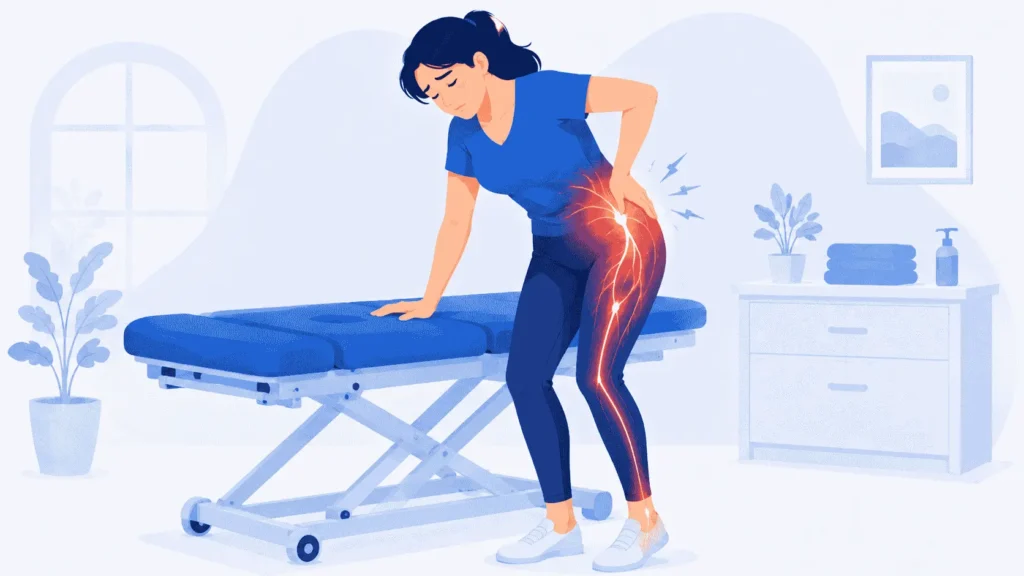
A sharp pain shooting down your leg. Tingling in your foot. An ache in your lower back that gets worse after sitting for hours.
These symptoms can be uncomfortable, especially when you aren’t sure what’s causing them.
One possible explanation is sciatica, a condition involving irritation or compression of nerve roots in the lower back.
Although sciatica can affect anyone, women may have additional questions about symptoms during pregnancy, changes in physical activity, and discomfort around the hips or pelvis.
The symptoms of sciatica in women are generally similar to those experienced by men, but recognising the pattern of pain and associated warning signs can help you decide when to seek care.
Here are nine symptoms worth understanding.
What Is Sciatica?
Sciatica refers to pain and other symptoms associated with irritation of nerve roots in the lower spine that contribute to the sciatic nerve.
These nerves help provide sensation and muscle function to parts of the leg and foot.
When a nerve root becomes irritated, pain may travel from the lower back or buttock into the leg.
Sciatica is often associated with:
- Lumbar disc herniation
- Spinal stenosis
- Age-related changes affecting spinal nerves
Not every episode of back or hip pain is sciatica. The location of symptoms, neurological findings, and medical history all help determine the likely cause.
What Are the Top 9 Sciatica Symptoms in Women?
1. Pain That Travels Down One Leg
One of the most recognisable signs of sciatica is pain that travels from the lower back or buttock into one leg.
It may feel:
- Sharp
- Shooting
- Burning
- Electric-shock-like
- Deep and aching
The pain may extend into the thigh, calf, or foot.
Although sciatica typically affects one side, symptoms can occasionally occur in both legs.
Pain travelling below the knee is an important clue, particularly when accompanied by tingling or numbness.
2. Lower Back Pain
Some women experience lower back discomfort alongside radiating leg pain.
The back pain may:
- Feel worse after prolonged sitting
- Increase during bending or lifting
- Come and go throughout the day
- Occur alongside buttock or leg discomfort
However, sciatica does not always cause severe back pain.
For some people, leg symptoms are more noticeable than discomfort in the lower spine.
3. Tingling or Pins-and-Needles Sensations
Tingling is another common symptom of nerve irritation.
You may notice unusual sensations in your:
- Buttock
- Thigh
- Calf
- Foot
- Toes
Some people describe the feeling as buzzing, prickling, or mild electric shocks.
Tingling can occur alongside pain or appear intermittently.
Persistent or worsening symptoms deserve professional assessment.
4. Numbness in the Leg or Foot
Sciatica can sometimes affect sensation in areas supplied by the irritated nerve root.
You might notice that part of your leg or foot feels less sensitive than usual.
For example, numbness may affect the outer calf, top of the foot, or other areas depending on the nerve involved.
However, numbness can have several causes, including peripheral nerve problems.
It should not automatically be assumed to be sciatica.
5. Weakness in the Leg or Foot
Muscle weakness is a particularly important symptom.
You may notice:
- Difficulty lifting the front of your foot
- Trouble standing on your toes
- A leg that feels unusually weak
- Difficulty performing movements that were previously easy
True muscle weakness differs from avoiding movement because it hurts.
New or progressive weakness requires prompt medical evaluation.
Sudden significant weakness, particularly with other neurological symptoms, may require emergency assessment.
6. Pain Around the Buttock or Back of the Hip
Sciatica often produces pain through the buttock, sometimes extending toward the back of the thigh.
This discomfort may be mistaken for a hip joint problem.
However, the location can help distinguish different conditions.
For example:
- Deep groin pain may suggest a hip joint condition.
- Outer hip pain may be associated with gluteal tendon problems.
- Buttock pain travelling into the leg may suggest nerve irritation.
A clinical assessment can help identify the likely source.
7. Sciatica-Like Pain During Pregnancy
Pregnancy can bring changes in posture, movement, and loading that contribute to lower back, pelvic, and leg discomfort.
Some pregnant women experience genuine sciatica, but not all pregnancy-related pain is caused by sciatic nerve compression.
Pelvic girdle pain and other musculoskeletal conditions can produce similar symptoms.
If you experience persistent radiating leg pain during pregnancy, speak with your maternity healthcare professional.
Treatment choices should account for your stage of pregnancy and individual medical history.
8. Pain That Worsens When Sitting
Some people with disc-related sciatica notice increased pain after sitting for extended periods.
You may feel more discomfort while:
- Working at a desk
- Driving
- Sitting on a sofa
- Bending forward from a seated position
However, this pattern is not universal.
Some people with lumbar spinal stenosis experience the opposite pattern, with symptoms worsening during standing or walking and easing when sitting.
The way your symptoms respond to different positions can provide useful clues.
9. Difficulty Walking or Standing
Sciatica may affect your ability to walk comfortably, particularly when leg pain or weakness is present.
You may notice:
- Shorter walking distances
- Changes in your walking pattern
- Pain that increases during activity
- Difficulty standing for extended periods
- Reduced confidence in the affected leg
These symptoms should be assessed if they persist or worsen.
Rapidly deteriorating walking ability or significant weakness requires urgent medical attention.
Do Sciatica Symptoms Differ Between Women and Men?
Sciatica generally produces the same core neurological symptoms regardless of sex.
These include radiating leg pain, tingling, numbness, and sometimes weakness.
However, certain circumstances may influence how women experience or interpret pain.
Pregnancy and Postpartum Changes
Pregnancy and the postpartum period can involve back pain, pelvic girdle pain, and changes in physical activity.
These symptoms may overlap with sciatica but do not necessarily indicate sciatic nerve compression.
Hip and Pelvic Conditions
Some hip and pelvic conditions may produce discomfort that resembles sciatica.
An accurate diagnosis helps distinguish nerve-related symptoms from other causes.
Daily Activities
Prolonged sitting, repetitive lifting, and sudden increases in physical activity can aggravate musculoskeletal symptoms in anyone.
These factors are not unique causes of sciatica in women.
What Causes Sciatica Symptoms in Women?
The most common causes involve irritation of nerve roots in the lumbar spine.
Herniated Lumbar Disc
A disc herniation may irritate or compress a nearby nerve root, causing pain that travels into the leg.
Lumbar Spinal Stenosis
Narrowing around spinal nerves may produce leg pain, tingling, or weakness, especially during standing or walking.
Age-Related Spinal Changes
Changes affecting discs and spinal joints can sometimes contribute to nerve irritation.
However, these findings are common even in people without symptoms.
Other Conditions That Mimic Sciatica
Hip joint problems, peripheral nerve disorders, and certain pelvic conditions can cause similar pain.
This is why symptoms alone may not be enough to establish the diagnosis.
How Can You Tell If It’s Sciatica or Ordinary Back Pain?
The most useful distinction is often whether symptoms travel into the leg.
| Ordinary mechanical back pain | Possible sciatica |
| Pain mainly around the lower back | Pain often travels into the buttock and leg |
| May feel aching or stiff | May feel shooting, burning, or electric |
| Usually no nerve-related symptoms | May involve tingling or numbness |
| Typically no neurological weakness | Can involve muscle weakness |
This comparison is only a general guide. A healthcare professional may need to examine you to determine the cause.
When Are Sciatica Symptoms in Women Serious?
Most cases of sciatica do not require emergency treatment, but certain symptoms should never be ignored.
Seek Emergency Medical Care If You Experience:
- New difficulty controlling your bladder or bowels
- Difficulty starting urination or loss of bladder sensation
- Numbness around the genitals, groin, or inner thighs
- Severe or rapidly worsening weakness
- Significant neurological symptoms affecting both legs
These symptoms may indicate cauda equina syndrome or another serious condition requiring immediate assessment.
Arrange a Medical Appointment If:
- Pain persists or worsens
- Tingling or numbness continues
- Leg symptoms interfere with daily activities
- You develop new weakness
- Walking becomes increasingly difficult
Early assessment can help identify the cause and guide appropriate management.
How Are Sciatica Symptoms Diagnosed?
A healthcare professional may begin by asking about:
- Where your pain starts and travels
- How long symptoms have been present
- Whether you have numbness or weakness
- Activities that aggravate symptoms
- Previous back problems
- Pregnancy or other relevant health circumstances
The physical examination may include checking muscle strength, sensation, reflexes, and movements that reproduce symptoms.
Not everyone needs imaging.
MRI may be considered when symptoms are severe, persistent, or associated with concerning neurological findings.
What Can Help Relieve Mild Sciatica Symptoms?
If your symptoms are mild and there are no warning signs, conservative management may be appropriate.
Stay Gently Active
Short walks and comfortable movement may help maintain activity.
Avoid prolonged bed rest unless specifically advised by a healthcare professional.
Change Positions Regularly
If sitting aggravates your symptoms, take regular breaks to stand or walk.
Modify Painful Activities
Temporarily reduce movements that significantly increase radiating leg pain.
Try Comfortable Sleeping Positions
Some people find relief by lying on their side with a pillow between the knees or on their back with support beneath the knees.
Consider Appropriate Rehabilitation
Exercise-based rehabilitation may help some people manage symptoms and gradually return to normal activities.
Treatment should be matched to the cause and severity of symptoms.
Can Chiropractic Care Help Women with Sciatica?
Some women explore chiropractic care as part of conservative management for lower back and leg pain.
A chiropractor may assess musculoskeletal symptoms and provide selected advice, exercises, or manual therapies when appropriate.
However, evidence specifically supporting chiropractic adjustments for sciatica is limited.
Chiropractic manipulation is not suitable for every patient and should not replace medical evaluation when neurological warning signs are present.
For a detailed discussion of treatment suitability, read Can a Chiropractor Help with Sciatica?.
You can also learn more about sciatica care at VitalSpine.
Sciatica Care at VitalSpine Chiropractic in Sanford, FL
If you’re experiencing lower back pain, tingling, or discomfort travelling into your leg, understanding the cause is an important first step.
At VitalSpine Chiropractic in Sanford, FL, Dr. Michaelene Callahan, DC, provides chiropractic and musculoskeletal care.

An appropriate assessment can help determine whether conservative care may be suitable or whether another healthcare professional should be involved.
To discuss available services, book an appointment.
Frequently Asked Questions
1. Can sciatica affect both legs in women?
Yes, although sciatica more commonly affects one leg. New symptoms affecting both legs, especially with weakness, numbness around the groin, or bladder or bowel changes, require urgent medical assessment.
2. Can sciatica cause pelvic pain in women?
Sciatica typically causes pain in the lower back, buttock, and leg. Pelvic pain may have other causes, including pregnancy-related pelvic girdle pain or gynecological conditions, so it should not automatically be attributed to sciatica.
3. Is sciatica more common during pregnancy?
Pregnancy can cause back and pelvic discomfort, but genuine nerve-root-related sciatica is less common than general pregnancy-related musculoskeletal pain. Persistent radiating leg symptoms should be discussed with a maternity healthcare professional.
4. Can sciatica symptoms come and go?
Yes. Symptoms may fluctuate depending on the underlying condition, activities, and positions. Recurrent or worsening neurological symptoms should be evaluated.
5. How long do sciatica symptoms usually last?
Many cases improve over several weeks to a few months, although recovery varies. Persistent pain, numbness, or weakness may require further assessment.
Disclaimer
This article is for general educational purposes only and does not replace professional medical advice, diagnosis, or treatment. Seek appropriate medical care for persistent symptoms and urgent assessment for neurological warning signs.


