
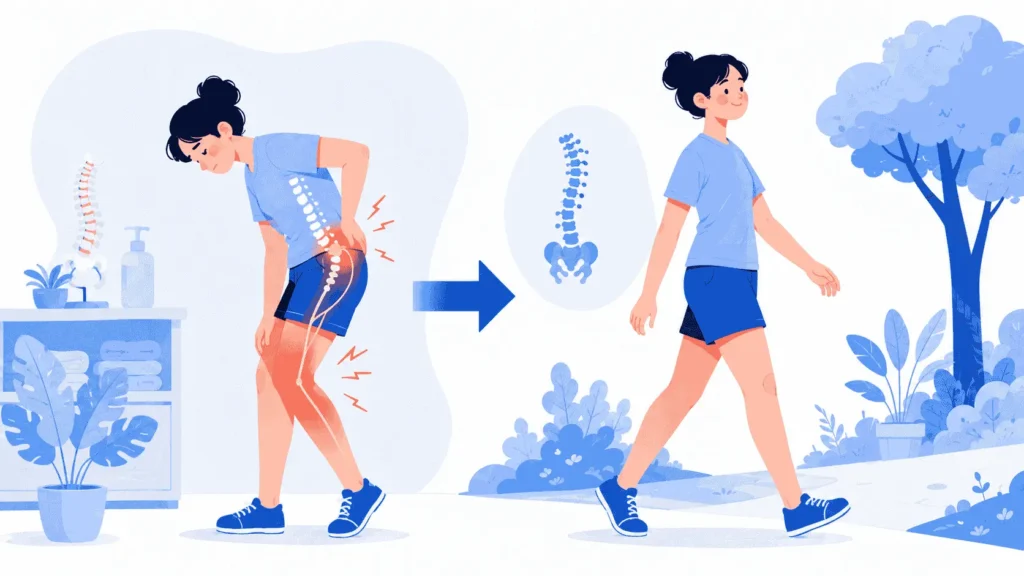
A sharp pain shoots from your lower back into your leg. It gets worse when you sit, bend, or stand for too long. Maybe it disappears for a few days, only to return when you least expect it.
When this keeps happening, it’s natural to wonder: Is sciatica permanent, or can it go away naturally?
The good news is that sciatica is not usually permanent. Many people improve over several weeks, sometimes without invasive treatment. However, recovery depends on what’s irritating the nerve, how severe the symptoms are, and whether neurological problems are developing.
Some people recover completely. Others experience recurring episodes or symptoms that last for months.
Understanding what influences recovery can help you recognise what’s normal and when it’s time to seek professional care.
Is Sciatica Permanent?
For most people, sciatica is not permanent.
Sciatica describes pain and other symptoms caused by irritation or compression of nerve roots in the lower back. These nerve roots contribute to the sciatic nerve, which travels through the buttock and down the leg.
When the irritation improves, symptoms may gradually settle.
For example, some cases associated with a lumbar disc herniation improve as inflammation decreases and the body naturally changes or absorbs part of the herniated disc material over time.
However, recovery isn’t identical for everyone.
Some people experience persistent symptoms because of ongoing nerve compression, spinal stenosis, or other underlying conditions.
Long-lasting pain does not automatically mean permanent nerve damage, but persistent numbness or weakness deserves medical evaluation.
How Long Does Sciatica Usually Last?
The recovery timeline varies.
Many people with acute sciatica begin improving within a few weeks, although complete recovery can take longer.
| Recovery stage | What you might experience |
| First few days | Pain may be intense or fluctuate with movement |
| First several weeks | Many people notice gradual improvement |
| 6–12 weeks | Some recover substantially, while others still have symptoms |
| Beyond 3 months | Persistent symptoms may require reassessment and a longer-term management plan |
These are general patterns, not guaranteed recovery deadlines.
The underlying cause, symptom severity, and neurological findings matter more than any fixed timeline.
Can Sciatica Go Away Naturally Without Treatment?
Yes. Sciatica can sometimes improve on its own, particularly when symptoms are mild and the underlying nerve irritation settles.
Many cases associated with lumbar disc problems improve without surgery.
Natural recovery doesn’t necessarily mean doing nothing, though.
You may benefit from staying gently active, modifying aggravating activities, and gradually returning to your usual routine.
What Helps Support Natural Recovery?
Gentle movement: Short walks or comfortable activities can help you avoid unnecessary inactivity.
Changing positions: If sitting aggravates your symptoms, regular movement breaks may be useful.
Activity modification: Temporarily reduce heavy lifting, repeated bending, or other movements that significantly increase radiating leg pain.
Appropriate exercise: A healthcare professional may recommend exercises suited to your symptoms and diagnosis.
Time and monitoring: Gradual improvement is reassuring, but worsening numbness or weakness should not be ignored.
Prolonged bed rest is generally not recommended for uncomplicated sciatica.
Why Does Sciatica Come and Go?
One of the most frustrating things about sciatica is how unpredictable it can feel.
You may wake up feeling better, only to experience pain again after sitting at work or lifting something heavy.
Several factors can contribute to fluctuating symptoms.
1. Changes in Nerve Irritation
Inflammation and mechanical irritation around a spinal nerve can change over time.
This may explain why pain is stronger on some days than others.
2. Prolonged Sitting
Some people with disc-related sciatica find that sitting increases discomfort.
However, not every type of sciatica behaves this way.
For example, symptoms associated with lumbar spinal stenosis may worsen during standing or walking and improve when sitting.
3. Sudden Changes in Activity
Returning too quickly to demanding exercise or heavy lifting may aggravate symptoms during recovery.
4. An Underlying Condition That Persists
Conditions such as spinal stenosis or recurring disc-related problems may contribute to repeated episodes.
5. Changes in Pain Sensitivity
Sleep, stress, and general health can influence how strongly pain is experienced.
A flare-up doesn’t necessarily mean new structural damage has occurred.
Can Sciatica Become Chronic?
Yes. Some people develop persistent sciatica lasting longer than three months.
Chronic sciatica may involve:
- Ongoing leg pain
- Recurrent tingling or numbness
- Difficulty sitting or walking comfortably
- Reduced activity tolerance
- Sleep disruption
- Periodic flare-ups
However, chronic does not necessarily mean permanent.
Even when symptoms last for months, improvement may still be possible.
A healthcare professional can reassess the diagnosis and discuss appropriate treatment options.
Can Sciatica Cause Permanent Nerve Damage?
In some cases, prolonged or severe nerve compression can cause lasting neurological problems.
Possible signs include persistent loss of sensation or muscle weakness.
However, pain intensity alone does not reliably indicate whether permanent nerve damage is occurring.
New or progressive weakness is particularly important to assess promptly.
If you notice difficulty lifting your foot, worsening leg strength, or spreading numbness, seek medical evaluation.
Does Sciatica Pain in the Foot Mean It’s Getting Worse?
Not necessarily.
Sciatica can cause symptoms that travel into the calf, ankle, foot, or toes because different nerve roots supply different parts of the lower limb.
You may experience:
- Burning sensations
- Tingling
- Shooting pain
- Numbness
- Changes in sensation
Pain extending into the foot does not automatically mean permanent nerve damage.
However, persistent numbness, increasing weakness, or difficulty controlling foot movement should be assessed.
What Factors Can Affect Sciatica Recovery?
Several factors influence how quickly symptoms improve.
The Underlying Cause
A disc-related episode may follow a different recovery pattern from lumbar spinal stenosis.
Severity of Neurological Symptoms
Pain without weakness may require a different approach from symptoms involving progressive loss of strength.
Duration of Symptoms
Long-standing symptoms sometimes require more comprehensive management.
General Health and Activity
Your overall health, activity level, and ability to remain comfortably active may influence recovery.
Access to Appropriate Care
An accurate diagnosis helps ensure that serious conditions are recognised and suitable treatment options are considered.
When Should You Stop Waiting for Sciatica to Improve?
If your symptoms are mild and gradually improving, conservative management may be reasonable.
However, arrange a medical assessment if:
- Pain persists for several weeks without improvement
- Symptoms repeatedly return
- Numbness or tingling continues
- Pain interferes with sleep or daily activities
- Walking becomes increasingly difficult
- You develop new weakness
When Is Sciatica an Emergency?
Seek emergency medical care if you experience:
- New loss of bladder or bowel control
- Difficulty starting urination or reduced bladder sensation
- Numbness around the groin, genitals, or inner thighs
- Severe or rapidly progressing leg weakness
- Significant neurological symptoms affecting both legs
These may indicate serious nerve compression, including cauda equina syndrome.
Do not wait for these symptoms to resolve naturally.
What If Sciatica Doesn’t Go Away Naturally?
Persistent sciatica does not automatically mean surgery is necessary.
A healthcare professional may recommend different approaches depending on the diagnosis.
These can include:
- Exercise-based rehabilitation
- Physical therapy
- Appropriate pain management
- Activity and lifestyle adjustments
- Further imaging when clinically indicated
- Specialist assessment
- Selected procedures or surgery in appropriate cases
Treatment decisions should be based on symptoms, neurological findings, and the underlying condition.
Can Chiropractic Care Help with Sciatica Recovery?
Some people explore chiropractic care as part of conservative management for lower back and leg symptoms.
A chiropractor may assess musculoskeletal complaints and provide selected advice, exercises, or manual therapies when appropriate.
However, evidence specifically supporting chiropractic adjustments for sciatica is limited, and manipulation is not suitable for every patient.
Chiropractic treatment should not be presented as a guaranteed way to release a compressed nerve or permanently prevent recurrence.
For a detailed discussion, read Can a Chiropractor Help with Sciatica?.
You can also explore sciatica care at VitalSpine.
Sciatica Care at VitalSpine Chiropractic in Sanford, FL
If your sciatica keeps returning or isn’t improving as expected, understanding the cause can help you decide what to do next.
At VitalSpine Chiropractic in Sanford, FL, Dr. Michaelene Callahan, DC, provides chiropractic and musculoskeletal care.

An assessment can help determine whether conservative chiropractic care may be appropriate or whether referral to another healthcare professional is needed.
To discuss available services, book an appointment.
Frequently Asked Questions
1. Can sciatica disappear completely?
Yes. Many people recover from an episode of sciatica and return to normal activities without ongoing symptoms. However, some experience recurrence.
2. Can sciatica last for years?
Yes. Some people experience persistent or recurring symptoms over several years. Long-lasting symptoms do not always mean permanent nerve damage, but they warrant medical evaluation.
3. Can sciatica return after it goes away?
Yes. Recurrence is possible, particularly when underlying spinal conditions or aggravating factors remain. A new episode does not necessarily indicate a serious injury.
4. Can a herniated disc heal naturally?
Some lumbar disc herniations decrease in size over time as the body naturally absorbs part of the herniated material. However, not every herniation resolves completely, and symptoms do not always match imaging findings.
5. How do I know if my sciatica is healing?
Signs of improvement may include less frequent leg pain, reduced tingling, better activity tolerance, and improved sleep. Persistent or worsening weakness requires medical assessment even if pain decreases.
Disclaimer
This article is for general educational purposes only and does not replace professional medical advice, diagnosis, or treatment. Seek appropriate medical care for persistent or worsening symptoms, and emergency assessment for serious neurological warning signs.


