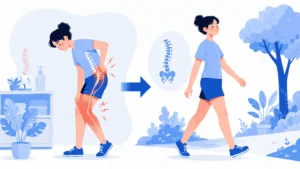
Does your lower back feel stiff after sitting all day? Maybe you notice a dull ache when getting out of bed, bending down, or standing after a long drive.
Lower back discomfort is common, and sometimes gentle movement can help you feel more comfortable.
These 10 stretches for lower back pain relief focus on improving flexibility, reducing feelings of tightness, and helping you move more easily. You can try many of them at home without special equipment.
However, not every stretch is suitable for every type of back pain. Start gently, listen to your body, and avoid movements that worsen your symptoms.
How to Stretch Your Lower Back Safely
Before starting, remember that stretching should feel comfortable rather than painful.
A few simple guidelines can help:
- Warm up with a short, gentle walk.
- Move slowly without bouncing.
- Stretch only until you feel mild tension.
- Breathe normally throughout each movement.
- Avoid forcing your body into a position.
- Stop if pain, numbness, or tingling increases.
For many static stretches, holding a comfortable position for approximately 20–30 seconds may be reasonable. Mobility exercises usually involve several slow repetitions instead.
Important: If you have recently experienced a significant injury, undergone spinal surgery, are pregnant, or have osteoporosis or another diagnosed spinal condition, seek individual guidance before trying these movements.
1. Single Knee-to-Chest Stretch
The single knee-to-chest stretch gently moves the lower back and hips. Some people find it helpful when their lower back feels tight after sitting or lying down.

How to do it:
- Lie on your back with both knees bent and your feet flat on the floor.
- Bring one knee toward your chest.
- Place your hands behind your thigh or over your shin.
- Gently pull the knee closer until you feel a comfortable stretch.
- Hold for 20 to 30 seconds.
- Lower the leg and repeat on the opposite side.
Repetitions: Two or three times per leg, as comfortable.
Tip: Keep your head and shoulders relaxed. Stop if bringing your knee toward your chest increases your back or leg pain.
2. Lower Back Rotation
This gentle movement encourages comfortable rotation through the lower back and hips.
It may help when your back feels stiff after staying in one position for too long.
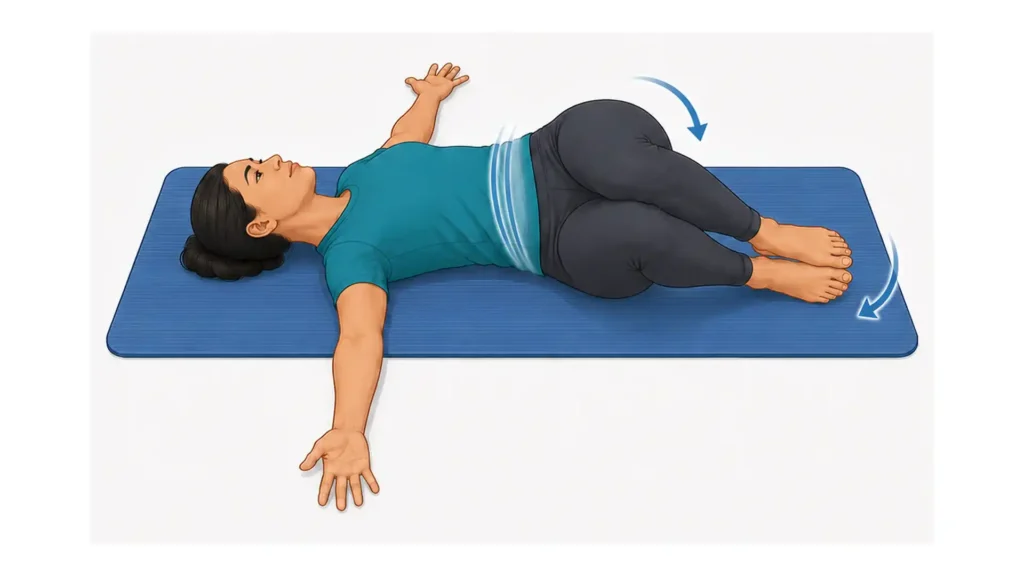
How to do it:
- Lie on your back with your knees bent and feet together.
- Extend your arms out to the sides for support.
- Keeping your shoulders against the floor, slowly lower both knees toward one side.
- Move only as far as you can without increasing your pain.
- Return to the center and repeat on the other side.
Repetitions: Eight to ten slow movements in each direction.
Tip: Your knees do not need to touch the floor. Move only as far as feels comfortable.
3. Pelvic Tilt
A pelvic tilt is a gentle mobility exercise rather than a traditional stretch.
It helps you practise controlled movement through your pelvis and lower back.
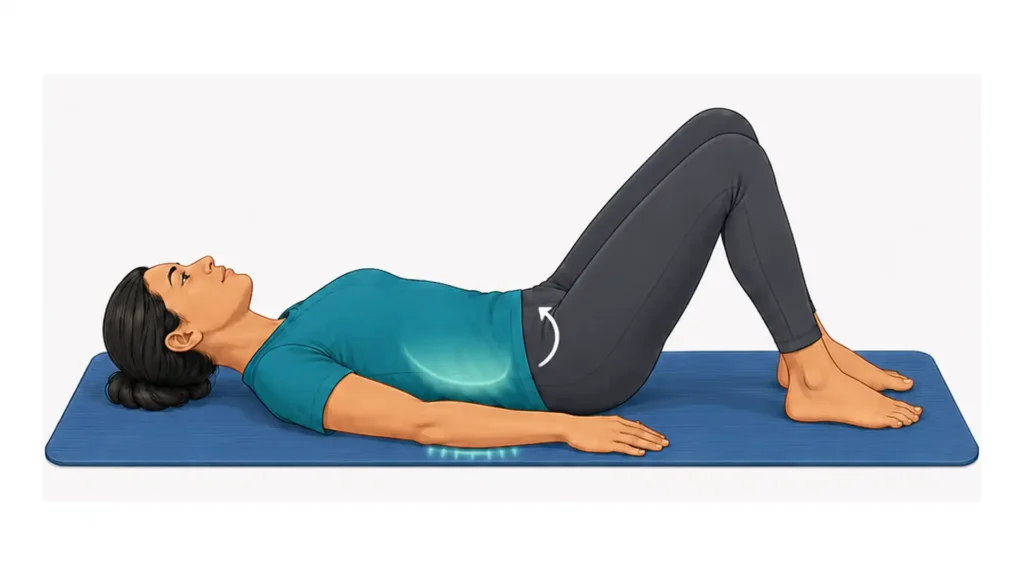
How to do it:
- Lie on your back with your knees bent.
- Relax your shoulders and neck.
- Gently tighten your abdominal muscles.
- Flatten your lower back toward the floor by slightly tilting your pelvis.
- Hold for three to five seconds.
- Relax and return to the starting position.
Repetitions: Eight to twelve times.
Tip: Avoid holding your breath or pressing your back forcefully into the floor.
4. Cat-Cow Stretch
Cat-cow moves your spine through gentle rounding and extension.
It can be useful when your back feels stiff after waking up or spending a long time sitting.
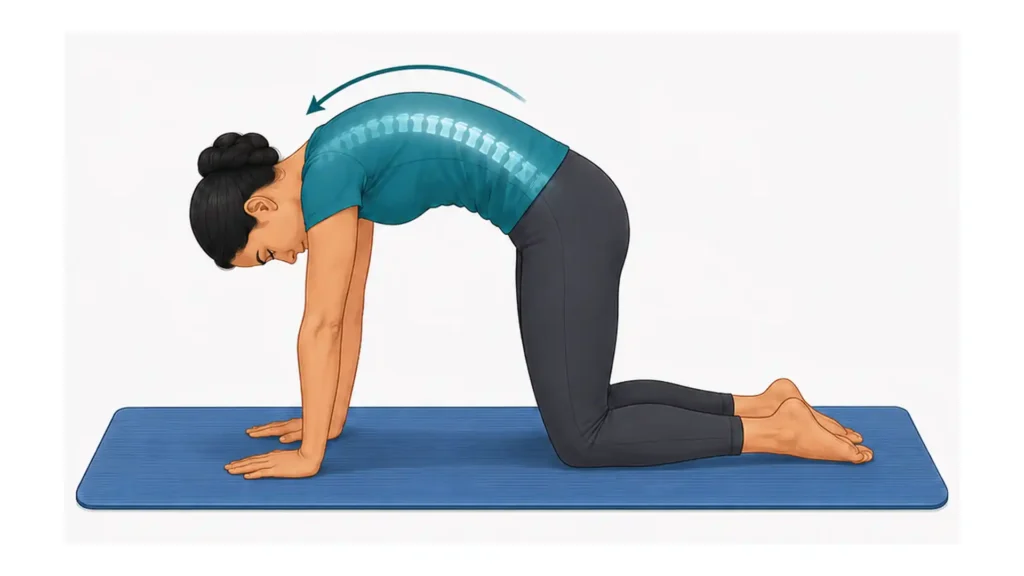
How to do it:
- Begin on your hands and knees.
- Position your hands beneath your shoulders and your knees beneath your hips.
- Slowly round your back upward while allowing your head to lower comfortably.
- Pause briefly.
- Reverse the movement by gently lowering your abdomen and lifting your chest.
- Stay within a pain-free range.
Repetitions: Eight to ten controlled movements.
Tip: You do not need to create a large curve in either direction. Small, comfortable movements are enough.
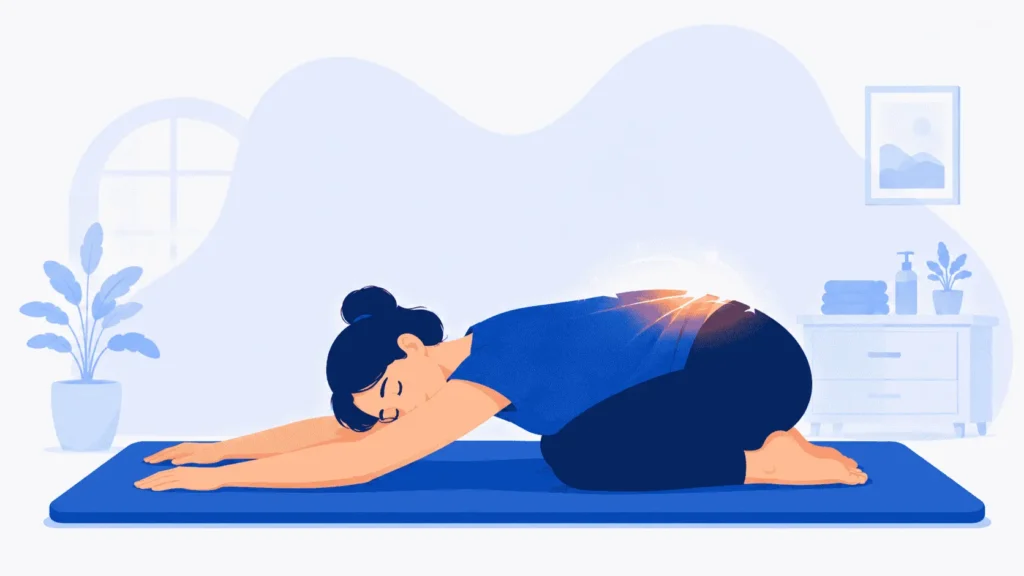
5. Child’s Pose
Child’s pose gently stretches muscles around the lower back, hips, and sides of the torso.
Some people find this position relaxing, particularly after physical activity.
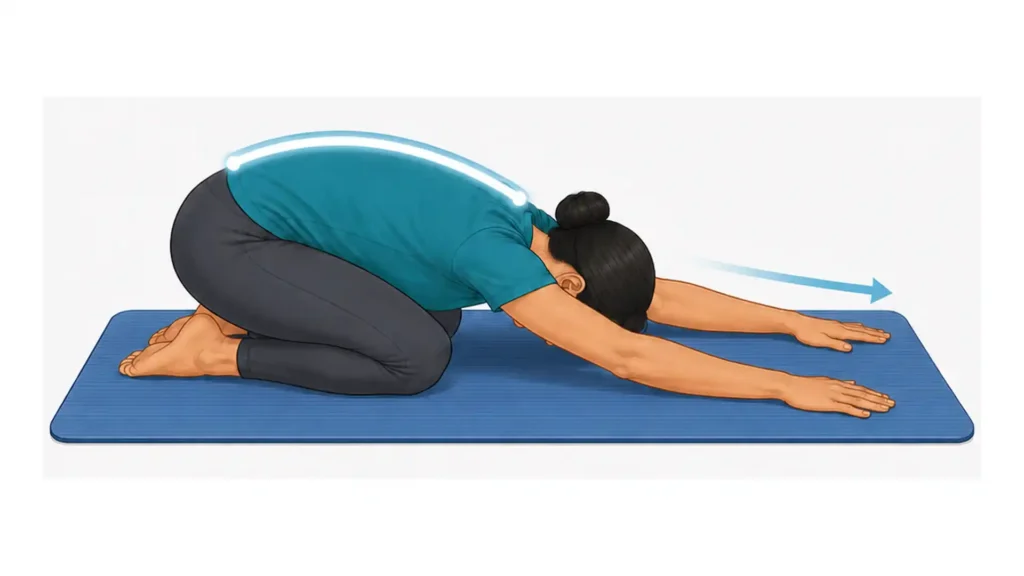
How to do it:
- Begin on your hands and knees.
- Slowly move your hips back toward your heels.
- Extend your arms in front of you.
- Let your chest move toward the floor without forcing the position.
- Hold for 20 to 30 seconds.
Tip: Place a pillow beneath your chest or between your hips and heels for support.
Avoid this stretch if bending forward increases your symptoms.
6. Sphinx Stretch
The sphinx stretch gently extends the lower spine.
Some people find backward-bending movements comfortable, while others may experience increased discomfort.
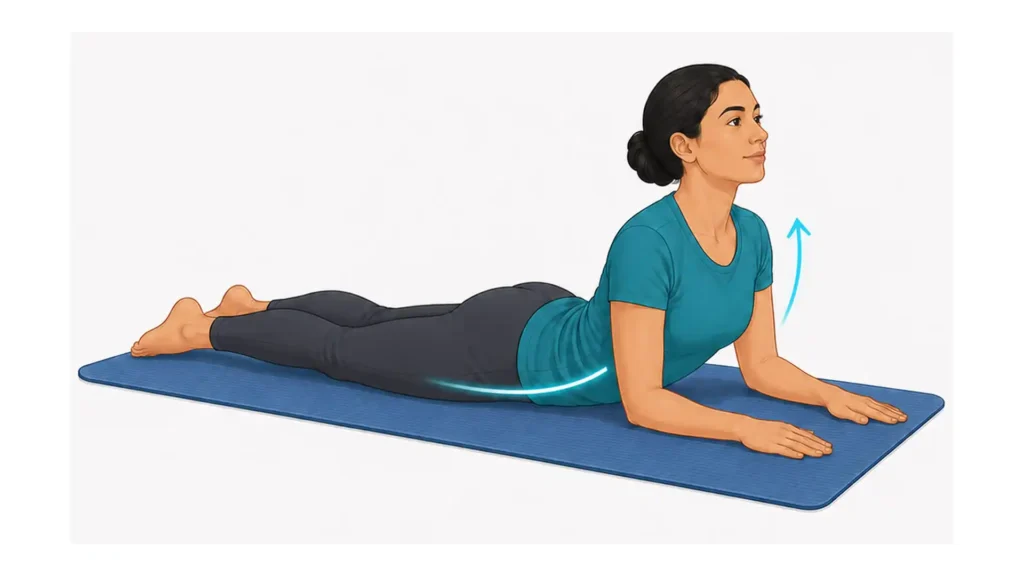
How to do it:
- Lie on your stomach.
- Place your elbows beneath your shoulders.
- Rest your forearms on the floor.
- Gently lift your chest while keeping your hips and legs relaxed.
- Hold for five to 10 seconds.
- Lower yourself slowly.
Repetitions: Up to five times, if comfortable.
Tip: Stop if this movement increases pain, tingling, or numbness in your leg.
7. Kneeling Hip-Flexor Stretch
Long periods of sitting can leave the muscles at the front of your hips feeling tight.
This stretch focuses on those muscles while keeping lower back movement relatively small.
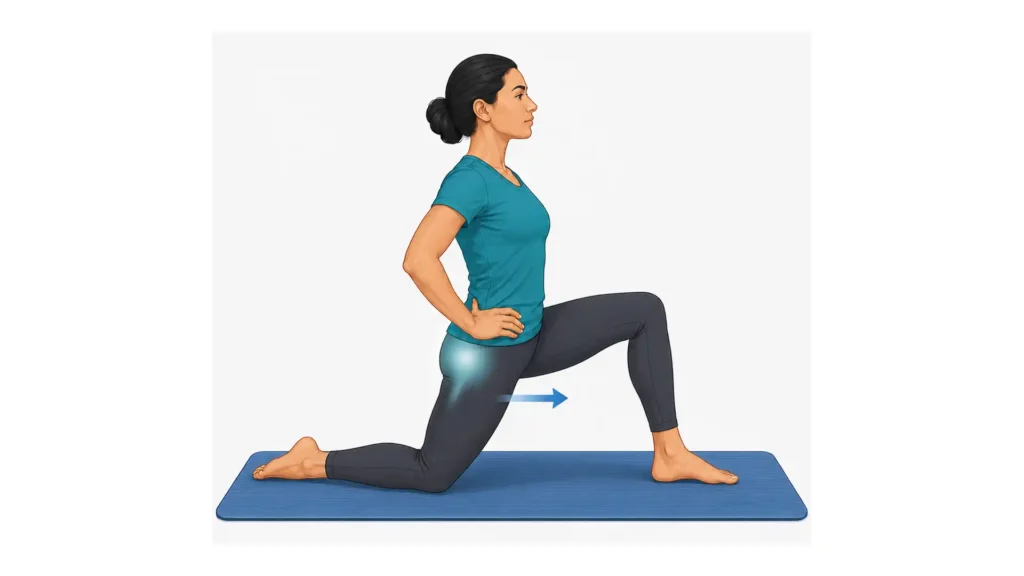
How to do it:
- Kneel on one knee with the opposite foot in front of you.
- Keep your torso upright.
- Gently tuck your pelvis rather than arching your lower back.
- Shift your weight forward slightly.
- Stop when you feel a stretch at the front of the kneeling-side hip.
- Hold for 20 to 30 seconds.
- Repeat on the opposite side.
Repetitions: Two or three times per side.
Tip: Place a folded towel under your knee for comfort. Avoid arching your lower back.
8. Supine Hamstring Stretch
The hamstrings are muscles located at the back of your thighs.
Stretching them may improve flexibility around your hips and legs.
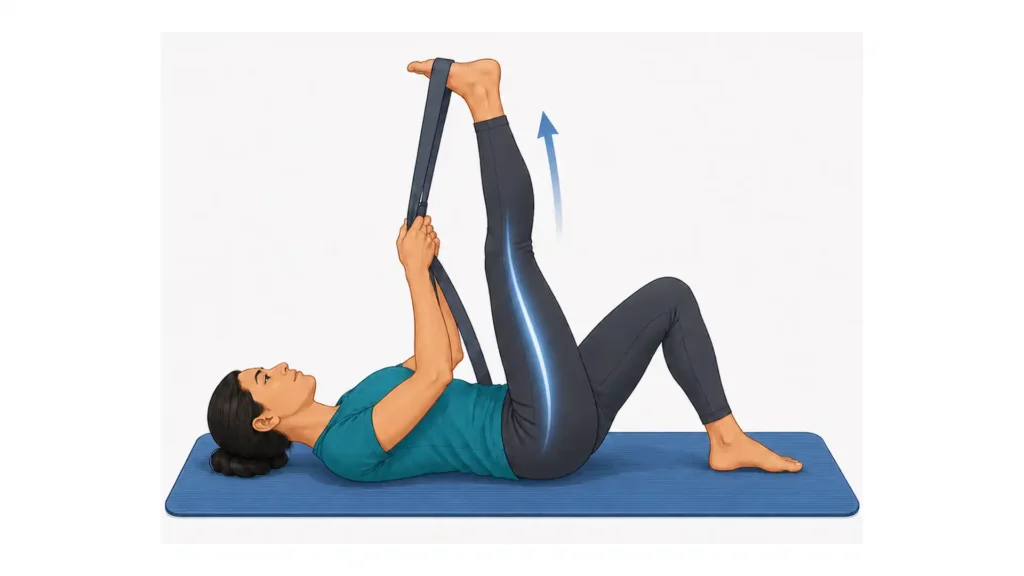
How to do it:
- Lie on your back with both knees bent.
- Lift one leg and place a towel or stretching strap around the back of your thigh or foot.
- Gently straighten the knee until you feel tension behind the thigh.
- Keep the opposite foot on the floor if that is more comfortable.
- Hold for 20 to 30 seconds.
- Switch sides.
Tip: Avoid pulling forcefully or trying to straighten your knee completely.
If this movement produces shooting pain or tingling, stop.
9. Figure-Four Stretch
The figure-four stretch targets muscles around the buttocks and back of the hip.
It may be helpful for some people who experience muscular tightness after prolonged sitting.
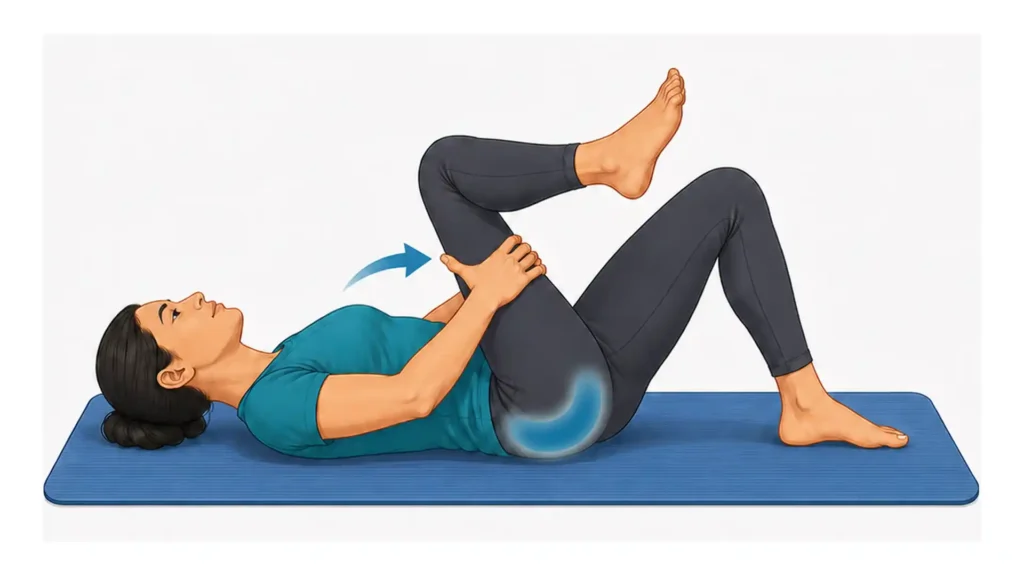
How to do it:
- Lie on your back with your knees bent.
- Place your right ankle over your left thigh.
- Reach behind your left thigh and gently draw it toward your chest.
- Keep your right foot relaxed but supported.
- Hold for 20 to 30 seconds.
- Repeat on the opposite side.
Tip: Avoid pushing your raised knee downward. A seated version may be more comfortable for some people.
10. Standing Side-Body Stretch
This standing movement stretches muscles along the sides of your waist and trunk.
It is convenient when you want to move after sitting at a desk.

How to do it:
- Stand with your feet approximately hip-width apart.
- Place one hand on your hip.
- Lift the opposite arm overhead.
- Gently lean away from the raised arm without twisting your torso.
- Hold for 15 to 20 seconds.
- Return to the center and switch sides.
Tip: Keep the movement small and controlled. Use a stable chair or countertop if you need balance support.
Which Lower Back Stretches Should You Try First?
You do not need to perform all ten stretches in one session.
The best starting point depends on where you feel discomfort and which movements are comfortable.
| If you experience | Movements you might try |
| Stiffness after sitting | Pelvic tilts, cat-cow, hip-flexor stretch |
| General muscular tightness | Knee-to-chest, gentle rotations |
| Tight hips or buttocks | Figure-four, hip-flexor stretch |
| Stiffness after inactivity | Cat-cow, pelvic tilts |
| Discomfort with bending forward | Avoid aggravating flexion stretches and seek individual guidance |
These suggestions are general, not a diagnosis or a personalised exercise prescription.A Simple 3-Minute Routine for Lower Back Stiffness
If your back feels stiff after sitting, try a short movement break.
Minute 1: Stand up and walk gently for approximately 60 seconds.
Minute 2: Perform five to eight comfortable standing side bends or pelvic tilts.
Minute 3: Try a gentle hip-flexor stretch for approximately 30 seconds on each side.
You can adjust or skip movements depending on your comfort.
Regular movement breaks may be more helpful than staying in one position for several hours and then attempting an intense stretching session.
Should You Stretch If You Have Sciatica?
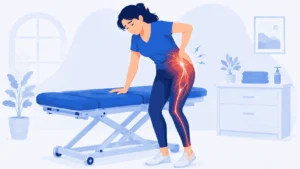
Sciatica can cause pain that travels from the lower back into the buttock or leg. Some people also experience tingling, numbness, or weakness.
Not every lower back stretch is appropriate for these symptoms.
For example, certain forward-bending movements or hamstring stretches may aggravate nerve-related discomfort in some people.
Stop any movement that causes symptoms to spread farther down your leg.
If you have persistent or worsening radiating pain, numbness, or weakness, seek a professional assessment rather than attempting to stretch through it.
When Are Lower Back Stretches Not Enough?
Stretching may help relieve mild muscular stiffness, but it does not address every cause of lower back pain.
Consider seeking professional advice if:
- Your pain continues despite reasonable self-care.
- Symptoms repeatedly return.
- Pain interferes with work, sleep, or daily activities.
- You experience persistent tingling or numbness.
- Your movement becomes increasingly limited.
Seek emergency medical care if you develop new loss of bladder or bowel control, numbness around the groin or saddle area, or rapidly worsening leg weakness.
Back pain accompanied by fever, significant trauma, or other concerning symptoms also requires prompt medical evaluation.
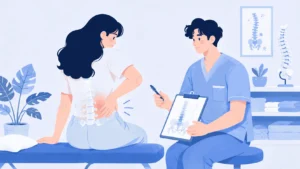
Getting Help With Lower Back Pain in Sanford, FL
If lower back discomfort keeps returning or limits your daily activities, a professional assessment may help identify possible contributing factors.
At VitalSpine Chiropractic in Sanford, FL, Dr. Michaelene Callahan, DC, provides chiropractic assessments and conservative care for appropriate musculoskeletal concerns.
Depending on your symptoms and examination findings, recommendations may include movement guidance, exercise advice, or other suitable treatment options.
Not every type of back pain requires chiropractic treatment, and some conditions need medical evaluation.
To learn more, book an appointment today!
Frequently Asked Questions
1. Is it better to stretch your lower back in the morning or at night?
Either can be appropriate. Gentle stretching in the morning may help with stiffness after sleeping, while evening movement may feel comfortable after a long day. Choose a time that works for your symptoms and routine.
2. Should lower back stretches hurt?
No. You may feel mild muscular tension, but stretching should not cause sharp pain, burning, increasing numbness, or shooting pain down your leg. Stop if these symptoms occur.
3. Can I do lower back stretches every day?
Many people can perform gentle, comfortable movements daily. However, frequency depends on your symptoms and health history. Avoid forcing stretches or continuing movements that aggravate pain.
4. How long does it take for stretching to help lower back stiffness?
Some people notice temporary improvements in comfort or movement after a short session. Others may need a gradual programme involving strengthening and regular physical activity. Results vary depending on the cause of discomfort.
5. Are lower back stretches enough to prevent recurring pain?
Not always. Stretching can support flexibility, but long-term management may also involve strengthening, physical activity, gradual conditioning, and addressing individual contributing factors.
Disclaimer
This article provides general educational information and is not a substitute for professional medical advice, diagnosis, or treatment. Consult a qualified healthcare professional before beginning new exercises if you have a diagnosed spinal condition, significant symptoms, or other health concerns.