Ever felt a dull ache, sharp pain, or burning sensation right between your shoulder blades?
Maybe it starts after sitting at your desk for hours. Or perhaps you notice it when you twist, take a deep breath, or wake up in the morning.
Pain between shoulder blades, also called interscapular pain, is often related to muscle tension, overuse, or problems affecting the upper back. But sometimes, it can be a sign of something that needs medical attention.
The location of the pain, how it feels, and any other symptoms can provide important clues.
Here’s what may be causing your discomfort, when to worry, and what you can do to feel better.
What Causes Pain Between Shoulder Blades?
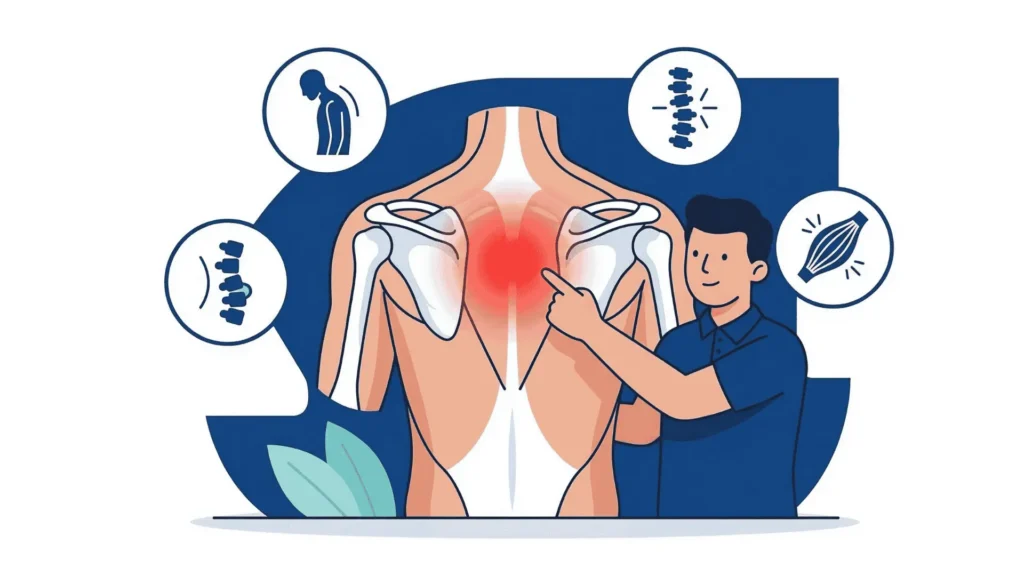
Your shoulder blades, also known as scapulae, sit on either side of your upper back.
Several muscles, joints, nerves, and other structures work together to support shoulder movement and upper-body stability.
Pain in this area may come from the muscles or joints nearby. It can also be referred pain, meaning the discomfort starts somewhere else in the body but is felt between the shoulder blades.
Below are nine possible causes.
1. Muscle Strain or Overuse
Muscle strain is a common reason for upper back pain between the shoulder blades.
It can develop after:
- Lifting something heavy
- Repeated pulling or reaching movements
- A new workout
- Carrying a heavy bag
- Spending long periods in one position
The rhomboid and trapezius muscles are among the muscles that may become sore or irritated.
What it feels like: A dull ache, tenderness, tightness, or pain that becomes worse with certain movements.
Mild muscle strain often improves with time, comfortable movement, and temporary adjustments to aggravating activities.
2. Prolonged Sitting and Postural Strain
If you spend much of your day working on a computer or looking down at your phone, you may notice discomfort developing across your upper back.
Remaining in the same position for long periods can increase muscle fatigue and stiffness.
This does not mean that one particular posture is always harmful. The problem may be spending too long without changing position.
What it feels like: Aching or tightness between the shoulder blades, particularly toward the end of the day.
Taking movement breaks, changing positions, and adjusting your workspace may help.
3. Thoracic Spine Joint Problems
The thoracic spine is the middle and upper portion of your back, where the ribs connect to the spine.
Joint irritation, age-related changes, or stiffness in this area may contribute to pain between the shoulder blades.
You might notice discomfort when:
- Rotating your upper body
- Bending backward
- Sitting for extended periods
- Moving after a period of inactivity
Some spinal conditions require further assessment, particularly when pain is persistent or accompanied by neurological symptoms.
Learn more about back pain and its possible causes.
4. Myofascial Pain and Muscle Trigger Points
Myofascial pain involves discomfort associated with muscles and surrounding connective tissues.
Sensitive areas within muscles are sometimes called trigger points.
Muscles around the shoulder blades, including the trapezius and rhomboids, may become tender and painful.
What it feels like: Deep aching, muscle tightness, or pain that seems to spread from one tender spot into a nearby area.
Symptoms may become more noticeable after repetitive activity or prolonged muscle tension.
5. Neck Problems and Pinched Nerves
Sometimes, pain felt between the shoulder blades begins in the neck.
Certain cervical spine conditions can cause referred pain around the upper back or shoulder blade.
If a cervical nerve root becomes irritated, symptoms may also travel into the shoulder, arm, or hand.
You may experience:
- Neck stiffness
- Pain near one shoulder blade
- Tingling in the arm or fingers
- Numbness
- Muscle weakness
Persistent tingling, numbness, or weakness should be assessed by a healthcare professional.
Read more about neck pain and its possible causes.
6. Shoulder Joint or Rotator Cuff Problems
Not all shoulder blade pain originates in the spine.
Problems affecting the shoulder joint, rotator cuff tendons, or surrounding muscles can sometimes cause pain around the scapula.
Examples include:
- Rotator cuff irritation
- Shoulder stiffness
- Certain shoulder injuries
- Altered shoulder blade movement associated with pain
What it feels like: Pain near the shoulder blade that may worsen when lifting your arm, reaching overhead, or lying on the affected shoulder.
The location and movement pattern can help distinguish shoulder-related pain from upper back problems.
7. Stress-Related Muscle Tension
Stress can influence muscle tension and how strongly we experience pain.
During stressful periods, some people unconsciously tense their shoulders or upper back.
This may contribute to soreness, headaches, or a feeling of tightness between the shoulder blades.
Gentle activity, regular breaks, relaxation techniques, and adequate sleep may help reduce associated discomfort.
However, new or unexplained pain should not automatically be attributed to stress.
8. Gallbladder or Digestive Problems
Pain around the right shoulder blade can sometimes be referred from the gallbladder.
Gallstones or gallbladder inflammation may cause pain in the upper right abdomen that spreads toward the back or right shoulder.
Other symptoms may include:
- Nausea or vomiting
- Upper abdominal pain
- Pain after eating
- Fever in some cases
Persistent abdominal pain, fever, jaundice, or repeated vomiting requires prompt medical assessment.
9. Heart, Lung, or Other Serious Conditions
Although muscle and joint problems are common causes of shoulder blade discomfort, some serious medical conditions can also cause pain in the upper back.
Examples include:
- Heart-related problems, including heart attacks
- Pulmonary embolism
- Pneumonia or pleurisy
- Certain major blood vessel problems, including aortic dissection
These conditions cannot be reliably distinguished from musculoskeletal pain based on location alone.
Call emergency services immediately if shoulder blade or upper back pain occurs with chest pressure, shortness of breath, fainting, sudden severe tearing pain, or other concerning symptoms.
What Does the Location of Shoulder Blade Pain Mean?
The exact location may offer clues, but it cannot confirm a diagnosis.
| Pain location | Possible causes |
| Between both shoulder blades | Muscle strain, thoracic joint irritation, prolonged sitting |
| Near the left shoulder blade | Muscle or neck problems; occasionally heart-related referred pain |
| Near the right shoulder blade | Muscle or shoulder problems; sometimes gallbladder-related pain |
| Between shoulder blades and neck | Muscle tension, cervical spine problems |
| Shoulder blade pain spreading into an arm | Possible cervical nerve irritation or another condition |
The pattern of pain, associated symptoms, and examination findings are more useful than location alone.
Why Do I Have Sharp Pain Between My Shoulder Blades?
Sharp pain between the shoulder blades can have several causes.
It may develop when a muscle is strained, a joint becomes irritated, or a particular movement places stress on sensitive tissues.
However, sudden severe pain without an obvious explanation deserves greater caution.
If the pain is intense, starts abruptly, or occurs with chest symptoms, breathlessness, fainting, or neurological changes, seek emergency medical care.
Do not assume sharp upper back pain is always a pulled muscle.
What Causes Burning Pain Between Shoulder Blades?
A burning sensation may be associated with muscle irritation, nerve-related pain, or other conditions.
For example, some people with cervical nerve irritation experience burning or tingling around the shoulder blade.
Shingles can also cause burning pain before a blistering rash appears, often on one side of the body.
Persistent burning pain, particularly with numbness, weakness, or a new rash, should be medically assessed.
Why Does It Hurt Between My Shoulder Blades When I Breathe?
Pain that becomes worse when taking a deep breath may come from the muscles or joints around the ribs and upper back.
However, breathing-related pain can also occur with conditions affecting the lungs or lining of the chest.
Potential causes include:
- Chest wall muscle strain
- Rib-related irritation
- Pleurisy
- Pneumonia
- Pulmonary embolism
New or unexplained pain with breathing should be medically assessed promptly. If it is accompanied by shortness of breath, coughing blood, fainting, or sudden severe symptoms, seek emergency care.
How to Relieve Pain Between Shoulder Blades
If the pain appears mild and musculoskeletal, and you have no warning signs, several self-care measures may help.
1. Keep Moving Comfortably
Avoid remaining in the same position for long periods.
Short walks and gentle movement can help reduce stiffness.
You do not need to force painful movements.
2. Try Heat or Cold
A warm pack may help relax tight muscles.
A cold pack may feel more comfortable after a recent strain.
Use a protective cloth and avoid applying extreme temperatures directly to the skin.
3. Take Regular Movement Breaks
If you work at a desk, change positions periodically.
Stand up, walk briefly, or move your shoulders through a comfortable range.
There is no single perfect sitting posture that everyone must maintain.
4. Try Gentle Shoulder Blade Exercises
Some people benefit from gentle mobility exercises.
Examples include:
Shoulder blade squeezes: Sit or stand comfortably, gently draw your shoulder blades together, hold briefly, and relax.
Shoulder rolls: Slowly roll your shoulders backward and forward within a comfortable range.
Gentle upper back rotation: While seated, slowly rotate your upper body to each side without forcing the movement.
Stop if an exercise increases pain, causes dizziness, or produces new tingling or weakness.
Exercises may not be appropriate for every condition, especially after injury or when the cause of pain is unclear.
5. Adjust Activities That Aggravate Pain
If a particular movement repeatedly increases symptoms, consider reducing the load or frequency temporarily.
You can gradually return to usual activities as symptoms allow.
6. Seek Professional Assessment When Needed
If pain continues, returns frequently, or limits your normal activities, a healthcare professional can help investigate the cause.
Treatment should be based on the diagnosis rather than assuming every case comes from poor posture or spinal alignment.
Can Chiropractic Care Help Pain Between Shoulder Blades?
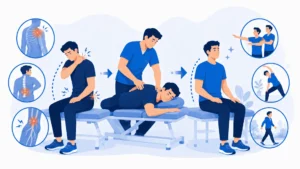
Chiropractic care may be considered for certain musculoskeletal causes of upper back discomfort.
Depending on the examination findings, a chiropractor may discuss:
- Joint mobility
- Muscle-related discomfort
- Movement and exercise recommendations
- Ergonomic changes
- Appropriate manual therapy
Some patients may benefit from conservative care for mechanical back pain, but results vary, and no treatment is suitable for every cause.
Spinal manipulation is not appropriate for pain caused by heart, lung, gallbladder, or other serious medical conditions.
At VitalSpine Chiropractic, the suitability of any musculoskeletal treatment should be determined through an individual assessment.
Learn more about chiropractic care and medical massage.
When Should You Worry About Pain Between Shoulder Blades?
Most mild muscle-related upper back pain is not an emergency.
However, certain symptoms require urgent attention.
Seek Emergency Medical Care If You Have:
- Sudden, severe, or tearing upper back pain
- Chest pain or pressure
- Difficulty breathing
- Fainting or severe dizziness
- Sudden weakness, facial drooping, or difficulty speaking
- Severe pain following significant trauma
Arrange a Medical Appointment If You Have:
- Pain that persists or keeps returning
- Fever or unexplained weight loss
- Pain that is consistently worse at night
- New numbness, tingling, or weakness
- Pain that limits normal daily activities
- A history of cancer or other relevant medical conditions
These symptoms do not always indicate a serious problem, but they deserve appropriate evaluation.
How Long Does Pain Between Shoulder Blades Last?
Recovery depends on the cause.
Mild muscle-related discomfort may improve over several days or weeks.
Pain caused by nerve irritation, joint conditions, or other medical problems may last longer.
If symptoms are not improving, continue to worsen, or repeatedly return, an assessment can help determine whether further investigation or treatment is needed.
Avoid relying on a fixed recovery timeline without understanding the cause.
Shoulder Blade and Upper Back Care in Sanford, FL
If pain between your shoulder blades is affecting your daily activities, an assessment may help clarify whether the problem is musculoskeletal or needs medical investigation.
At VitalSpine Chiropractic in Sanford, FL, Dr. Michaelene Callahan, DC, provides chiropractic care for appropriate musculoskeletal complaints.
The clinic offers services that may be considered for certain back, neck, and muscle-related problems.
You can learn more about chiropractic care.
Contact us to discuss available services.
Frequently Asked Questions
1. Can sleeping position cause pain between shoulder blades?
Sleeping in an uncomfortable position may contribute to temporary muscle stiffness or soreness. However, persistent or worsening pain should not automatically be blamed on sleep position.
2. Is pain between shoulder blades related to the heart?
Sometimes. Heart-related pain can be felt in the upper back, with or without obvious chest discomfort. Sudden unexplained pain accompanied by breathlessness, sweating, nausea, or chest pressure requires emergency evaluation.
3. Can a pinched nerve cause pain between shoulder blades?
Yes. Certain cervical nerve root problems may cause pain around a shoulder blade, sometimes with tingling, numbness, or weakness extending into an arm.
4. Why does the pain get worse after sitting all day?
Prolonged sitting may contribute to muscle fatigue and stiffness, especially when you remain in one position without breaks. Changing positions and moving regularly may help.
5. Should I massage pain between my shoulder blades?
Gentle massage may help some muscle-related discomfort. However, massage is not appropriate as a substitute for medical evaluation when pain is sudden, severe, unexplained, or accompanied by warning signs.
Disclaimer
This article is for general educational purposes and does not replace professional medical advice, diagnosis, or treatment. New, severe, or unexplained upper back pain should be assessed by an appropriate healthcare professional.