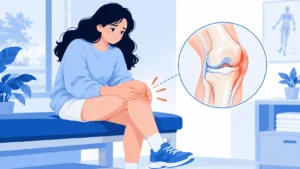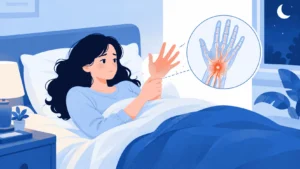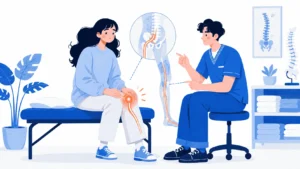
You finish a workout feeling great, but a few hours later, your lower back starts aching. Maybe your knees feel stiff after a walk, or your shoulders become sore after a game of tennis.
Sound familiar?
Back and joint pain after exercise is something many active adults experience. It can happen after running, cycling, weightlifting, golf, pickleball, or even a longer-than-usual walk.
Sometimes, the discomfort is simply your body adapting to physical activity. Other times, it may indicate that a muscle, tendon, or joint has been irritated.
The key is understanding what’s normal, what’s not, and how to stay active without making symptoms worse.
Why Do Your Back and Joints Hurt After Exercise?
Exercise places physical demands on your muscles, joints, tendons, and other tissues.
This is generally a good thing. With appropriate training and recovery, your body gradually adapts and becomes stronger.
However, discomfort can develop when activity increases faster than your body is prepared for, or when an existing problem becomes aggravated.
Here are seven common reasons.
1. Doing Too Much Too Soon
One of the most common reasons for pain after exercise is a sudden increase in physical activity.
Perhaps you recently started running, increased your lifting weights, or returned to tennis after several months away.
Your muscles and other tissues may not yet be accustomed to the additional demands.
You might notice:
- Muscle soreness
- Joint discomfort
- Stiffness the following morning
- Pain during certain movements
- Reduced comfort during your next workout
Gradually increasing exercise intensity and duration can help your body adapt.
2. Muscle Soreness After a Workout
Delayed onset muscle soreness, commonly called DOMS, often develops after unfamiliar or demanding exercise.
It typically begins several hours after activity, becomes more noticeable over the following one to three days, and then gradually improves.
Common symptoms include:
- Aching muscles
- Temporary stiffness
- Tenderness when touching affected muscles
- Discomfort during movement
DOMS usually affects muscles rather than the joints themselves.
Sharp joint pain, significant swelling, or worsening weakness should not automatically be dismissed as normal workout soreness.
3. Repetitive Stress on Joints
Activities involving repeated movements can place demands on particular joints and tendons.
For example:
- Running may aggravate certain knee or ankle conditions.
- Tennis may contribute to shoulder or elbow discomfort.
- Cycling may be associated with neck or lower back soreness.
- Weightlifting may irritate an already sensitive shoulder or back.
- Golf involves repeated rotation through the trunk and hips.
Repetitive activity does not automatically cause injury, but problems may develop when training demands exceed your current capacity.
4. Muscle Weakness or Reduced Conditioning
Your muscles help support movement and manage forces around your joints.
If you return to exercise after a long break, you may find certain activities more demanding than expected.
Reduced strength or conditioning can make it harder to tolerate your usual workload.
A gradual strengthening programme may improve your ability to perform everyday activities and exercise comfortably.
5. Previous Injuries
An old injury may become noticeable again when you increase your activity level.
For example, someone who previously experienced lower back pain may notice discomfort after returning to heavy lifting.
Similarly, an earlier ankle, knee, or shoulder injury may affect how comfortable certain movements feel.
Recurring pain deserves assessment rather than repeated attempts to push through it.
6. Joint Conditions Such as Osteoarthritis
Not every episode of joint pain is caused by exercise itself.
Some adults have underlying joint conditions, including osteoarthritis, that can contribute to stiffness and discomfort.
Symptoms may become noticeable during or after certain activities.
However, regular, appropriately adapted exercise is generally an important part of managing osteoarthritis.
The goal is usually to find a suitable activity level, not to avoid movement altogether.
Learn more about osteoarthritis and joint discomfort.
7. Inadequate Recovery
Recovery allows your body to adapt to physical activity.
If you repeatedly perform demanding workouts without enough rest, sleep, or appropriate nutrition, you may experience persistent fatigue or soreness.
Recovery needs vary depending on your age, health, fitness level, and training intensity.
A balanced routine should include both activity and adequate recovery.
Is Back Pain After Exercise Normal?
Mild muscle soreness after unfamiliar exercise can be normal.
However, back pain and ordinary muscle soreness are not always the same thing.
Lower back pain after exercise may be related to:
- Muscle strain
- A sudden increase in lifting or training volume
- Irritation of spinal joints or surrounding tissues
- An existing back condition
- Nerve-related problems in some cases
The way the pain behaves can provide useful clues.
A mild ache that improves over a few days may be less concerning than severe pain that begins suddenly or spreads into the leg.
If back pain repeatedly returns after exercise, it may be worth reviewing your training routine and seeking professional assessment.
For more information, explore common causes of back pain.
Why Do Your Knees, Hips, or Shoulders Hurt After Physical Activity?
Different activities place different demands on your body.
Knee Pain After Walking or Running
Knee discomfort may develop when walking or running distances increase too quickly.
Other possible contributors include tendon irritation, patellofemoral pain, or arthritis.
Persistent swelling, instability, or difficulty bearing weight should be assessed.
Hip Pain After Exercise
Hip discomfort may be related to muscles, tendons, or the hip joint itself.
Sometimes, pain felt around the hip actually originates in the lower back.
The exact location and movement pattern can help a healthcare professional identify the cause.
Shoulder Pain After Weightlifting
Overhead pressing, repetitive lifting, or other upper-body exercises may aggravate shoulder structures.
Possible causes include muscle strain, rotator cuff-related pain, or joint irritation.
If lifting your arm becomes difficult or weakness develops, seek an assessment.
Learn more about shoulder pain.
Muscle Soreness vs. Joint Pain: How Can You Tell?
Muscle soreness and joint pain can feel similar, but there are some general differences.
| Feature | Muscle soreness | Possible joint-related pain |
| Location | Often spread across a muscle group | May feel more localised around a joint |
| Timing | Often begins hours after unfamiliar exercise | May occur during activity or afterward |
| Sensation | Aching, tenderness, stiffness | Aching, sharp pain, stiffness or catching |
| Movement | Muscles may feel sore when used | Specific joint movements may aggravate pain |
| Recovery | Often improves within several days | Depends on the underlying cause |
These differences are not reliable enough to diagnose a condition on their own.
If you’re unsure whether the pain is muscular or joint-related, a healthcare professional can help.
How to Relieve Back and Joint Pain After Exercise
If your symptoms are mild and there are no warning signs, several practical steps may help.
1. Reduce Aggravating Activities Temporarily
You do not necessarily need complete bed rest or to stop exercising.
Instead, consider temporarily reducing the intensity, duration, or frequency of movements that increase pain.
For example, you might replace a demanding run with a shorter walk or reduce the weight used during resistance training.
2. Keep Moving Comfortably
Gentle movement can help reduce stiffness and maintain mobility.
Walking, easy cycling, or comfortable range-of-motion exercises may be suitable depending on the cause of your symptoms.
Avoid forcing movements that cause sharp or worsening pain.
3. Try Heat or Cold
A cold pack may feel helpful after a recent minor strain.
Heat may provide comfort for muscle tightness or stiffness.
Use a protective cloth and avoid placing extreme temperatures directly against your skin.
4. Prioritise Sleep and Hydration
Adequate sleep supports normal physical recovery.
Staying hydrated is also important for general health and exercise performance, although drinking extra water does not directly repair an injured joint.
5. Return to Exercise Gradually
Once symptoms begin settling, gradually return to your normal routine.
Start with an activity level you can tolerate and increase it over time.
Repeatedly pushing through significant pain may aggravate certain conditions.
6. Consider Professional Assessment
If discomfort persists, keeps returning, or limits your normal activities, a healthcare professional can help determine whether an underlying injury or joint condition is involved.
Treatment should be based on the diagnosis rather than assuming all exercise-related pain comes from poor posture or spinal misalignment.
Should You Stretch When Your Back or Joints Hurt?
Stretching can sometimes help with mild muscle tightness, but it is not always the best solution.
For example, stretching an irritated tendon or forcing movement through a painful joint may increase symptoms.
If you decide to stretch:
- Move slowly.
- Stay within a comfortable range.
- Avoid bouncing or forcing the movement.
- Stop if pain increases.
- Avoid stretching through numbness or weakness.
For persistent pain, strengthening or activity modification may be more useful than stretching alone.
How Can You Prevent Recurring Pain After Exercise?
Not every injury or episode of pain can be prevented, but a few habits may reduce unnecessary physical stress.
Build Your Activity Level Gradually
Avoid making large, sudden increases in workout intensity or duration.
Give your body time to adapt.
Include Strength Training
Appropriate resistance exercise helps maintain muscle strength and supports physical function.
Choose exercises suited to your current ability.
Vary Your Activities
Combining different types of exercise can help you build a balanced routine.
For example, you might alternate walking, resistance training, and lower-intensity activities.
Take Recovery Seriously
Plan lighter activity or rest when needed, particularly after demanding sessions.
Review Your Exercise Technique
If a particular exercise repeatedly causes discomfort, a qualified fitness or rehabilitation professional may help you modify the movement or training load.
Address Persistent Symptoms
Recurring pain should not simply become part of your normal workout routine.
Identifying the cause can help you choose a more appropriate recovery plan.
Can You Continue Exercising with Back or Joint Pain?
Sometimes, yes.
Mild discomfort does not always mean you need to stop all physical activity.
However, the safest approach depends on the cause and severity of the pain.
You may be able to continue with modified activities if:
- Pain is mild and manageable.
- Movement does not cause progressive symptoms.
- You can perform the activity safely.
- There is no significant swelling, weakness, or instability.
Stop the activity and seek appropriate evaluation if you experience severe pain, sudden weakness, significant swelling, or symptoms that worsen rapidly.
When Should You See a Doctor for Pain After Exercise?
Arrange a medical assessment if you experience:
- Pain that persists or keeps returning
- Swelling that does not settle
- Difficulty moving or using a joint
- Pain that regularly interrupts sleep
- Numbness or tingling
- New or worsening weakness
- Joint instability
- Pain that limits everyday activities
Seek urgent medical attention after a significant injury, if you cannot bear weight, or if a joint becomes hot, swollen, and painful with fever.
For back pain, new bladder or bowel dysfunction, numbness around the groin, or significant progressive weakness requires emergency assessment.
These symptoms may indicate a condition that needs prompt treatment.
Can Chiropractic Care Help with Exercise-Related Back Pain?
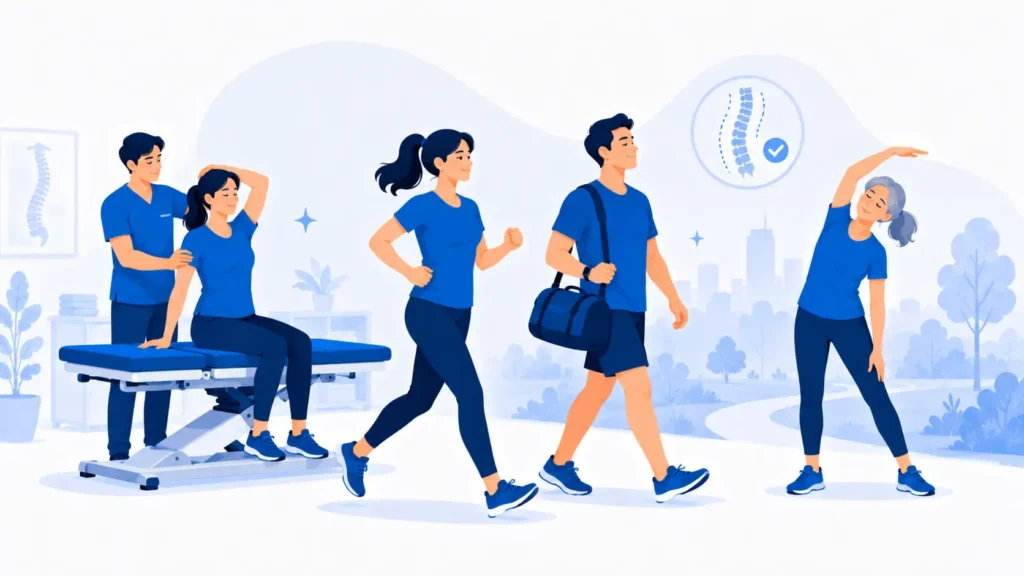
Chiropractic care may be considered for certain musculoskeletal complaints, particularly some forms of mechanical lower back pain.
Depending on the individual assessment, conservative care may include movement guidance, exercises, or selected manual therapies.
For some types of lower back pain, spinal manipulation may offer modest improvements in pain or function.
However, chiropractic adjustments have not been established as a way to prevent sports injuries, accelerate muscle recovery, or improve athletic performance in otherwise healthy individuals.
Exercise-related joint pain can have many causes, and some conditions are better managed through physical therapy, medical treatment, or specialist care.
Learn more about chiropractic care at VitalSpine.
Back and Joint Pain Support in Sanford, FL
If recurring back or joint discomfort is making it difficult to enjoy your usual activities, understanding the cause is an important first step.
At VitalSpine Chiropractic in Sanford, FL, Dr. Michaelene Callahan, DC, provides chiropractic and musculoskeletal care.
Whether you enjoy walking, cycling, golf, pickleball, or strength training, an appropriate assessment can help determine whether chiropractic care may be suitable for your symptoms.
To learn more about available services, contact VitalSpine Chiropractic.
You can also book an appointment to discuss your concerns.
Frequently Asked Questions
1. Why do my joints hurt the day after exercising?
Joint discomfort after exercise may be related to increased training demands, tendon irritation, an underlying joint condition, or other factors. Unlike typical muscle soreness, persistent or worsening joint pain should be assessed.
2. Is it normal to have lower back pain after working out?
Mild muscle soreness can occur after unfamiliar activity. However, sharp, persistent, or recurring lower back pain should not automatically be considered normal workout soreness.
3. Should I exercise if my joints feel stiff?
Gentle movement may help some types of stiffness, but the appropriate activity depends on the cause. Avoid forcing painful movements, particularly when stiffness is accompanied by swelling or weakness.
4. How long should muscle soreness last after exercise?
Typical delayed onset muscle soreness often improves within several days. Severe pain, significant swelling, or symptoms that continue to worsen may indicate something other than ordinary soreness.
5. Can chiropractic care help with back pain after exercise?
Chiropractic care may be one conservative option for selected types of mechanical lower back pain. Its suitability depends on the diagnosis, and it should not replace appropriate medical evaluation when warning signs are present.
Disclaimer
This article is for general educational purposes only and does not replace professional medical advice, diagnosis, or treatment. Back and joint pain can have different causes, and appropriate care depends on individual symptoms and health circumstances.