You get up from your chair, take a few steps, and notice a dull ache on the inside of your knee. Maybe it hurts when you climb stairs, bend down, or go for your usual walk. At first, you don’t think much of it. But when the soreness keeps coming back, you start wondering what’s wrong.
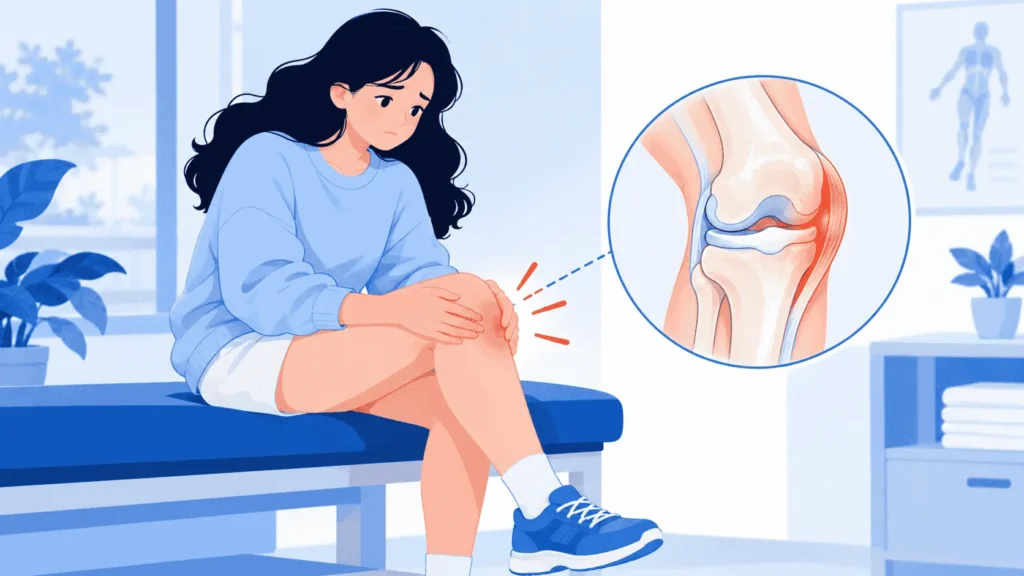
Medial knee soreness simply means pain along the inner side of your knee. It can happen after exercise, an awkward twist, or even without an obvious injury.
One question that often comes up is whether the pain could be a torn meniscus. That’s certainly one possibility, but it’s not the only one.
The good news is that many causes of inner knee pain can improve with the right care. The first step is understanding what might be causing yours.
What Is Medial Knee Soreness?
The word medial means toward the middle of your body. So, when someone talks about medial knee pain, they’re referring to soreness on the inside of the knee, the side closest to your other leg.
Several structures meet in this area, including cartilage, ligaments, tendons, and muscles. They help your knee bend, straighten, and support your weight as you move.
When one of these structures becomes irritated or injured, you might notice:
- An ache along the inside of your knee
- Pain when bending or straightening your leg
- Stiffness after sitting for a while
- Tenderness when you press the area
- Swelling or discomfort while walking
Sometimes, the pain settles after resting. Other times, it continues or gradually gets worse.
What Causes Pain on the Inside of Your Knee?
There isn’t one single reason for medial knee soreness. Here are some of the more common causes.
1. A Torn Medial Meniscus
Inside your knee are two C-shaped pieces of cartilage called the menisci. They act as cushions between your thighbone and shinbone.
The medial meniscus sits on the inner side of your knee.
A sudden twist, particularly when your foot stays planted, can tear this cartilage. Tears can also develop gradually as the tissue changes with age.
You may notice pain when turning, squatting, or bending your knee deeply. Some people also experience swelling or a catching sensation.
2. Medial Collateral Ligament (MCL) Injury
Your MCL is a ligament that runs along the inner side of your knee. Its job is to help keep the joint stable.
If your knee gets pushed inward during a fall, sports activity, or awkward movement, this ligament can become stretched or torn.
The pain is usually felt along the inside of the knee. Depending on the injury, you may also notice swelling or feel that your knee is less stable than usual.
3. Knee Osteoarthritis
Does your knee feel stiff when you first get out of bed or after sitting for a long time?
Osteoarthritis could be one possible reason.
Over time, changes in the cartilage and other tissues inside the knee can lead to pain and stiffness.
You might notice discomfort when climbing stairs, walking longer distances, or getting up from a chair.
4. Pes Anserine Bursitis
Just below the inner side of your knee is a small fluid-filled sac called a bursa. It helps reduce friction between nearby tissues.
When this area becomes irritated, it can cause soreness just below the knee joint.
The discomfort may be more noticeable when climbing stairs or getting out of a chair.
5. Overuse or Muscle Strain
Sometimes, the explanation is much simpler.
Perhaps you’ve recently started running, increased your workout intensity, or spent more time walking than usual.
These changes can place extra strain on the muscles and tendons around your knee.
In mild cases, reducing the activities that aggravate the pain may give the area time to settle.
Is Medial Knee Soreness a Sign of a Torn Meniscus?
It can be, especially if the pain started after twisting your knee.
But having pain on the inside of your knee doesn’t necessarily mean you’ve torn your meniscus.
A meniscus tear is more likely when the pain comes with swelling, catching, or difficulty fully straightening your leg.
What Does a Torn Meniscus Feel Like?
Some people feel a sudden sharp pain during an injury. Others notice an ache that develops over the next few hours.
Common signs include:
- Pain when twisting or turning
- Swelling or stiffness
- Clicking or catching inside the knee
- Difficulty fully bending or straightening the leg
- Discomfort when squatting
How painful is a torn meniscus? That depends on the injury. Some tears cause significant pain, while others are surprisingly mild.
Being able to move your knee doesn’t necessarily mean the meniscus is fine.
How Can You Tell If You Have a Torn Meniscus?
If your knee hurts every time you twist or squat, you might be tempted to test it yourself.
You may even have searched for a torn meniscus symptoms test online.
Doctors and physical therapists use examination techniques such as the McMurray and Thessaly tests to look for signs of a meniscus injury.
However, these tests aren’t always conclusive, and trying them yourself could aggravate an already painful knee.
A healthcare professional can examine your knee, ask how the pain began, and decide whether imaging, such as an MRI, is needed.
Can You Walk With a Torn Meniscus?
Yes, many people can still walk with a torn meniscus.
You may feel reasonably comfortable walking on a flat surface but notice pain when turning, using stairs, or bending your knee.
However, just because you can walk doesn’t mean you should ignore the injury.
If walking causes increasing pain, swelling, or a feeling that your knee might give way, it’s best to reduce the activity and get it checked.
Can You Run on a Torn Meniscus?
Running puts repeated pressure on your knee, so it’s generally better to avoid it while a suspected meniscus injury is painful or swollen.
Returning to running depends on your symptoms, knee strength, and the type of injury.
A healthcare professional can help you decide when it’s safe to start again.
Does a Torn Meniscus Heal on Its Own?
This is one of the most common questions people have after a knee injury.
The answer depends on where the tear is located and how severe it is.
The outer part of the meniscus has a better blood supply, which means certain tears in this area have a greater chance of healing.
The inner part receives much less blood, so tears there are less likely to heal completely on their own.
Still, that doesn’t mean everyone needs surgery.
Many people improve with activity changes, rehabilitation, and other non-surgical treatments, even when the tear itself doesn’t fully heal.
How Long Does a Torn Meniscus Take to Heal?
There’s no exact timeline that applies to everyone.
Some people notice improvement within several weeks. Others may need a few months of rehabilitation before returning to their usual activities.
Recovery depends on the type of tear, your symptoms, and the treatment you receive.
How Can You Treat Medial Knee Soreness?
If your knee has been sore for a few days, you may be wondering whether you should rest it completely or keep moving.
The answer depends on what’s causing the pain.
For mild soreness, a few simple steps may help:
- Reduce painful activities. Take a break from running, deep squats, or movements that make your knee hurt.
- Try a cold pack. Applying a wrapped cold pack for 15–20 minutes may help ease pain and swelling.
- Keep moving gently. Comfortable movement can help prevent stiffness. Avoid pushing through sharp pain.
- Build strength gradually. Strong thigh and hip muscles help support your knee during everyday activities.
- Get persistent pain checked. If the soreness keeps returning, an examination can help identify the cause.
For some people, conservative treatment may also help with knee-related movement problems and discomfort.
If you’re interested in learning more, read our guide on whether a chiropractor can help with knee pain.
What Exercises Can Help With a Torn Meniscus?
Not every meniscus injury needs the same exercises. But when appropriate, gentle strengthening and movement can play an important role in recovery.
Some commonly recommended exercises for a torn meniscus include:
Heel slides: Lie on your back and slowly slide your heel toward your body, bending your knee only as far as feels comfortable.
Quadriceps tightening: Sit or lie with your leg supported and gently tighten the muscles at the front of your thigh.
Straight-leg raises: While lying on your back, keep one leg straight and slowly lift it a short distance, provided the movement doesn’t cause pain.
These movements may help maintain strength and mobility, but they aren’t suitable for every injury. If you suspect a meniscus tear, get professional guidance before starting exercises.
When Should You See a Doctor for Inner Knee Pain?
A little soreness after an unusually active day may improve with rest and gentle movement.
But if your knee continues to hurt, becomes swollen, or starts interfering with normal activities, it’s worth getting checked.
Seek prompt medical attention if you cannot put weight on your leg, your knee becomes locked, or you experience significant swelling after an injury.
A red, hot, swollen knee accompanied by fever also needs urgent medical attention.
Looking for Knee Pain Treatment in Sanford, FL?
Knee pain can make even simple things uncomfortable, whether it’s walking around the house, climbing stairs, or getting out of your car.
At VitalSpine Chiropractic in Sanford, FL, Dr. Michaelene Callahan, DC, provides personalized chiropractic care focused on joint function, movement, and musculoskeletal health.
With more than 20 years of experience, Dr. Callahan takes the time to understand patients’ concerns and explore appropriate care options.
If your medial knee soreness is related to a musculoskeletal problem, chiropractic care may help address associated discomfort or movement limitations. However, suspected meniscus tears and significant ligament injuries may need additional medical evaluation or rehabilitation.
If you’re looking for a knee pain chiropractor in Sanford, the first step is understanding what’s causing your symptoms.
Contact VitalSpine Chiropractic to schedule an appointment and discuss your knee pain.
Frequently Asked Questions
Can medial knee soreness happen without an injury?
Yes. Inner knee soreness can develop from overuse, osteoarthritis, tendon irritation, or other conditions, even when you haven’t experienced a fall or sudden injury.
Is walking good for medial knee pain?
Gentle walking may help maintain mobility if it doesn’t increase your symptoms. If walking causes sharp pain, swelling, or instability, reduce the activity and seek professional advice.
Can a torn meniscus cause knee pain at night?
Yes. Some people notice aching at night, particularly after spending a lot of time on their feet. However, nighttime knee pain can have several causes.
Do all torn meniscus injuries need surgery?
No. Many meniscus tears can be managed without surgery. Treatment depends on the type of tear, symptoms, and how much the injury affects your knee.
Can chiropractic care help with medial knee soreness?
Chiropractic care may help manage certain musculoskeletal problems associated with knee discomfort or limited mobility. However, it cannot repair a torn meniscus, and the underlying cause should be properly assessed.
Medical Disclaimer: This article is for informational purposes only and does not replace professional medical advice, diagnosis, or treatment. Consult a qualified healthcare professional for persistent knee pain or a suspected injury.