
Introduction
Experiencing lower back pain during pregnancy can be stressful, especially in the early stages when your body is rapidly changing. Many women experience discomfort due to hormonal shifts, posture changes, increased spinal pressure, and muscle tension that develops as the body adapts to pregnancy.
At Vitalspine Chiropractic in Sanford, FL, we provide personalized, non-invasive care designed to help women manage pregnancy-related discomfort safely and naturally. If you are searching for ways to manage lower back pain early pregnancy, pregnancy chiropractic care Sanford FL, or lower back pain treatment Sanford FL, this guide explains common causes, symptoms, and safe treatment options that may help improve comfort and mobility.
Pregnancy-related lower back pain can affect sleep, movement, work routines, posture, and overall daily comfort. Understanding why these symptoms happen and how to manage them safely can help women feel more supported throughout pregnancy.
Is Lower Back Pain Normal in Early Pregnancy?
Yes, lower back pain early pregnancy is extremely common. During pregnancy, the body undergoes several physical and hormonal changes that can place stress on the lower back, hips, pelvis, and surrounding muscles.
Common reasons include:
- Hormonal changes loosening ligaments and joints
- Changes in posture and balance
- Increased pressure on the spine
- Muscle tension and fatigue
- Reduced spinal stability
- Pelvic stress and discomfort
While mild discomfort is normal, severe or persistent pain should always be evaluated by a healthcare professional.
Common Causes of Lower Back Pain During Early Pregnancy
1. Hormonal Changes
Pregnancy hormones, especially relaxin, help loosen ligaments in preparation for childbirth. However, this can reduce spinal stability and contribute to lower back discomfort.
As ligaments loosen, the spine and pelvis may experience additional strain, causing soreness and stiffness.
2. Postural Changes
As your body adapts to pregnancy, your posture shifts, increasing stress on the lower back muscles and joints.
Even small posture changes can place additional pressure on the spine, hips, and pelvis, leading to discomfort during standing, walking, or sitting.
3. Pain in Lower Back and Hips
Many women experience pain in lower back and hips female patients commonly report during pregnancy. This can result from pelvic instability, muscle tension, and increased stress on surrounding joints.
Hip discomfort may also become more noticeable during movement, sleep, or prolonged standing.
4. Muscle Strain and Fatigue
Extra physical strain on the body can cause tightness and soreness in the lower back.
As the body works harder to support pregnancy, muscles may become fatigued more easily, contributing to discomfort and stiffness.
5. Vertebrogenic Low Back Pain
Some women may experience vertebrogenic low back pain, which originates from the vertebrae and spinal structures.
Symptoms may include:
- Deep aching pain
- Pain that worsens with sitting or standing
- Limited mobility
- Lower back stiffness
- Discomfort with movement
6. Lower Back Pain and Nausea
Some women experience lower back pain and nausea female patients commonly report during early pregnancy. This may be related to hormonal changes, digestive discomfort, fatigue, or physical strain.
If symptoms become severe, persistent, or are accompanied by fever, cramping, or bleeding, medical evaluation is recommended.
How to Manage Lower Back Pain in Early Pregnancy
There are several safe and effective ways to reduce discomfort during pregnancy.
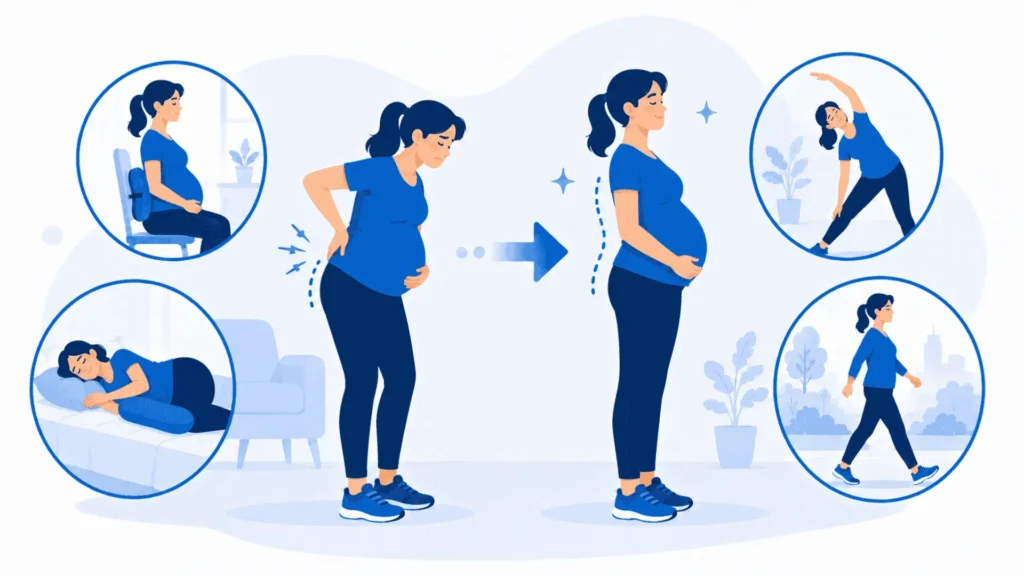
1. Maintain Proper Posture
Good posture can significantly reduce pressure on the spine and surrounding muscles.
Helpful posture tips:
- Avoid slouching
- Keep shoulders back
- Use supportive chairs
- Avoid standing for long periods
- Keep feet flat while sitting
- Change positions regularly
2. Stay Physically Active
Gentle movement can help reduce stiffness, improve circulation, and support spinal mobility.
Recommended activities:
- Walking
- Prenatal yoga
- Stretching exercises
- Gentle mobility routines
Always consult your healthcare provider before starting new exercises during pregnancy.
3. Use Supportive Footwear
Proper shoes help maintain balance and reduce strain on the lower back.
Try to avoid:
- High heels
- Unsupportive footwear
- Shoes without proper arch support
- Worn-out shoes
4. Sleep in a Supportive Position
Sleeping on your side with a pillow between your knees can help reduce spinal stress and improve alignment.
Pregnancy pillows may also improve comfort and reduce pressure on the hips and lower back.
5. Apply Heat or Cold Therapy
Warm compresses or ice packs may help relieve muscle tension and inflammation.
Tips for safe use:
- Use moderate temperatures
- Avoid prolonged exposure
- Never apply directly to the skin for long periods
- Consult your healthcare provider if symptoms persist
6. Consider Chiropractic Care
Many pregnant women benefit from pregnancy chiropractic care Sanford clinics provide.
Chiropractic care during pregnancy focuses on:
- Improving pelvic alignment
- Reducing spinal stress
- Supporting mobility and comfort
- Improving posture
- Reducing muscle tension
- Supporting overall spinal function
A qualified chiropractor can provide gentle, pregnancy-safe adjustments designed around patient comfort and safety.
Benefits of Chiropractic Care During Pregnancy
Choosing lower back pain chiropractic care Sanford Florida providers offer several benefits for women seeking natural support during pregnancy.
| Benefit | How It Helps |
| Drug-free pain relief | Supports comfort without medication |
| Improved posture | Reduces pressure on the spine and pelvis |
| Reduced muscle tension | Helps relieve tightness and soreness |
| Better mobility and flexibility | Improves movement and comfort |
| Pelvic support | Helps maintain alignment during pregnancy |
| Personalized care | Treatment plans tailored to patient needs |
Many women searching for a back pain chiropractor Sanford Florida prefer chiropractic care because it is natural, non-invasive, and focused on long-term wellness.
When Should You See a Chiropractor?
You should seek professional care if you experience:
- Persistent or worsening lower back pain
- Pain affecting daily activities
- Difficulty walking or standing
- Pain radiating to the hips or legs
- Ongoing stiffness and reduced mobility
- Discomfort affecting sleep quality
Early care may help prevent discomfort from becoming more severe and support improved mobility throughout pregnancy.
Meet Dr. Michaelene Callahan, DC
Dr. Michaelene Callahan brings over 24 years of experience in helping patients improve mobility, reduce discomfort, and support long-term wellness through personalized chiropractic care.
She earned her Doctorate of Chiropractic from Life University and focuses on patient-centered, non-invasive treatment approaches tailored to each individual’s needs.
Her holistic approach combines chiropractic care, posture guidance, wellness education, and lifestyle recommendations to help patients feel more comfortable and supported throughout different stages of life.
At Vitalspine Chiropractic, Dr. Callahan is committed to providing compassionate care designed to help patients achieve improved function, mobility, and overall well-being.
Learn more about Dr. Michaelene Callahan and our team.

Why Choose Chiropractic Care in Sanford, FL?
If you are searching for a chiropractor Sanford FL, lower back pain treatment Sanford FL, or pregnancy chiropractic care Sanford Florida, choosing a local provider offers convenience and personalized support.
Why patients choose Vitalspine Chiropractic:
- Personalized care plans
- Gentle chiropractic techniques
- Non-invasive treatment options
- Supportive pregnancy wellness care
- Convenient Sanford, FL location
- Ongoing patient-centered guidance
Our clinic is dedicated to helping women experience safer, more comfortable pregnancies through natural chiropractic care.
Schedule Your Appointment Today
Pregnancy-related lower back pain can affect movement, comfort, sleep, and daily routines, but you do not have to manage it alone.
Vitalspine Chiropractic in Sanford, FL offers gentle, personalized chiropractic care for women seeking natural support for lower back pain, hip discomfort, and pregnancy-related spinal stress.
Frequently Asked Questions (FAQs)
1. Is lower back pain normal in early pregnancy?
Yes, mild lower back pain is common during early pregnancy because hormonal changes, posture shifts, and ligament loosening can increase pressure on the spine and pelvis.
2. Can chiropractic care help during pregnancy?
Yes, pregnancy-safe chiropractic care may help improve mobility, posture, pelvic alignment, and lower back comfort using gentle, non-invasive techniques.
3. When should I worry about pregnancy back pain?
Seek medical attention if pain becomes severe, sudden, persistent, or is accompanied by bleeding, fever, cramping, numbness, or weakness.
4. Is it safe to exercise during pregnancy?
Gentle exercise is often beneficial for reducing stiffness and supporting mobility, but always consult your healthcare provider before starting a new routine.
5. What sleeping position is best for lower back pain?
Sleeping on your side with a pillow between your knees may help support spinal alignment and reduce pressure on the lower back and hips.
6. Can posture affect pregnancy back pain?
Yes, poor posture can increase stress on the spine, pelvis, and muscles, which may worsen lower back discomfort during pregnancy.
7. How often should I see a chiropractor during pregnancy?
The recommended frequency depends on your symptoms, stage of pregnancy, and personalized treatment plan created by your chiropractor.
8. Can pregnancy cause hip pain too?
Yes, hip and pelvic discomfort are common during pregnancy because hormonal changes can affect joint stability and muscle tension.
9. Are chiropractic adjustments safe during pregnancy?
Chiropractic adjustments may be safe during pregnancy when performed by a trained chiropractor using pregnancy-safe techniques and positioning.
10. How do I find the best chiropractor near me?
Look for an experienced chiropractor who offers personalized care, gentle treatment techniques, and patient-centered pregnancy support.
Disclaimer
This content is for informational purposes only and does not constitute medical advice. Always consult a qualified healthcare provider before starting any treatment during pregnancy.


