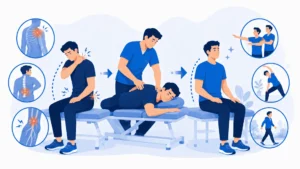
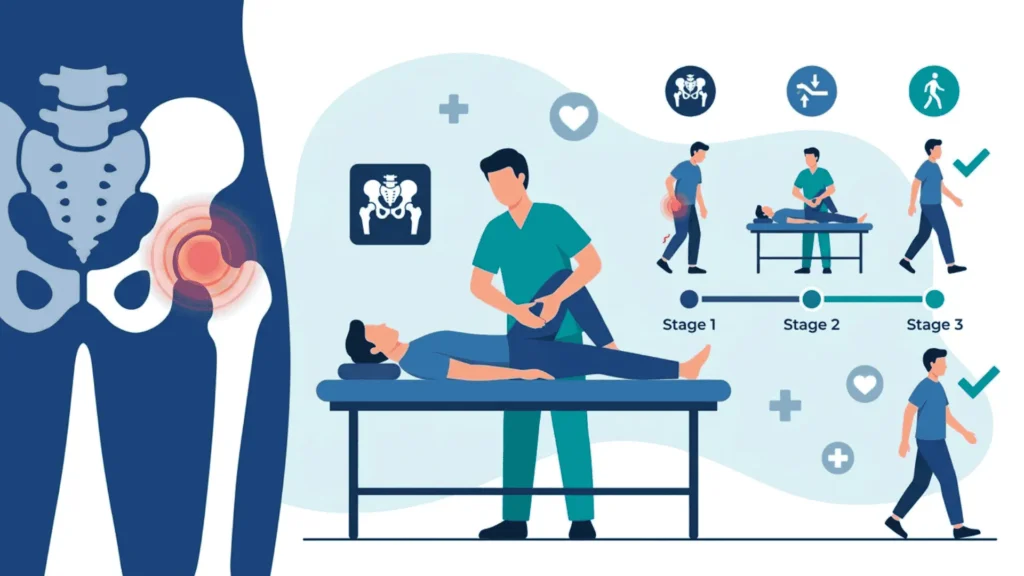
Hip pain can make everyday life surprisingly difficult. You might feel a sharp discomfort when getting out of a chair, an ache after walking, or pain along the outside of your hip when lying on your side.
Sometimes the pain starts in the hip itself. Other times, it comes from your lower back or the surrounding muscles.
If you’re looking for ways to manage the discomfort without surgery, you may be wondering: Can a chiropractor help with hip pain?
The answer depends on what’s causing it.
Chiropractic care may be considered for selected musculoskeletal problems involving the hip, pelvis, or lower back. However, not every type of hip pain responds to chiropractic treatment, and some conditions require medical evaluation or specialist care.
Understanding where your pain is coming from is the first step toward choosing an appropriate treatment.
Where Is Your Hip Pain Coming From?
One of the most useful clues is the location of your discomfort.
Hip pain doesn’t always feel the same or appear in the same place.
Pain in the Front of the Hip or Groin
Pain deep in the groin or front of the hip may be associated with the hip joint itself.
Possible causes include:
- Hip osteoarthritis
- Hip flexor irritation
- Labral injuries
- Other joint-related conditions
You may notice discomfort when walking, bending, or getting into a car.
Pain on the Outside of the Hip
Pain along the outer hip is often associated with structures around the greater trochanter, the bony area on the side of the upper thigh.
One common cause is greater trochanteric pain syndrome (GTPS), which frequently involves irritation of the gluteal tendons.
Symptoms may become worse when:
- Lying on the painful side
- Climbing stairs
- Walking for longer distances
- Standing on one leg
This type of pain is not necessarily caused by a misaligned hip joint.
Pain in the Back of the Hip or Buttock
Pain around the buttock may originate from the lower back, muscles, or other nearby structures.
Sometimes, nerve irritation in the lumbar spine causes pain that travels toward the hip or leg.
Other symptoms may include tingling, numbness, or discomfort extending below the knee.
Learn more about sciatica.
What Are the Most Common Causes of Hip Pain?
Several conditions can produce hip discomfort, and each may require a different approach.
1. Hip Osteoarthritis
Osteoarthritis involves changes in the cartilage and other tissues within the joint.
Hip osteoarthritis may cause:
- Groin pain
- Stiffness after rest
- Difficulty putting on shoes or socks
- Reduced hip movement
- Discomfort during walking
Exercise-based treatment is an important part of managing hip osteoarthritis.
Chiropractic adjustments cannot reverse cartilage changes or cure the condition.
Read more about osteoarthritis.
2. Greater Trochanteric Pain Syndrome
GTPS is a common cause of pain on the outside of the hip.
It is often associated with irritation or changes involving the gluteal tendons.
Treatment commonly includes modifying aggravating activities and gradually strengthening the hip muscles.
A carefully selected exercise programme is generally more important than attempting to correct hip alignment.
3. Hip Flexor Strain
The hip flexors help lift your thigh and move your hip.
These muscles may become irritated after sprinting, kicking, sudden movements, or unfamiliar exercise.
Symptoms may include discomfort at the front of the hip when lifting the knee or walking uphill.
Mild strains may improve with appropriate activity modification, while more significant injuries require assessment.
4. Hip Labral Injuries
The labrum is a ring of cartilage around the hip socket.
A labral injury may cause groin pain, clicking, catching, or discomfort during certain movements.
However, clicking alone does not necessarily mean there is an injury.
Persistent mechanical symptoms may warrant evaluation by a sports medicine or orthopedic specialist.
5. Lower Back Problems
Not all pain felt around the hip originates from the hip joint.
Conditions affecting the lumbar spine may cause referred pain into the buttock or hip.
If a spinal nerve is irritated, symptoms may travel into the leg.
This is why an assessment should consider both the hip and lower back when appropriate.
Explore lower back pain and sciatica.
6. Overuse and Changes in Activity
Suddenly increasing walking distance, running intensity, or exercise frequency may aggravate muscles and tendons around the hip.
A gradual return to activity is often helpful, depending on the underlying condition.
Can a Chiropractor Really Help with Hip Pain?
A chiropractor may assess musculoskeletal factors contributing to certain types of hip discomfort.
For example, some people experience hip-area pain alongside mechanical lower back pain or movement-related muscle discomfort.
Depending on the diagnosis, conservative care may include:
- Advice about modifying painful activities
- Mobility and movement exercises
- Selected manual therapies
- Soft tissue techniques
- Strengthening recommendations
- Referral for further assessment when necessary
However, evidence specifically supporting chiropractic adjustments for hip joint conditions is limited.
Chiropractic care should not be presented as a guaranteed way to correct hip alignment, eliminate inflammation, or provide permanent relief.
The best treatment depends on the actual cause of the pain.
How Might Chiropractic Care Be Used for Hip-Related Discomfort?
1. Assessing the Hip and Lower Back
Because pain may originate from different structures, a clinician may examine both the hip and lumbar spine.
This can help distinguish between symptoms that appear to come from the hip joint and those that may be referred from the back.
2. Evaluating Movement Limitations
An assessment may include hip range of motion, walking, and movements that reproduce symptoms.
Movement limitations can provide useful clinical information, although they do not always indicate a joint is out of alignment.
3. Selected Manual Therapy
Some chiropractors use mobilisation or other manual techniques for appropriate musculoskeletal complaints.
These approaches may provide short-term symptom relief for some patients, but evidence for chiropractic manipulation in specific hip disorders remains uncertain.
Manual therapy should not replace appropriate rehabilitation or medical care.
4. Exercise and Strengthening Advice
Strengthening the hip muscles can be particularly important for some conditions.
Depending on the diagnosis, exercises may target:
- Gluteal muscles
- Hip abductors
- Hip extensors
- Trunk muscles
Exercises should be tailored to your symptoms and physical ability.
5. Activity and Lifestyle Guidance
For some patients, small changes to daily activities may reduce aggravating factors.
Examples include:
- Temporarily adjusting walking distance
- Modifying painful exercises
- Avoiding prolonged positions that aggravate symptoms
- Gradually returning to usual activity
- Finding a more comfortable sleeping position
Can a Chiropractor Help with Hip Pain from Sciatica?
Sometimes pain around the hip is related to irritation of a nerve in the lower back.
Sciatica commonly causes pain that travels from the lower back or buttock into the leg.
Depending on the cause, symptoms may include:
- Shooting or burning pain
- Tingling
- Numbness
- Pain extending below the knee
- Muscle weakness
Some conservative treatments, including exercise-based care and selected manual therapies, may be considered for certain cases of sciatica.
However, chiropractic adjustments do not reliably eliminate nerve compression, and they are not appropriate for every spinal condition.
Progressive weakness, new bladder or bowel dysfunction, or numbness around the groin requires urgent medical attention.
Learn more about sciatica.
Can Chiropractic Care Help Hip Arthritis?
Hip osteoarthritis is a common reason people experience persistent groin pain and stiffness.
While some patients explore manual therapy, chiropractic adjustments cannot rebuild cartilage or reverse arthritis.
Treatments with stronger evidence include:
- Therapeutic exercise
- Muscle strengthening
- Physical activity adapted to symptoms
- Weight management when appropriate
- Pain management recommended by a clinician
- Physical therapy
For more advanced cases, an orthopedic specialist may discuss additional options.
Chiropractor vs. Physical Therapist vs. Orthopedic Doctor for Hip Pain
Choosing the right healthcare professional depends on the symptoms and suspected condition.
| Healthcare professional | When they may be appropriate |
| Chiropractor | Selected musculoskeletal or lower-back-related complaints |
| Physical therapist | Hip strengthening, rehabilitation, and movement-related problems |
| Primary care doctor | New, persistent, or unexplained hip pain |
| Sports medicine physician | Sports injuries, tendon problems, and activity-related pain |
| Orthopedic specialist | Significant joint injuries, suspected labral problems, or advanced hip arthritis |
If you’re unsure where the pain originates, a primary care clinician is often a sensible starting point.
What Can You Do at Home for Mild Hip Pain?
If your symptoms are mild and there has been no major injury, a few simple measures may help.
Modify Aggravating Activities
Reduce activities that clearly increase pain while maintaining comfortable movement.
For example, if long walks worsen your symptoms, temporarily shorten the distance.
Avoid Lying Directly on a Painful Outer Hip
For some people with lateral hip pain, sleeping on the painful side increases discomfort.
You may find it more comfortable to lie on the other side with a pillow between your knees or sleep on your back.
Keep Moving Within a Comfortable Range
Gentle movement can help maintain mobility.
Avoid forcing deep stretches or movements that significantly worsen symptoms.
Return to Exercise Gradually
If your symptoms began after increasing activity, reduce the workload and rebuild gradually as discomfort improves.
Seek Advice Before Starting Aggressive Stretching
Certain hip tendon conditions can become more irritated by prolonged or forceful stretching.
The best exercise approach depends on the diagnosis.
When Should You See a Doctor for Hip Pain?
Arrange a medical assessment if you experience:
- Persistent or worsening hip pain
- Pain that repeatedly interrupts sleep
- Difficulty walking or climbing stairs
- Reduced hip movement
- Recurrent groin pain
- Numbness or tingling
- Symptoms that do not improve with appropriate self-care
When Is Hip Pain an Emergency?
Seek urgent medical attention if you experience:
- Severe hip pain following a fall or accident
- Inability to bear weight after an injury
- A visibly deformed leg or hip
- A hot, swollen joint accompanied by fever
- Sudden severe pain with significant weakness
- New bladder or bowel problems with back and leg symptoms
These signs may indicate a fracture, infection, or another serious condition.
What to Expect During a Hip Pain Assessment
An initial assessment may include a discussion of your symptoms, health history, and activities.
A clinician may evaluate:
- Hip range of motion
- Pain location
- Walking pattern
- Muscle strength
- Lower back movement
- Neurological symptoms when relevant
Depending on the findings, imaging or referral may be recommended.
Not everyone needs an X-ray or MRI.
The goal is to identify the likely cause and decide which treatment options are appropriate.
Hip Pain Care at VitalSpine Chiropractic in Sanford, FL
If hip pain is making it difficult to walk, exercise, or sleep comfortably, understanding the cause is an important first step.
At VitalSpine Chiropractic in Sanford, FL, Dr. Michaelene Callahan, DC, provides chiropractic and musculoskeletal care.
An assessment can help determine whether conservative chiropractic care may be appropriate for your symptoms or whether another healthcare professional should be involved.
Learn more about hip pain care at VitalSpine.
You can also contact VitalSpine Chiropractic to discuss available services.
Frequently Asked Questions
1. Can a chiropractor help with outer hip pain?
Outer hip pain may be caused by conditions such as greater trochanteric pain syndrome. Treatment commonly involves activity modification and progressive strengthening. A chiropractor may assess musculoskeletal factors, but adjustments are not an established primary treatment for this condition.
2. Can hip pain come from the lower back?
Yes. Some lower back conditions cause referred pain into the buttock or hip. Nerve irritation may also cause pain, tingling, or numbness extending into the leg.
3. Should you stretch a painful hip?
It depends on the cause. Gentle movement may help some conditions, but aggressive stretching can aggravate certain tendon problems. An assessment can help identify suitable exercises.
4. Can chiropractic adjustments fix hip arthritis?
No. Chiropractic adjustments cannot reverse cartilage changes or cure hip osteoarthritis. Exercise-based management and other evidence-supported treatments are generally more appropriate.
5. How do I know if hip pain is serious?
Seek medical evaluation for persistent or worsening pain, significant movement limitations, or neurological symptoms. Severe pain after an injury, inability to bear weight, or a hot swollen joint with fever requires urgent attention.
Disclaimer
This article is for general educational purposes only and does not replace professional medical advice, diagnosis, or treatment. Hip pain can have different causes, and treatment suitability depends on an appropriate clinical assessment.