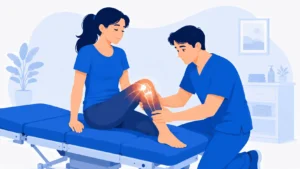

If you are struggling with chronic back pain, disc issues, or sciatica, you may be asking: is spinal decompression safe? Spinal decompression therapy has become a popular non-surgical treatment option for relieving pressure on the spine and promoting natural healing.
Is Spinal Decompression Safe? Risks, Side Effects & Who Should Avoid It
If you’re dealing with ongoing back pain, sciatica, or a herniated disc, you may have heard about spinal decompression therapy.
But before trying it, there’s an important question: Is spinal decompression safe?
Non-surgical spinal decompression is generally considered a relatively low-risk procedure for appropriately selected patients. However, it isn’t suitable for everyone, and some people may experience increased pain or other side effects.
Understanding the risks, possible benefits, and conditions that make treatment unsuitable can help you make a more informed decision.
Here’s what you should know before your first session.
What Is Non-Surgical Spinal Decompression?
Non-surgical spinal decompression is a form of mechanical traction that applies a controlled pulling force to the spine.
During treatment, you usually lie on a specialised table while a system applies and releases traction according to selected settings.
The intention is to temporarily reduce mechanical loading on certain spinal structures.
Spinal decompression is sometimes considered for people with back or neck pain, including some disc-related conditions.
However, it is important to distinguish non-surgical spinal decompression from surgical decompression.
Surgical decompression involves an operation to relieve pressure on spinal nerves or other structures. It has different indications, benefits and risks.
This article focuses on non-surgical spinal decompression performed in a clinical setting.
For a broader explanation, see our guide to what spinal decompression therapy is.
Is Spinal Decompression Safe?
Non-surgical spinal decompression may be reasonably safe for some patients when a qualified healthcare professional has assessed their condition and determined that traction is appropriate.
Because it does not involve surgery, it avoids risks associated with anaesthesia, incisions and surgical recovery.
However, non-invasive does not mean risk-free.
Safety depends on several factors:
- Your medical history
- The cause of your symptoms
- Existing spinal conditions
- Bone health
- Previous surgeries or implants
- The traction force and treatment settings
- Your response during the session
Some patients tolerate traction comfortably. Others may experience increased discomfort or find that it aggravates their symptoms.
There is also limited high-quality evidence establishing the safety and effectiveness of branded non-surgical spinal decompression systems across different patient groups.
The safest approach is an individual assessment before treatment, rather than assuming decompression is appropriate for every type of back pain.
What Are the Possible Side Effects of Spinal Decompression?
Like other physical treatments, spinal decompression can cause unwanted effects.
Possible side effects include:
1. Temporary Muscle Soreness
Some people may notice soreness or stiffness after a traction session.
This can occur as the muscles and surrounding tissues respond to an unfamiliar mechanical force.
However, discomfort should not automatically be dismissed as a normal part of healing.
2. Increased Back or Neck Pain
Traction may aggravate symptoms in some individuals.
If your pain becomes significantly worse during treatment, the session should be stopped and your symptoms reassessed.
3. Increased Leg or Arm Symptoms
If you already experience nerve-related pain, certain traction positions or forces may worsen symptoms.
Watch for:
- Shooting pain
- Tingling
- Numbness
- Burning sensations
- New or increasing weakness
These symptoms should be reported promptly.
New or progressive weakness requires urgent medical evaluation.
4. Discomfort From Positioning or Equipment
Some people find lying in one position uncomfortable, particularly when they already have significant pain.
Harnesses or other equipment may also create pressure or discomfort.
Your provider should explain how to communicate discomfort and stop treatment when necessary.
Who Should Avoid Spinal Decompression Therapy?
Not everyone is a suitable candidate for mechanical spinal traction.
Certain conditions may make treatment unsafe or require specialist clearance.
| Condition | Why additional caution is needed |
| Severe osteoporosis | Fragile bones may be more vulnerable to injury |
| Recent spinal fracture | Traction may place stress on injured structures |
| Spinal instability | Pulling forces may aggravate an unstable spinal segment |
| Spinal tumour or infection | Requires appropriate medical diagnosis and management |
| Certain spinal implants or previous surgeries | Treatment suitability depends on the procedure, hardware and healing status |
| Pregnancy | Some traction positions and equipment may be unsuitable |
| Significant neurological deficits | May indicate nerve compression requiring urgent assessment |
This is not a complete list of contraindications.
A healthcare professional should also review other medical conditions, medications, and relevant imaging findings before recommending treatment.
If you have a history of spinal surgery, do not assume decompression is automatically safe or unsafe. The decision depends on your specific circumstances.
Is Spinal Decompression Safe for a Herniated Disc?
Some people with herniated discs consider spinal decompression because they hope traction will reduce discomfort or pressure around irritated nerves.
However, a herniated disc does not automatically mean spinal decompression is the right treatment.
A clinician should first assess:
- Whether your symptoms are consistent with disc-related pain
- Whether you have numbness or weakness
- Whether there are signs of significant nerve compression
- Whether traction aggravates your symptoms
- Whether other treatments may be more appropriate
Non-surgical spinal decompression is sometimes promoted as a way to pull herniated disc material back into place.
That claim is not reliably established by strong clinical evidence.
Some people may experience symptom improvement with traction, but that does not prove the disc has physically returned to its original position.
Treatment decisions should be based on your symptoms, examination findings, available evidence and personal preferences.
Is Spinal Decompression Safe for Sciatica?
Sciatica commonly involves pain that travels from the lower back into the buttock or leg.
It may also cause tingling, numbness or weakness.
Traction is sometimes used for selected patients with nerve-related back pain, but its effectiveness for sciatica is uncertain, and it is not routinely recommended by all clinical guidelines.
Certain movements or traction forces may aggravate nerve symptoms.
If you experience increasing leg pain, spreading numbness or weakness during treatment, the procedure should be stopped and your symptoms reassessed.
Does Spinal Decompression Hurt?
A non-surgical spinal decompression session is generally intended to apply controlled traction rather than a sudden or forceful movement.
You may feel a gentle pulling sensation or changes in pressure around your back.
Some people find the experience comfortable, while others may feel discomfort.
You should not be expected to tolerate sharp pain, increasing nerve symptoms or significant distress.
During treatment, tell your provider immediately if you experience:
- Sharp or worsening back pain
- Pain spreading farther into an arm or leg
- New numbness or tingling
- Dizziness or unusual discomfort
- Any sensation that makes you feel unsafe
The clinician should be able to adjust or stop treatment.
Can Spinal Decompression Make Back Pain Worse?
Yes, it can.
Although some patients may experience temporary symptom relief, others may notice increased pain or stiffness.
A worsening response does not necessarily mean permanent damage has occurred, but it should not be ignored.
If symptoms become worse after a session, contact the treating clinician and discuss whether treatment should continue.
If you develop significant new neurological symptoms, seek medical attention.
Emergency warning signs include:
- New loss of bladder or bowel control
- Numbness around the groin or inner thighs
- Difficulty urinating with new neurological symptoms
- Rapidly worsening leg weakness
These symptoms can indicate serious nerve compression and require emergency medical assessment.
Does Spinal Decompression Actually Work?
Safety and effectiveness are two separate questions.
A treatment can be relatively low risk for selected patients without having strong evidence that it consistently improves their condition.
Research into mechanical traction for lower back pain has produced mixed findings.
Some studies suggest possible short-term benefits for certain groups, but results vary, and the overall evidence does not establish non-surgical spinal decompression as a consistently effective treatment for everyone with disc problems or sciatica.
Several clinical guidelines do not recommend routine traction for low back pain.
Claims that decompression reliably heals damaged discs, reverses degeneration, or prevents surgery are not supported by strong evidence.
Depending on the diagnosis, other conservative approaches may include exercise-based rehabilitation, activity guidance, medication when appropriate, and selected manual therapies.
What Happens Before a Spinal Decompression Session?
A responsible treatment process begins with an assessment.
Your healthcare professional may ask about:
- Your current symptoms
- Previous injuries or spinal surgery
- Existing medical conditions
- Medications
- Numbness or weakness
- Activities that aggravate your pain
- Previous treatments and their results
A physical examination may help determine whether symptoms appear musculoskeletal or suggest another medical condition.
Imaging is not necessary for every patient, but it may be appropriate when examination findings indicate a specific concern.
Before treatment, you should understand the proposed approach, its uncertainties, potential risks, alternatives and expected costs.
Questions to Ask Before Starting Spinal Decompression
Before agreeing to treatment, consider asking your provider:
- What diagnosis or examination findings suggest traction may help me?
- Are there any reasons spinal decompression might be unsafe for my condition?
- What benefits are realistic, based on the available evidence?
- What side effects should I watch for?
- What will happen if my symptoms become worse?
- What other treatment options could I consider?
- How will we assess whether the treatment is helping?
A good consultation should give you enough information to make a decision without pressure or promises of guaranteed results.
Spinal Decompression Safety in Sanford, FL
If you’re considering non-surgical spinal decompression, understanding your individual risks is an important first step.
At VitalSpine Chiropractic in Sanford, FL, Dr. Michaelene Callahan, DC, provides chiropractic assessments and offers spinal decompression as one of the clinic’s available services.

Treatment suitability should be determined through an individual assessment, including consideration of symptoms, medical history, contraindications and other available options.
You can learn more about the clinic’s advanced spinal decompression service or book an appointment to discuss whether a consultation is appropriate.
Frequently Asked Questions
1. Is non-surgical spinal decompression safer than surgery?
Non-surgical decompression avoids risks associated with an operation, such as anaesthesia and surgical complications. However, it is not a substitute for surgery when urgent or specific surgical treatment is medically indicated. The two approaches serve different purposes.
2. Can spinal decompression cause nerve damage?
Traction can aggravate nerve-related symptoms in some people. Serious nerve injury is not well quantified in the available evidence, so it would be inaccurate to describe the risk as zero. New or worsening neurological symptoms require prompt assessment.
3. How long does soreness last after spinal decompression?
Mild soreness, if it occurs, may be temporary. However, there is no reliable timeframe that applies to everyone. Persistent or worsening discomfort should be discussed with your treating clinician.
4. Is spinal decompression safe for older adults?
Age alone does not determine whether treatment is appropriate. Bone density, spinal stability, medical conditions, previous procedures and overall health are more relevant factors. Older adults with osteoporosis or fractures may require particular caution.
5. Can I stop spinal decompression if it feels uncomfortable?
Yes. You should be able to communicate discomfort and request that treatment be stopped. Significant pain or worsening neurological symptoms should prompt reassessment rather than simply increasing or continuing traction.
Disclaimer
This article is for general educational purposes and does not replace professional medical advice, diagnosis or treatment. Non-surgical spinal decompression may not be suitable for every patient. Consult a qualified healthcare professional about your individual condition, treatment options and potential risks.