
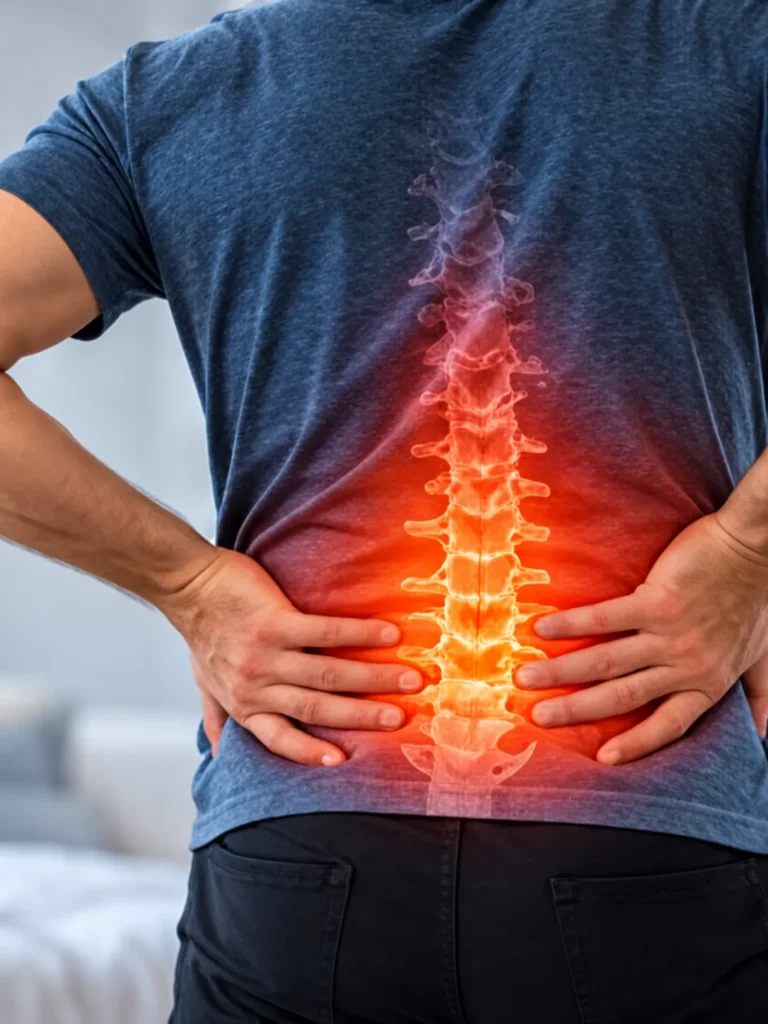
Decompression Therapy for Sciatica in Sanford, FL
When Pain Travels Down Your Leg, Even the Simplest Movements Can Feel Difficult.
It starts somewhere in your lower back. Perhaps a dull ache that you think will disappear after a good night’s sleep. But then the discomfort begins to travel. Through your hip, down the back of your thigh and sometimes all the way to your foot.
You shift in your chair. You stretch your leg. You stand up, hoping a little movement will help. Yet the pain seems to follow you everywhere.
That is one of the most frustrating things about sciatica. The discomfort does not always stay in one place. It can make sitting, driving, walking and even resting feel unpredictable.
At VitalSpine Chiropractic in Sanford, FL, we understand how exhausting it can be when everyday activities become uncomfortable. Our approach to decompression therapy for sciatica focuses on understanding what may be irritating the nerves in your lower spine and exploring gentle, non surgical care options that may help suitable patients find relief.
Because when pain starts deciding how you move, where you sit and what you can enjoy, it deserves more than simply being ignored.
What Is Sciatica, and Why Does the Pain Travel So Far?
Here is something many people find surprising. Sciatica is not actually a disease. It is a term used to describe symptoms associated with irritation or compression of the nerve roots that contribute to the sciatic nerve.
The sciatic nerve is the largest nerve in your body. It begins from nerve roots in your lower spine, travels through your buttocks and continues down each leg.
Think of it as a communication pathway between your spine and your lower body. When the nerve roots become irritated, you may experience symptoms along the areas those nerves supply.
That explains why a problem in your lower back can sometimes be felt much farther down your leg.
What Is Causing Your Sciatic Nerve Pain?
Sometimes, the Pain You Feel in Your Leg Begins with Something Happening in Your Spine.
Imagine experiencing a sharp sensation in your calf every time you sit down. Naturally, you might assume something is wrong with your leg.
But the source of that discomfort could be much higher up.
Several spinal conditions can irritate the nerve roots associated with sciatica.
Herniated or Bulging Lumbar Discs
The discs between your vertebrae act as cushions that help your spine absorb everyday forces. When a disc bulges or herniates, it may irritate a nearby nerve root.
This is one of the common causes of sciatica, particularly when pain travels from the lower back into the buttock and leg.
Lumbar Spinal Stenosis
As we age, changes in the spine can sometimes narrow the spaces through which nerves travel. This narrowing may contribute to nerve compression and symptoms in the legs.
People with lumbar spinal stenosis may notice discomfort when standing or walking, with some relief when sitting or bending forward.
Degenerative Changes in the Spine
Changes involving spinal discs and joints can sometimes contribute to inflammation, narrowing around nerves or altered spinal movement.
Although these changes are common with age, they do not always cause symptoms.
Other Causes of Sciatic Pain
Not every case of sciatica is caused by a disc problem. Certain conditions affecting the pelvis, muscles or nerves outside the spine may produce similar symptoms.
That is why understanding the cause matters. The most appropriate care depends on what is actually contributing to your discomfort.
What Are the Common Symptoms of Sciatica?
Sciatica can feel different from one person to another. Some experience a constant ache, while others describe sudden, electric sensations that seem to shoot down the leg.
Common symptoms include:
- Pain travelling from the lower back into the leg: Often affecting one side of the body.
- Burning or shooting sensations: Discomfort that may feel sharp, hot or electric.
- Tingling and numbness: A pins and needles sensation in the buttock, calf or foot.
- Nerve pain in the lower leg: Sometimes occurring even when lower back pain is relatively mild.
- Discomfort while sitting: Prolonged sitting may aggravate symptoms in some people.
- Muscle weakness: Certain movements, such as lifting the foot or standing on your toes, may become difficult.
These symptoms can occur for several reasons, so identifying the underlying cause is important before considering treatment.
How Does Decompression Therapy for Sciatica Work?
A Gentle Approach to Reducing Pressure on the Lower Spine
When you hear the word decompression, you might picture something being pulled apart or forced back into position.
But spinal decompression is designed to be a much more controlled process.
Spinal decompression for sciatica uses a specialised table that applies gentle, carefully controlled traction to the lower spine.
During treatment, you lie on the table while the equipment gradually applies and releases pulling forces.
The aim is to temporarily change the forces acting on spinal structures and potentially reduce symptoms associated with certain causes of nerve irritation.
A decompression machine allows the practitioner to adjust the amount of traction, positioning and treatment duration according to your needs.
For some people with disc related sciatica, traction may provide temporary symptom relief. However, research on mechanical spinal decompression remains mixed, and it has not been consistently shown to provide lasting benefits for sciatica.
At VitalSpine Chiropractic, the goal is to determine whether this approach is suitable for your particular condition rather than assuming every case of sciatic pain requires decompression.
What Happens During Sciatica Decompression Therapy?
Your Comfort Matters Just as Much as Your Treatment Plan.
If you have never experienced spinal decompression before, it is natural to wonder what an appointment involves.
Will it hurt? Will you feel the stretching? What happens if your leg pain gets worse?
At VitalSpine Chiropractic, understanding your symptoms and helping you feel comfortable with your care options comes first.
Step 1: We Begin by Understanding Your Pain
Your chiropractor will ask about your symptoms, when they began and what makes them better or worse.
You may be asked whether your pain travels below the knee, whether you experience numbness or tingling and whether certain movements aggravate your discomfort.
Your medical history and relevant examination findings help determine whether sciatica decompression therapy is appropriate.
Step 2: We Discuss Your Care Options
Not everyone with sciatica benefits from spinal traction. Your chiropractor will explain whether decompression may be suitable and discuss other options, including exercise based rehabilitation or medical referral when necessary.
Step 3: You Get Comfortable on the Table
If treatment is appropriate, you will be positioned on a specially designed decompression table with supportive equipment.
The settings are selected according to your individual needs and comfort.
Step 4: Gentle Traction Begins
The table gradually applies and releases controlled traction to the lumbar spine.
You may notice a gentle stretching sensation. However, treatment should not cause significant or worsening pain, and any increase in leg symptoms should be reported immediately.
Step 5: We Review How You Are Responding
Your progress is assessed through changes in pain, mobility, nerve symptoms and everyday activities.
The care plan may be adjusted depending on your response.
The aim is not simply to complete a series of sessions. It is to make sure the approach remains appropriate and worthwhile for you.
What Patients Are Saying
Why Choose VitalSpine Chiropractic for Sciatica Care in Sanford?
Because Your Life Should Not Have to Revolve Around Your Sciatic Pain.
Think about the little things sciatica can take away.
The pleasure of a long morning walk. Sitting comfortably through a film. Driving somewhere without worrying about how your leg will feel when you arrive.
These might seem like ordinary moments, but when pain begins interfering with them, you realise how much they matter.
At VitalSpine Chiropractic in Sanford, FL, we believe care should begin with understanding how your symptoms affect your life.
Our approach to sciatica care focuses on:
- Personalised assessments: Understanding your symptoms and the possible causes of nerve irritation.
- Gentle care options: Exploring non surgical approaches when clinically appropriate.
- Clear communication: Helping you understand your condition and available options.
- Individual care planning: Considering your health history, daily activities and goals.
- Movement and function: Looking at how comfortably you can manage everyday tasks.
- Ongoing progress reviews: Monitoring your response and adjusting recommendations when necessary.
Whether you have recently developed sciatica or have been dealing with recurring leg pain, we want you to feel informed and supported as you explore your options.
Can Decompression Help Sciatica After Back Surgery?
Some people continue to experience leg pain even after undergoing spinal surgery. Others may develop new symptoms months or years later.
Experiencing nerve pain in the leg after back surgery can be particularly discouraging, especially when you expected the original procedure to resolve your discomfort.
Persistent or recurring symptoms may have several causes, including ongoing nerve irritation, scar tissue, recurrent disc herniation or changes elsewhere in the spine.
It is important not to assume that decompression is the right answer.
If you have previously undergone spinal surgery, your medical and surgical history must be carefully reviewed before considering traction. Certain procedures, implants or conditions may make spinal decompression unsuitable.
New or worsening leg pain after surgery should be assessed by an appropriate medical professional, and clearance from your treating surgeon may be necessary before considering mechanical traction.
How Long Does It Take to Recover from Sciatica?
When sciatica starts affecting your daily routine, the question is rarely just about pain.
It becomes about when you can comfortably drive again, enjoy a walk or sit through a meal without constantly changing positions.
The encouraging news is that many cases of sciatica improve over several weeks, although some take longer.
Recovery depends on the underlying cause, severity of nerve irritation, duration of symptoms and your overall health.
Small Everyday Habits That May Support Your Recovery
Keep moving when you comfortably can. Gentle walking and appropriate activity are often more helpful than prolonged bed rest.
Change positions regularly. If sitting aggravates your symptoms, short movement breaks may help.
Be mindful when lifting. Avoid repeatedly bending and twisting under heavy loads while your symptoms are particularly sensitive.
Follow appropriate exercises. A personalised rehabilitation programme may help improve movement, strength and confidence.
Pay attention to changing symptoms. Increasing numbness, weakness or worsening leg pain deserves medical assessment.
There is no universal timeline, and decompression therapy cannot guarantee faster recovery. The focus should be on steady, meaningful improvements in how you feel and function.
Your Next Comfortable Step Could Begin with Understanding Your Sciatica
Maybe you have learned to sit at a certain angle because it hurts less. Perhaps you avoid longer journeys or hesitate before making plans that involve too much walking.
Over time, these small adjustments can begin to feel normal.
But living around your pain does not have to be your only option.
At VitalSpine Chiropractic in Sanford, FL, we can help you better understand your symptoms and explore whether decompression therapy for sciatica is an appropriate part of your care.
You deserve to know what may be causing your discomfort, what your options are and what steps could help you move forward with greater confidence.
Book Your Sciatica Consultation at VitalSpine Chiropractic Today.
Medical Disclaimer: This content is intended for general educational purposes and does not replace medical advice, diagnosis or treatment. Mechanical spinal decompression is not appropriate for everyone, and evidence for its effectiveness in sciatica remains mixed. Seek urgent medical attention if you experience new bladder or bowel control problems, numbness around the groin or saddle area, or severe or progressive leg weakness.
Frequently Asked Questions About Decompression Therapy for Sciatica
Is decompression therapy good for sciatica?
Decompression therapy may help some people manage symptoms associated with certain lumbar disc conditions, but research on its effectiveness for sciatica is mixed. It is not a guaranteed solution and should only be considered after identifying the likely cause of your symptoms.
Can you decompress sciatica without surgery?
Many people with sciatica improve without surgery through conservative approaches such as activity modification, appropriate exercises and other recommended care. Mechanical spinal decompression may be considered for selected patients, although it is not necessary or beneficial for everyone.
How many spinal decompression sessions are needed for sciatica?
There is no universally recommended number of sessions. Treatment decisions depend on your symptoms, examination findings and response to care. Progress should be reviewed regularly to determine whether continuing decompression is appropriate.
Can spinal decompression make sciatica worse?
Some people may experience increased discomfort or worsening nerve symptoms during traction. Treatment should be stopped and reassessed if pain, tingling, numbness or weakness increases. This is one reason professional assessment and monitoring are important.
What is the difference between sciatica and a pinched nerve?
Sciatica describes symptoms associated with irritation of the nerve roots contributing to the sciatic nerve. A pinched nerve is a broader term for a nerve being compressed or irritated anywhere in the body. Sciatica can result from nerve root compression in the lower spine, but not every pinched nerve causes sciatica.