Introduction
Back pain, sciatica, and disc-related conditions can significantly affect daily life. Many patients searching for long-term relief often face a difficult choice: non surgical spinal decompression therapy or spinal surgery. Understanding the key differences between these two options can help you make an informed decision about your spinal health. At Vitalspine Chiropractic in Sanford, FL, we focus on safe, effective, and personalized care that addresses the root cause of pain without unnecessary surgery.
Chronic back pain affects millions in the U.S., making everyday activities like bending, lifting, or sitting painful. While surgery is one option, many are unaware of less invasive solutions like non-surgical spinal decompression therapy, which can relieve pain and improve quality of life.
What Is Non Surgical Spinal Decompression Therapy?
Non-surgical spinal decompression is a gentle, computer-controlled treatment that relieves pressure on the spine. It gradually stretches the spine, creating negative pressure in the discs, which:
- Helps herniated or bulging discs retract
- Improves flow of oxygen, nutrients, and fluids
- Supports natural healing
Unlike traditional traction, this therapy is precise, adjustable, and customized for each patient. It targets problem areas to reduce nerve compression, relieve pain, and restore mobility. Many patients even find it comfortable enough to relax or sleep during sessions.
Conditions it can help:
It can also enhance results from chiropractic care, medical massage, and therapeutic exercises, supporting overall spinal health.
What Is Spinal Decompression Surgery?
Spinal decompression surgery is an invasive procedure to relieve pressure on spinal nerves, often caused by herniated discs or bone spurs. Surgeons remove or adjust tissues to reduce pain and improve mobility.
Common types:
- Laminectomy: Removes part of the vertebra
- Discectomy: Removes part of a herniated disc
- Spinal Fusion: Joins vertebrae for stability
Risks include: infection, blood clots, nerve damage, anesthesia complications, and a long recovery that may require physical therapy.
While effective for severe cases, it’s considered major surgery, which is why many explore non-surgical spinal decompression as a safer alternative. Patients often ask, how serious is spinal decompression surgery? The seriousness depends on the complexity of the procedure and individual patient factors.
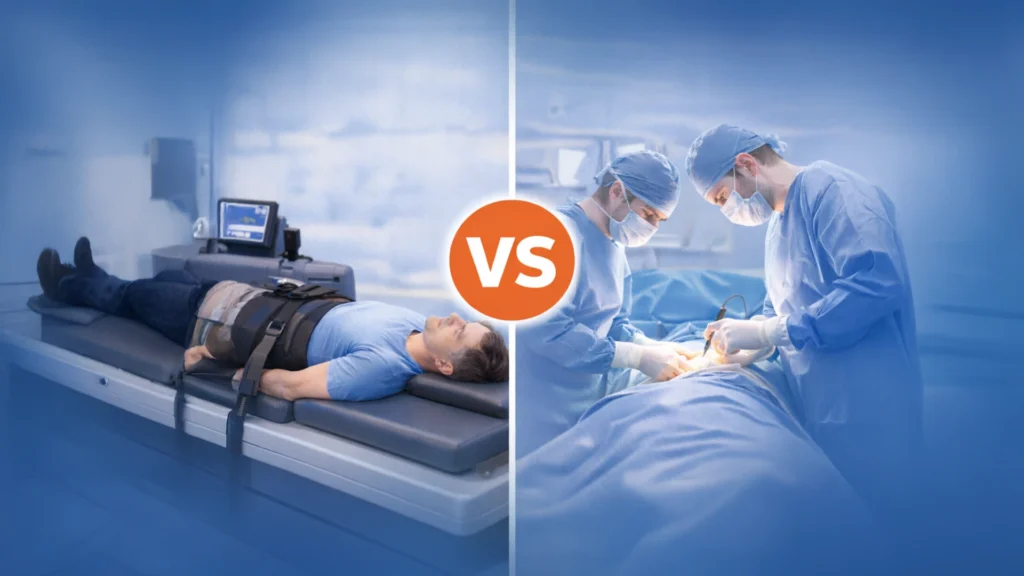
Key Differences Between Non-Surgical Spinal Decompression and Surgery
1. Treatment Approach
- Non-surgical spinal decompression therapy uses controlled, gentle traction to relieve spinal pressure. The process is non-invasive and painless for most patients.
- Spinal decompression surgery involves physically altering spinal structures to relieve nerve compression, which can include removal of bone or disc material.
2. Safety and Risks
- Non-surgical therapy is low-risk, with no anesthesia, no incisions, and minimal side effects. Some patients may experience temporary soreness or mild muscle spasms.
- Surgery carries higher risks, including infections, nerve injuries, blood loss, and longer-term complications. Recovery can be extensive, and some patients may experience failed back surgery syndrome.
3. Recovery Time
- Non-surgical spinal decompression allows patients to continue daily activities with minimal interruption. Most patients require a series of sessions over several weeks.
- Surgical recovery can take weeks to months. Patients may need hospitalization, pain management, and a structured rehabilitation program.
4. Cost and Long-Term Impact
- Non-surgical spinal decompression treatment is generally more affordable, does not permanently alter spinal anatomy, and has minimal risk of complications.
- Surgery is costly, irreversible, and may not always result in complete relief. Some patients require additional interventions or ongoing care after surgery.
5. Effectiveness
- Clinical studies and patient testimonials show that many individuals experience significant improvement with non-surgical spinal decompression, particularly when combined with chiropractic care and exercises.
- Surgery may provide rapid relief for severe cases but is typically reserved for patients who do not respond to conservative treatments.
Benefits of Non-Surgical Spinal Decompression
The benefits of spinal decompression without surgery are numerous:
- Alleviates chronic back and neck pain
- Reduces sciatic nerve pain
- Promotes natural disc healing
- Enhances spinal flexibility and mobility
- Minimizes the risk associated with invasive procedures
- Provides a personalized approach through a spinal decompression chiropractor
At Vitalspine Chiropractic, Dr. Michaelene Callahan tailors each non surgical spinal decompression therapy plan to the patient’s unique needs. By combining spinal decompression with chiropractic adjustments, medical massage, and therapeutic exercises, we aim to treat the root cause of pain and promote long-term wellness.
Who Is a Good Candidate for Non-Surgical Spinal Decompression?
Non-surgical spinal decompression is ideal for patients who experience:
- Herniated or bulging discs
- Sciatica or leg pain
- Chronic lower back or neck pain
- Degenerative disc disease
- Limited mobility due to spinal compression
Patients unsuitable for surgery, those seeking a non-invasive solution, or individuals recovering from minor injuries can benefit greatly from spinal decompression therapy. In many cases, incorporating spinal decompression exercises and targeted chiropractic care enhances results and promotes sustainable spinal health.
When Is Surgery Necessary?
Surgery may be considered when conservative care fails, or in the presence of severe nerve damage, spinal instability, or loss of bladder or bowel control. A comprehensive evaluation is essential before opting for surgical intervention. Even in such cases, non-surgical options may serve as a preliminary step, reducing pain and inflammation prior to surgery, or sometimes making surgery unnecessary.
Why Choose Vitalspine Chiropractic in Sanford, FL?
Vitalspine Chiropractic is led by Dr. Michaelene Callahan, DC, a trusted chiropractor with over 24 years of experience in natural pain relief and functional wellness care. Serving Sanford, Lake Mary, and surrounding areas, we focus on personalized spinal decompression chiropractic care designed to treat the cause—not just the symptoms.
Dr. Callahan’s expertise, combined with state-of-the-art spinal decompression equipment and a holistic approach, ensures that each patient receives a comprehensive plan that addresses their unique spinal condition and lifestyle needs.
Explore Non-Surgical Spinal Solutions Today
If you’re considering your options between surgery and non surgical spinal decompression therapy, our experienced team is here to help.
Book Appointment to schedule your consultation today.
Have questions or want to speak with our team? Contact Us to learn more about safe, non-surgical solutions for lasting spinal health.
Frequently Asked Questions (FAQs)
1. Is non-surgical spinal decompression therapy painful?
No, most patients find the treatment comfortable and relaxing. The therapy is gentle and personalized.
2. How long does spinal decompression treatment take?
Sessions typically last 20–30 minutes, depending on the condition being treated.
3. How many sessions will I need?
Treatment plans vary, but many patients notice improvement within 4–6 weeks of consistent therapy.
4. Can spinal decompression therapy replace surgery?
In many cases, yes. Non-surgical therapy is an effective alternative for patients not requiring immediate surgery.
5. What conditions respond best to non-surgical spinal decompression?
Herniated discs, sciatica, degenerative disc disease, and chronic back pain respond particularly well.
6. Is spinal decompression chiropractic care safe?
Yes, it is FDA-cleared and considered a safe, conservative treatment option for most patients.
7. Does insurance cover spinal decompression therapy?
Coverage varies by provider. Our team can help you verify benefits and create a cost-effective treatment plan.
8. How serious is spinal decompression surgery compared to therapy?
Surgery involves higher risks, a longer recovery period, and possible complications, making non-surgical therapy a safer first-line option.
9. Are spinal decompression exercises helpful?
Yes, these exercises, combined with therapy, help strengthen the spine, improve posture, and support long-term healing.
10. How do I know if I’m a candidate?
A consultation with a spinal decompression chiropractor can determine suitability based on your medical history, imaging, and specific symptoms.
Disclaimer
This blog is for informational purposes only and does not constitute medical advice. Results vary by individual. Always consult a qualified healthcare provider or chiropractor before beginning any new treatment, including non-surgical spinal decompression therapy or spinal surgery.